250 JOURNAL OF THE SOCIETY OF COSMETIC CHEMISTS primary irritant to which the normal skin does not react or to that concentration below (at times considerably below) the concentration that produces primary irritant action. Closed Patch Test: The patch test as ordinarily employed is closed-- the tested substance on the skin is covered (closed). If the covering (patch) excludes air it is occlusive if it does not, it is nonocclusive. It should be noted that minimum concentration which produces cutaneous reaction by closed patch test is well below that concentration which produces cutaneous reaction without covering as in ordinary actual use of the tested substance. It should also be noted that some substances which contact the skin in ordinary use without cutaneous reaction may cause such reaction if a closed patch test is performed. This applies, for example, to solution of soap, nonaqueous solvents, some essential oils, some sulfated oils and preparations containing alcohol. This does not apply to substances that are inherently not primary cutaneous irritants like rubber, tobacco, wood. Cutaneous reaction to such substances in closed patch test is an allergic one and not one of primary irritant action as in the aforegoing examples. In diagnosis of cutaneous allergy by closed patch test, it is imperative, to employ that concentration that does not produce primary i• titant action. If that concentration is not known, as a short cut, in performing a series of tests with varying dilutions on normal persons, an open patch test is employed. Open Patch Test: This is placing on the skin a few drops of the tested substance in use concentration or a comparable small amount, if not a liquid, allowing it to remain without covering (means may be taken to prevent its removal by clothing). If the skin is sensitized a positive reac- tion is to be expected. If powerful vesicants or irritants are tested in this manner dilution is necessary. Prophetic Pa/ch Test (Schwartz-Peck): Another purpose of the closed patch test, as aforementioned, is to determine if the tested substance has that degree of allergenicity that will sensitize the skin, by several or re- peated applications. For this purpose the prophetic or repeated insult method are employed. For the prophetic patch test two applications of the tested substance are used, usually on 200 subjects. The first application remains on the skin for forty-eight hours (some advise up to five days not always practical in hot weather). About two weeks later the second application is applied for twenty-four hours. Positive reactions after the first application indicates either primary irritant action or (less likely) that the tested person is allergic to the tested substance. Positive reactions after second applica- tion, if of sufficient severity (I believe more than 1 plus) indicates sensiti-

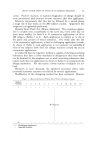
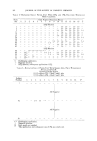
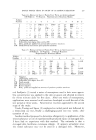
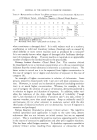
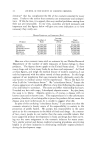
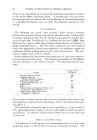
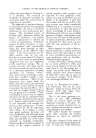
]NSUI,T PATCH TESTS IN STUDY OF CUTANEOUS REACTION 251 zation. Positive reactions to warrant designation of allergic should be more pronounced than primary irritant reactions after first application. Schwartz recommends that this test be followed by a second phase, a usage test of four weeks on the 200 subjects studied. Apparently this usage test is not generally performed. Repeated Insult Patch Text (Draize, Shelanski): This comprises applica- tion to random sites or preferably to the same site, every other day (or three times weekly) for from 8 to 15 consecutive applications on 50 to 100 subjects (Tables 1 to 6). Each application is uniform as to size of the patch and amount of tested substance. Two weeks after the last of the consecutive applications, a final or challenging application is made. As shown in Table 6, such application is not necessary nor advisable if some of the subjects show clear cut allergic reactions toward the end of consecutive applications. It is believed that the repetitive method is capable of eliciting sensitizing substances that have a lower threshold of allergenicity than that which can be detected by the prophetic test or weak sensitizing substances that require more than one application (as shown in Table 6) to consummate the allergic mechanism. For this reason a fewer number of subjects are uti- lized. Moreover, as later discussed, the repetitive procedure elicits other untoward cutaneous reactions not elicited by several applications. Modification of the aforegoing method has been employed. Brunner TABLE l--REPEATED INSULT PATCH TEST WITH A TOPICAl, CREAM Subject Number 1 2 3 4 5 6 7 8 9 10 11 12 C* All Negative C* Challenging application. -- Negative reaction.
Purchased for the exclusive use of nofirst nolast (unknown)
From: SCC Media Library & Resource Center (library.scconline.org)