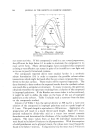
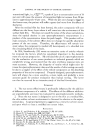
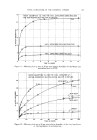
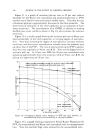
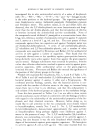
EFFECTS OF CHARACTERISTICS OF SUN SCREEN COMPOUNDS 281 It is possible to use these facts to establish what has been called a "sun- burn curve." Plotting the solar radiation curve and the erythema curve on the same graph, a sunburn curve can be constructed by multiplying the ordinates of the erythema curve by those of the solar radiation curve for each wavelength. This was originally done by Crew and Whittle (5) in 1938 who reported a maximum in the sunburn curve at 304 mu. This was later reinvestigated by Kumler and Daniels (6) who concluded that the sunburn curve ranges from 290 mu to 326 mu with a maximum at 308 mu. Thus in order to be a good sun screen, a compound must possess high absorption properties at 308 mu while superposing on the entire sunburn curve. A "sun screen index" was later proposed by Kumler (7) as a simple method of defining the relative sun screen power of different active ingre- dients. The sun screen index was defined as the optical density of a 1 per cent solution at a path length of 0.1 min. While an extremely useful con- cept, this definition did not include the effect of solvent on the absorption characteristics (8, 9). The total energy of a molecule is made up of electronic binding energy and vibrational and rotational kinetic energy. Molecules in solution absorb energy of a particular ultraviolet wavelength. The energy of the mole- cule is raised from the ground state to the energy level of the excited state. The absorption curve we obtain from the spectrophotometer is a composite of all the permitted transitions from the vibrational and rotational levels of the upper electronic state to the vibrational and rotational levels of the ground electronic state. Some of these individual transitions appear as fine structures in the gaseous phase or when the molecule is dissolved in non- polar solvents. Each solvent has its own unique perturbing effect on the electron configuration of the molecule in its ground states and in its excited states. In addition to this dielectric effect of the solvent environment, there can be spectral changes due to solvent-solute interaction resulting in changes in the permanent or induced dipoles in one solvent to a greater extent than in another solvent. Other influences are possible, such as hy- drogen bonding effects, dimerization, and similar molecular interaction. Finally, many molecules undergo profound changes in their spectrum with variation in pH. When a sun screen is dissolved in water, its spectrum usually differs from when it is dissolved in other solvents such as glycerol, alcohol or propylene glycol. Even larger effects may be found with solvents of lower degrees of polar character such as with fatty alcohols, triglycerides, fatty acid esters, or mineral oil. While all of these constituents are important, one must remember that the preparation is applied to the skin surface and must act as a sun screen after the volatiles have evaporated and the residual con- stituents have mixed with sweat and sebum constituents. The molecules of solvent immediately surrounding the sun screen molecules under its con-

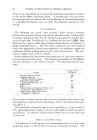
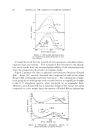
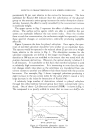
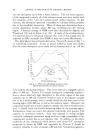
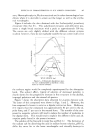
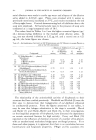
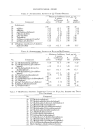
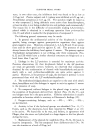
282 JOURNAL OF THE SOCIETY OF COSMETIC CHEMISTS didon of use will determine its ultraviolet absorption properties in relation to the solvent effects mentioned above. A concentration of a sun screen that looks good in one solvent may not be effective in the final preparation or a finished formulation may not show the expected response on skin testing. EXPERIMENTAL The following sun screens were studied: Ethyl p-amino benzoate (benzocaine), p-amino benzoic acid, phenyl salicylate (salol), 2-ethoxyethyl p-methoxy cinnamate (Giv-Tan F Sindar Corp.), glyceryl p-amino ben- zoate (Escalol 106 Van Dyk & Co.), 2,4-dibenzoyl resorcinol (DBR Dow Chemical Co.) and an alkyl phenyl benzotriazole derivative (Tinuvin P Geigy Industrial Chem.). The first three compounds were recrystallized twice from appropriate solvents and confirmed to be authentic samples by ½erification of their melting points and by other physical tests. The com- mercial samples were used as received. Stock solutions of all sun screens were made up to 0.5 per cent concentra- tion in ethanol and chloroform. The solutions were diluted to 10 milligram per cent solutions in the selected solvents. The following solvents were used: Notation Used Solvent in Figures I.iquid petrolatum (Nujol) Isopropyl palmirate (Propal--Robinson Wagner) Polyethylene glycol 400 (Union Carbide Chem. Co.) Ethanol 95% Water Polyoxyethylene monolaurate 5% in water (Tween 20--Atlas Powder Co.) Sodium lauryl sulfate 5% in water (Duponol C--DuPont) MO IP PE AL WA TW SL Since p-amino benzoic acid was the only free acid used in this study, it was converted to its sodium salt by dissolving it in 0.05 3//sodium borate solu- tion, pH 9.2. The ultraviolet absorption spectra were recorded on a Cary model 11 U.V. spectrophotometer using a 1.0 min. path length for both the solvent and solution. An identical solvent blank without the sun screen was used in each case. RESULTS AND DISCUSSION The selection of a 10 rag. per cent concentration and a 1.0 min. path length was made in order to obtain curves of a maximum accuracy. This
Purchased for the exclusive use of nofirst nolast (unknown)
From: SCC Media Library & Resource Center (library.scconline.org)