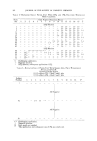
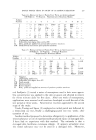
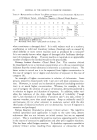
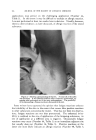
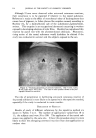
262 JOURNAL OF THE SOCIETY OF COSMETIC CHEMISTS In my experience and that of others as reported in the literature, these studies detect allergenicity in such range that the use of the tested substance is interdicted or to such degree that allergenicity would be an important issue. The methods now in vogue may be compared to that of a coarse sieve. The use of a finer sieve, so to speak, is ideal but not practical. I refer to one shortcoming of the tests now in vogue the number of subjects used. To use, ideally, one thousand or more subjects is not practical. For this reason, depending upon circumstances inherent to actual use--usage tests should be considered as a subsequent procedure. SUMMARY Discussion is made of four purposes of the patch test: (a) to determine primary cutaneous irritant action (b) to determine (diagnostic) if the skin is allergic to the tested substance (c) to determine by several appli- cations (prophetic patch test) or repeated applications (repeated insult patch test) if the tested substance has allergenic capability (d) to deter- mine other untoward cutaneous reactions. Definition is given of a primary cutaneous irritant of a cutaneous al- lergen. Discussion is made of closed patch test--the site of the tested substance on the skin is covered for an open patch test this site is un- covered. The prophetic patch test determines only primary irritant and aller- genic action. The repeated patch test by virtue of 10 to 15 consecutive applications elicits, in addition, other untoward cutaneous reactions notably fatigue action. This represents cummulative primary irritant action from fatigue or exhaustion of' the defensive mechanism of the skin. It defines dermatitis potential in actual use. Discussion is made of results obtained with different substances tested by the repetitive method. The specificity of patch tests in determining allergenicity is discussed. REFERENCES (1) Brunner, M. J., and Srniljanic, A.,/1. M./1./lrch. Dermarc/., 66, 399 (1954). (2) Traub, E. F., Tusing, T. W., and Spoor, H. J., Ibid., 69, 399 (1954). (3) Klauder, J. V., and Gross, B. A., Ibid., 63, 1 (1951). (4) Klauder, J. V., and Brill, F. A., Jr.,/lrcli. DermatoL and $ypliilol., 56, 197 (1947). (5) Buckley, W. R.,/1. M./1./lrch. Dermatol.. 78, 454 (1958). (6) Goldman, 1.., Preston, R. H., and Scheen,'S. R., Ibid., 76, 208 (1957).

THE BEAUTY OF THE ENZYME SCREEN By V. F. LxsANmx* Presented December 2, Z959, New York Ci O, As YOU MAY well know beauty is defined by Webster as follows: "The quality or aggregate of qualities in a thing which gives pleasure to the senses or pleasurably exalts the mind." Screen--to sift, to separate, to sort out and to project. It is our belief that people working in the field of enzymology both receive pleasure and are exalted by the utility and in- formativeness of the study of tissue metabolism, normal and abnormal as elucidated by enzymological techniques. There are three thoughts to be developed. The first is to review briefly recent contributions to the under- standing of h,man health and physiology made as a result of the study of enzymes. The second is the nature of the oral cavity in whose confines we have been working for some years, and, thirdly, the presentation of some in- formation relative to basic studies made in oral enzymology. Historically, the measurements of enzymes in human tissues and secre- tions has developed supposedly in the last decade or two. Blood and urine glucose can be measured specifically with glucose oxidase. Great diagnostic value is derived from measurements of phosphatases, of dehydrogenases, and transaminases. Enzymes are being used to facilitate wound healing, to remove tissue debris in surgery, and to dissolve blood clots. As the functions of enzymes become clearer their role in normal physiology be- comes better understood. This has enabled us to take the succeeding steps in the case of several which have been linked to disease for which inhibitors have been found. An example of these is carbonic anhydrase whose role in the secretion of gastric acidity led to the discovery of Diamox, well known for its efficacy in the control of water balance (1, 2). Another excellent example is monoamine oxidase which has been found to be related to men- tal health, and for which specific inhibitors were found to be effective and hence of medicinal value. Enzymes have played a role in the mechanism of antibiosis of hexetidine (a synthetic hexahydropyrimidine antibacterial agent). Dr. Lionertl of Boston University School of Medicine noted several enzyme systems in the formed elements of human b16od which were particularly sensitive to the inhibitor. Simultaneously, it was found by * Institute of Stomatological Research, Sias Research Laboratories, Brooks Hospital, Brookline, Mass. 263
Purchased for the exclusive use of nofirst nolast (unknown)
From: SCC Media Library & Resource Center (library.scconline.org)