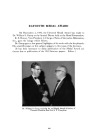
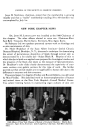
306 JOURNAL OF THE SOCIETY OF COSMETIC CHEMISTS in Nutley, N.J. His activity with this company concerns processes and formulations for coated fabrics and he develops an efficient commercial method for incorporating dyestuffs simultaneously with the coatings. In 1937 Bill joins the Givaudan-Delawanna Company with the expressed purpose of developing new antibacterial compounds. It would take too long to relate the details pertaining to all the compounds synthesized and studied by him and his research associates. It should suffice to say the synthesis of compound G-11 ©, commonly known as hexachlorophene, with its unique properties of high antibacterial potency, stability in soap and retention by the skin, opened a new pathway to cosmetic elegant deodorant and antiseptic soaps, a host of cosmetic deodorants, creams and lotions and numerous pharmaceutical products. Another compound perhaps not as well known as G-11 but equally unique in its application is compound G-4 ©. This chemical found its firs• major application in the mildewproofing of military fabrics during World War II and today in addition to this use it has many industrial applications. Currently Dr. Gump continues his studies and synthesis of new anti- bacterial compounds for cosmetic, pharmaceutical and industrial products. He also is active in synthesizing compounds for the possible chemotherapy of cancer and other diseases of man. An indication of Dr. Gump's broad interest and activity can be ob- tained from the appendix to my remarks which gives a complete list of his publications and patents issued in his name. This list makes it quite easy to understand the high regard given him by his fellow scientists. To complete my remarks, I must add one or two more to Bill's personal side. He is just as versatile in his avocations. Indoor-wise he is an avid reader, enjoys art and music, he likes to play chess, bridge and is a nice patsy to have in a game of gin rummy. Outdoors, he putters in the gar- den, swims, ice skates and as I mentioned before will go hiking at the drop of a hat. A new and important interest was added in 1956 when the Gumps be- came grandparents. They now have two grandchildren, and I understand they are upholding the centuries-old tradition and prerogative of all grand- parents, of spoiling them. In conclusion, it is only fitting we thank the Medal Award committee for their excellent choice in behalf of the SOC•F.q'¾. Unquestionably, Dr. Gump will prize this Medal in all the years ahead and by hi• acceptance, it bestows great honor to our SOC•F.*¾.

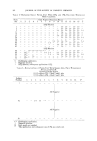
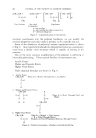
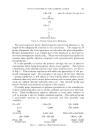
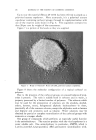
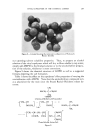
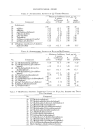
CHEMICAL STRUCTURE AND ANTIMICROBIAL ACTIVITY OF BIS-PHENOLS By WILLIAM S. GUMP and GEORGE R. WALTER Sindar Corp., De/awanna, N. )'. The marked antimicrobial properties of 2,2'-methylenebis [4-chloro- phenol], (G-4 ©, dichlorophene) and of 2,2'-methylenebis-[3,4,6-trichloro- phenol], (G-11 ©, hexachlorophene) reported from our laboratories (1-4) induced the senior author to prepare numerous bis-phenols during the past two decades. This was done with the hope of finding more potent anti- septics, especially as additives for soap, and of correlating biological ac- tivity with chemical structure. By establishing such a relationship, a pattern might evolve which would lead to the synthesis of compounds with superior qualities. The behavior of various series of bis-phenols against fungi, such as Chaetomium g/obosum and •lspergi//us niger, had been thoroughly investi- gated by Marsh and his co-workers (5, 6). We shall present here only the study of the activity of a selected group of bis-phenols against Staphy/o- coccus aureus and Escherichia co/i, and against a pathogenic fungus, Tri- chophyton mentagrophytes, and their comparison with hexachlorophene being chosen as a standard in view of its wide use as an antiseptic. It had been previously stated that bis-phenols, such as hexachlorophene or bithionol, do not kill bacteria rapidly whether they are on the skin or in any substrate, but exert a slow inhibitory action which in time will lead to the death of the organisms. For this reason, we determined the bac- teriostatic levels of the compounds against the three micro Srganisms em- ploying serial dilution technique. The results are shown in Tables 1 to 5. While, naturally, we have done work of this kind in previous years, the data presented here are derived from a recent study carried out under identical conditions. S. aureus would appear to be the most suitable organism for the evaluation of topically applied antiseptics we felt that the tests with this organism should also be run in the presence of soap. The latter results provide a better indication of the utility of the compounds, es- pecially as the principal use of active Ns-phenols lies in the field of anti- septic and deodorant soaps and detergents. We are aware that the data obtained in vitro, while helpful for selecting the most promising com- pounds, do not constitute the final criterion of their value as skin anti- 307
Purchased for the exclusive use of nofirst nolast (unknown)
From: SCC Media Library & Resource Center (library.scconline.org)