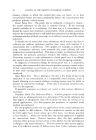
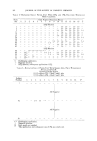
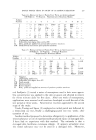
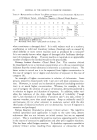
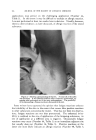
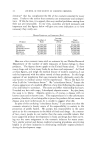
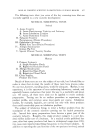
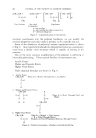
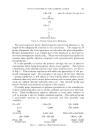
308 JOURNAL OF THE SOCIETY OF COSMETIC CHEMISTS septics. This depends on in vivo studies of their ability to degerm the skin, as may be demonstrated by standard hand-washing techniques. There appears to be a fairly good relationship between in vitro and in vivo ac- tivity (7). EXPERIMENTAL Preparation of the Bis-Phenols The compounds used in this study were prepared by standard methods. Many of the compounds listed in the tables have been described in the scientific literature and in patents * for the substances which are new, the synthesis is largely evident from their structure and the procedure may be derived from the known preparation of analogs. This paper would not be the proper place to present experimental details it may suffice to make a few general statements. All compounds of Table 1 are derivatives of diphenylmethane an/t were obtained by condensation of the appropriate phenols with aqueous for- maldehyde or paraformaldehyde in the presence of sulfuric acid of varying strength, the conditions depending on the reactivity of the phenol em- ployed. The asymmetrical compounds Nos. 13 and 14 had to be made in two steps: alkaline condensation of 2,4-dichlorophenol with t•)rmalde- hyde yielded 2,4-dichloro-6-hydroxymethylphenol which was brought to reaction with p-chlorophenol (No. 13) and 2,4,5-trichlorophenol (No. 14) under acid conditions. It should be mentioned that compound 9 was synthesized by debromination of compound 5 by means of zinc dust in potassium hydroxide solution. Similarly, the compounds listed in Table 2 were prepared by conden- sation of the monophenols with acetaldehyde, chloral, benzaldehyde and substituted benzaldehydes. Bromination of compounds 15 and 18 re- sulted in compounds 16 and 19, respectively. The stilbenediols (Nos. 20 and 21) were obtained from the corresponding benzoins (8). The reaction of phenols with sulfur dichloride led to the formation of the 2,2'-thiobis-phenols listed in Table 3. If the phenols are substi- tuted by more than one chlorine, aluminum chloride is needed as a catalyst. Dechlorination of compound 30 led to compound 29, bromination to com- pound 33. The bis-phenols listed in Tables 4 and 5 were generally prepared by the same methods as had been employed for the compounds of the pre- ceding tables. We might add that compound 43 was obtained by first preparing octachlorodiphenylene dioxide from potassium pentachloro- phenoxide at 300øC., and heating the dioxide with sodium hydroxide in aqueous methanol at 160øC. Compounds 45, 58 and 59 resulted from * Many references are found in the review article "Ths Bis-phenols" (4).

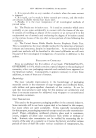
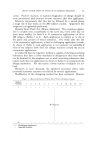
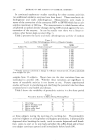
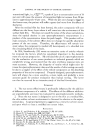
EI,EVENTH MEDAL AWARD 309 the oxidation of the corresponding 2,2'-thiobis-phenols with hydrogen peroxide. Bromination of compound 46 led to compound 47, chlorination of compound 48 to compound 49. •lntimicrobia/ In Fitro Study Bacteriostatic and fungistatic levels were ascertained for Staphylococcus aureus ATCC 6358, Escherichia coli ATCC 11229, and Trichophyton menta- grophytes ATCC 9129 by serial dilution technique. Stock solutions of the compounds to be tested were made in acetone or N,N-dimethylformamide followed by twofold serial dilutions in alcohol (S.D.A. 30). Aliquots from the solvent serial dilutions were added to A.O.A.C. agar tubes for bacterial tests and Sabouraud's Dextrose Agar (Difco) tubes for fungal tests. The tube contents were mixed and poured into sterile plates which were then spot-inoculated with the test organisms. Twenty-four hour A.O.A.C. broth cultures of S. aureus and E. coli were employed, the inoc- ulum being diluted 1-100 in A.O.A.C. broth. Spores and roycelia frag- ments harvested from a seven-day Sabouraud's dextrose agar slant with water served as the Trichophyton inoculum. Inhibitory levels were recorded at the end of forty-eight hours at 37 ø C., and seven days at 30øC., for the bacteria and mold respectively. Controls were included to demon- strate lack of inhibition by the solvents employed. Replicate tests were conducted on different days in an attempt to minimize the day-to-day variation in the test procedfire. Bacteriostatic levels of the compounds in the presence of soap were ascertained by a similar technique except that aliquots of the stock solu- tions were added to a Maxine (Swift & Co.) soap solution. Twofold TABLE I--ANTIMICKOBIAL ACTIVITY OF 2•2'-METHYLENEBIS-PHENOLS •--Minimum Inhibitory Level, t•g./ml.--• S. aureus T. Compound S. (in Presence E. menta- No. Substituents aureus of Soap) coli grophytes 1 3,4,6-Trichloro,hexachlorophene, G~11© 0.39 1.56 25 3.12 2 4,5,6-Trichloro 0.39 0.78 25 6.12 3 3,4,5-Trichloro 0.20 0.39 6.25 3.12 4 4-Bromo-3,6-dichloro 1.56 6.25 50 6.25 5 4-Bromo-5,6-dichloro 1.56 6.25 50 12.5 6 4-Chloro, dichlorophene, G-4 3.12 12.5 25 6.25 7 4-Methyl 25 12.5 50 50 8 4,6-Dichloro 0.78 1.56 50 1.56 9 5,6-Dichloro 3.12 6.25 50 3.12 10 4,6-Dibromo 0.78 3.12 50 3.12 11 6-Bromo-4-chloro 0.78 1.56 50 6.25 12 4-Chloro-6-methyl 1.56 3.12 50 6.25 13 2,2'-Dihydroxy-3,5,5' -trichlorodiphenyl- methane 1.56 ! ! ! ! 14 2,2-Dihydroxy-3,5,3,5,6 -pentachloro- diphenylmethane , 0.78 3.12 50 3.12 1.56 50 3.12
Purchased for the exclusive use of nofirst nolast (unknown)
From: SCC Media Library & Resource Center (library.scconline.org)