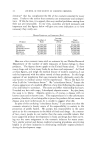
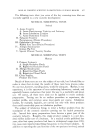
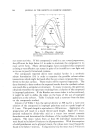
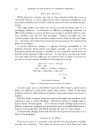
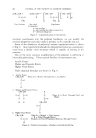
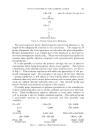
NEW TRENDS IN COSMETIC EVALUATION 243 considered as having the same speed. This is the same reasoning as that of a few routine addicts who stubbornly stick to middle age testing tech- niques and dare maintain that they can classify all odor intensities into three or four categories. This is obviously and ridiculously absurd. Some odors are perceived by the human nose in very minute amounts, while the intensities of some others are so strong that they cannot be measured by the nose alone. It appears as a consequence of the above that the measurement of the intensity of odors is a complex problem. However, it is eased a great deal by the use of the Barail Osmagraph ©. The Osmagraph ©. The Osmagraph is the first precision instrument wherein the elimination of variables has been so perfected that the testing of the intensity of an odor by several individuals brings results with varia- tions of less than 5 per cent. In order to obtain accurate results in the measurement of odors, it was necessary to build an instrument of g•eat reliability. As no way has yet been found to measure odors without using human olfactory nerves, such an instrument should enable anyone to obtain reproducible results, provided the following conditions are met: 1. The amount of air to be smelled should be known. 2. The air to be smelled should reach the nose of the technician under its own pressure and this pressure should be known. 3. The air to be smelled should contain only the odor to be measured and should have no other odor of its own. 4. The air should be cleaned prior to being mixed with the odor to be tested and the moisture of the mixed air should also be controlled. 5. All tests should be made under the same conditions. The Osmagraph © helps the human nose in the same way the microscope helps the human eye. The microscope permits the measurement of cells, micro 3rganisms and fibers invisible to the human eye. The Osmagraph © permits the measurement of the intensity of odors unmeasurable by the human nose. The concentration at which the odor becomes just barely perceptible is called the "threshold value." This threshold value can be expressed numerically and this numerical expression is called the "odor threshold number," (OTN). The ratio between the total final pressure and the pressure increment caused by the odorous air results in the odor threshold number as follows: Odor threshold number Odorous Increment Pressure OIP OTN = Total Pressure TP The value of the total pressure equals 910. It is obtained by adding the atmospheric pressure of the added odor free air, 760 ram. mercury at sea level, to the pressure of the odorous air, the median OIP of which is 150 min. mercury.

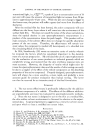
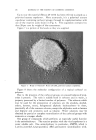
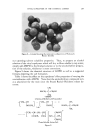
244 JOURNAL OF THE SOCIETY OF COSMETIC CHEMISTS The odor threshold number gives the concentration of the odor in the air dilution which will just barely cause the sensation of odor. For strongly odorous substances, this concentration will below, and the threshold number will be high. For weak odors, it will be the opposite. The Osma- graph © permits theoretically the measurement of 300 intensities of odors. In current practice, however, we have found that after using the proper ,dilutions and preparation requirements of the sampled odors, excellent odor determinations can be made by using a scale of 60 odor threshold numbers. We are now working with electronic engineers on the construction of an electronic Osmagraph. This is a difficult task, but if we succeed the elec- tronic Osmagraph will be very comparable to the electronic microscope. There will then be practically no limitation to the number of odor thresh- .olds which will become measurable. Use of Radioisotope Tracers We were the first to use radioisotope tracers in cosmetic research. As far back as 1949, we presented a paper entitled "Introduction to Testing Cos- metics Containing Radioisotopes." This paper was subsequently pub- lished in the )tourhal of the Society of Cosmetic Chemists (Vol. II, No. 5). Since that time, the use of labeled constituents of cosmetic preparations has greatly increased although not as much as could be expected. This may be due to the unscientific state of affairs in some advertising circles. It is not because tracer findings have not been widely publicized that this valu- able part of research work has not produced commendable results. Our first results on the penetration of cold cream have been widely and fully verified by several researchers. The penetration of the skin has been disproved. Claims made on the presence of antiseptics several hours after washing with antiseptic soaps have also been disproved. Other tests using tagged components of dentifrices definitely established the fact that a very negligible, if any, protective film is left on the teeth by any dentifrice on the market, and for a few minutes only. A single experimental dentifrice containing a chemical not used anywhere else was found to leave on the teeth a film which lasted several hours after brushing. Tracer research is now conducted on lipstick to investigate the possi- bility of a slight penetration of the mucous membrane which would insure long-lasting properties. Contrarily to expectations, vegetable dyes have been found superior to tar dyes in this respect. A great many isotopes have been tried in cosmetic investigations, but only a few have the prerequisite qualities. This reduces the possibility in one way, but on the other hand makes it safer and easier in the long run. The favorites are still carbon 14, tritium, iodine 131 and bromine 82. Some of these studies were made in vilro, using artificial membranes, leather, fabrics and their results were quite erratic. In vivo studies are much more reliable, although experiments made
Purchased for the exclusive use of nofirst nolast (unknown)
From: SCC Media Library & Resource Center (library.scconline.org)