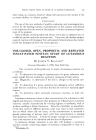
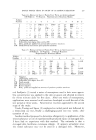
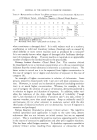
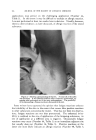
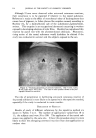
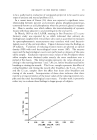
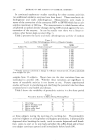
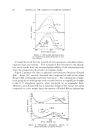
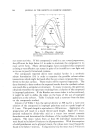
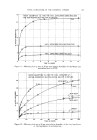
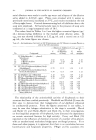
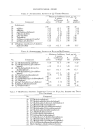
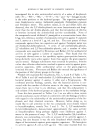
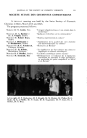
256 JOURNAL OF THE SOCIETY OF COSMETIC CHEMISTS applications may persist on the challenging application (Number 44, Table 5). In this event it may be difficult to exclude an allergic reaction. A re-test performed at least two weeks later is decisive. Usually, however, there is other evidence as later discussed, of allergic reaction of the tested substance. ß . .z Figure 1.--Showing a disappearing dermatitis. At onset all of the axilla was involved. It was bilateral without other cutaneous involvement, ap- pearing after prolonged use of the same antiperspirant. The possibility of its representing a fatigue reaction is discussed in the text. Some writers have expressed the opinion that fatigue reactions enhance the irritability of the skin to the extent that causes false positive reactions to other substances concomitantly tested. That has not been my observa- tion fatigue reactions are not that pronounced. The enhanced irrita- bility is confined to the site of application of the fatiguing substance its site of application at a different area is negative. Occasionally fatigue reactions may occur (Number 44, Table 5) at an immediate adjacent site but usually does not (Number 14, Table 5). Positive reactions at the latter site more likely indicate an allergic reaction (Number 48, Table 5

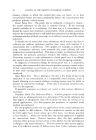
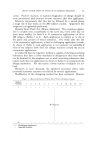
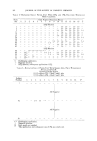
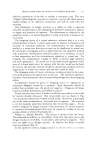
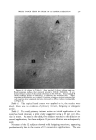
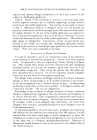
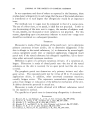
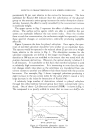
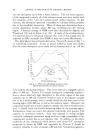
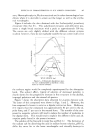
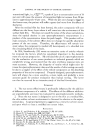
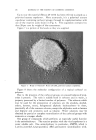
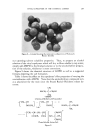
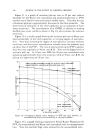
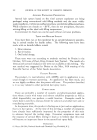
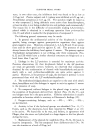
INSULT PATCH TESTS IN STUDY OF CUTANEOUS REACTION 257 Number 37, Table 6). I have frequently observed all negative reactions from many substances concomitantly tested with the fatiguing agent. Enhanced irritability of the skin is more likely to result from pronounced allergic reactions or from adhesive reactions at multiple sites of tests. Fatiguing reactions can be held back in the repetitive method by omit- ting an application (symbol R in Tables 4, 5) or by changing its location to an immediate adjacent site (symbol PM in Tables 4, 5, 6). Figure 2.--Showing 4 phis allergic reaction on subject in Table 6. The reac- tion was delayed appearing 48 hours after removal of the patch. It comprised pronounced redness wi th swelling and vesicles. Allergic Reaction: These usually comprise strongly positive reactions (Fig. 2). I do not believe a one plus reaction (Fig. 3--Site A) is likely to represent an allergic reaction. Allergic reaction may appear as early as the fifth application or later, or initially on the challenging application. They may appear gradually (Table 5) or suddenly (Table 6). Their ap- pearance before the challenging application (Table 6) makes unnecessary the latter application. In this event it is advisable to terminate the study. As aforementioned, additional evidence of allergic reaction may com- prise strongly positive reaction at site different than the prior test also a flare-up at prior sites of application or delayed reactions (Table 6). Other Unoward Cutanous Reaction: These reactions as elicited by the repetitive method are folliculitis and dryness of the skin, as shown in Fig. 4. Folliculitis is expressed as punctate areas of redness centering around a follicle. This reaction is represented in Tables 4 and 5 by the symbols F and FF.
Purchased for the exclusive use of nofirst nolast (unknown)
From: SCC Media Library & Resource Center (library.scconline.org)