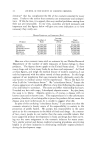
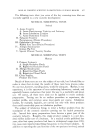
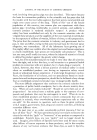
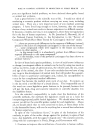
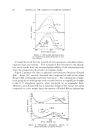
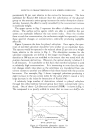
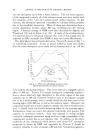
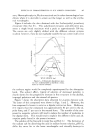
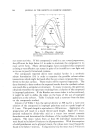
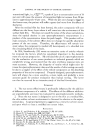
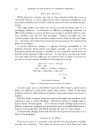
280 JOURNAL OF THE SOCIETY OF COSMETIC CHEMISTS 2. Continue to insist on adequate testing of his products before they are marketed. 3. Admit the limitations of his testing methods and strive to improve them. 4. Continue to base his conclusions on scientific facts, not speculations. 5. In connection with all issues of major social importance, maintain his perspective on the value of human experience as it relates to the interpretation of scientific evidence. All these things are his obligations in his role as a scientist, as a protector of the public health, and as a member of human society. REFERENCES (1) Wax, Murray, .4m. •. Sociology, 62, No. 6,588 (1957). (2) Isaiah, 3: 24. (3) Macdonald, Eleanor, •. Soc. Cosmetic Chemists, 10, 246 (1959). (4) Hartwell, X., Pub. HeaM, Serv. Pub. No. 149, 2nd Ed. (1951). EFFECT OF VEHICLE COMPONENTS ON THE ABSORPTION CHARACTERISTICS OF SUN SCREEN COMPOUNDS By SIDNEY RIEGELMAN* and RICHARD P. PENNA Presented May 12, 1960, New York City THERE ^RE many physical, chemical and biological factors which must be considered in the formulation of a suntan cosmetic product. Cer- tainly none is more important than the selection of an active sun screen compound. However, this selection cannot be properly made solely on the basis of the information contained in the manufacturer's technical brochure. While this information may be accurate, it does not consider the effects of the vehicle components on the ultraviolet absorption characteristics of the compound. This paper will attempt to clarify some of these interac- tions and point to their significance in the formulation of a suntan prepara- tion. The region of the sunlight which a compound must absorb in order to be an effective sun screen is dependent on the intensity and wavelength of the solar radiation and the body's erythemic response to the light. In- significant amounts of the solar radiation reach the earth's surface below 290 millimicrons (m/•) (1, 2). The shorter wavelengths are screened out by the atmosphere. On the other hand, studies (3, 4) on the erythema pro- duced by ultraviolet light on untanned human skin indicate a maximal erythemagenic effect at 254 m/• and at 287 m•, separated by a minimum at 280 mu. Only the second maximum is within the solar radiation region. * Associate Professor of Pharmacy and Pharmaceutical Chemistry. University of California School of Pharmacy, Medical Center, San Francisco 22, Calif.

280 JOURNAL OF THE SOCIETY OF COSMETIC CHEMISTS 2. Continue to insist on adequate testing of his products before they are marketed. 3. Admit the limitations of his testing methods and strive to improve them. 4. Continue to base his conclusions on scientific facts, not speculations. 5. In connection with all issues of major social importance, maintain his perspective on the value of human experience as it relates to the interpretation of scientific evidence. All these things are his obligations in his role as a scientist, as a protector of the public health, and as a member of human society. REFERENCES (1) Wax, Murray, .4m. •. Sociology, 62, No. 6,588 (1957). (2) Isaiah, 3: 24. (3) Macdonald, Eleanor, •. Soc. Cosmetic Chemists, 10, 246 (1959). (4) Hartwell, X., Pub. HeaM, Serv. Pub. No. 149, 2nd Ed. (1951). EFFECT OF VEHICLE COMPONENTS ON THE ABSORPTION CHARACTERISTICS OF SUN SCREEN COMPOUNDS By SIDNEY RIEGELMAN* and RICHARD P. PENNA Presented May 12, 1960, New York City THERE ^RE many physical, chemical and biological factors which must be considered in the formulation of a suntan cosmetic product. Cer- tainly none is more important than the selection of an active sun screen compound. However, this selection cannot be properly made solely on the basis of the information contained in the manufacturer's technical brochure. While this information may be accurate, it does not consider the effects of the vehicle components on the ultraviolet absorption characteristics of the compound. This paper will attempt to clarify some of these interac- tions and point to their significance in the formulation of a suntan prepara- tion. The region of the sunlight which a compound must absorb in order to be an effective sun screen is dependent on the intensity and wavelength of the solar radiation and the body's erythemic response to the light. In- significant amounts of the solar radiation reach the earth's surface below 290 millimicrons (m/•) (1, 2). The shorter wavelengths are screened out by the atmosphere. On the other hand, studies (3, 4) on the erythema pro- duced by ultraviolet light on untanned human skin indicate a maximal erythemagenic effect at 254 m/• and at 287 m•, separated by a minimum at 280 mu. Only the second maximum is within the solar radiation region. * Associate Professor of Pharmacy and Pharmaceutical Chemistry. University of California School of Pharmacy, Medical Center, San Francisco 22, Calif.
Purchased for the exclusive use of nofirst nolast (unknown)
From: SCC Media Library & Resource Center (library.scconline.org)