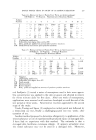
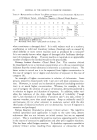
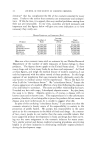
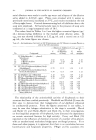
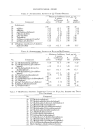
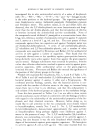
312 JOURNAL OF THE SOCIETY OF COSMETIC CHEMISTS investigated the in vitro antimicrobial activity of a series of bis-phenols with --S--, --SO--, --SO2--, --S--S--, --Sa-- and --S4-- linkages mostly in the ortho positions to the hydroxyl groups. The organisms employed were Staphy/ococcus aureus, Salmonella paratyphi, Trichophyton gypseum and Toru/opsis minor. The authors stated, as we and others have also observed, that the 2,2'-thiobis-phenols are more bacteriostatic and fungi- static than the 4,4'-thiobis-phenols, and that the introduction of chlorine or bromine increased the antimicrobial activity considerably. None of the compounds tested inhibited S. paratyphi at a concentration lower than 12 •g./ml., whereas a number of compounds were active against T. gypseum and S. aureus at a level of 1 •g./ml. and less. The most potent of these compounds against these two organisms and against roeoru/opsis minor was 2,2'-thiobis(4,6-dichlorophenol). A series of 2,2'-methylenebis-phenols, 2,2'-ethylidene and 2,2'-benzylidenebis-phenols, and a number of other compounds were examined by Florestano and Bahler (12) for antibacterial activity in vitro against a variety of organisms. They found that the compounds showed more or less specificity against gram-positive bacteria, being distinctly more active against them than against the gram-negative species tested. Halogen substituents were essential for potency bromine rather than chlorine substitution resulted in greater activity against gram- positive organisms, while antibacterial action on the gram-negatives remained the same. Florestano and Bahler also stressed the significance of the position of the hydroxy groups in the rings. Wendel (13) examined five bis-phenols, Nos. 1, 6 and 8 of Table 1, No. 40 of Table 4 and 4,4'-methylenebis (3,5-dichlorophenol), for their anti- bacterial potency against S. aureus, S. a/bus and a Streptococcus. He confirmed previous findings, namely, that the bacterial activity is con- nected with the number of chlorine atoms in the rings, an increase being shown from two to four to six chlorines and that this enhancement is only evident if the hydroxyl groups are adjacent to the methylene bridge. From the date presented in Tables 1 to 5 we are able to draw certain general conclusions (some of them in conformity with the findings of others) with regard to the relationship of the antimicrobial properties of the bis- phenols and their chemical structure. However, before doing so, we would like to call attention to the two compounds most closely related to hexachlorophene, namely Nos. 2 and 3. No. 2, 2,2'-methylenebis- (4,5,6-trichlorophenol), demonstrated approximately the same activity as hexachlorophene being perhaps slightly more inhibitory against S. aureus in the presence of soap. No. 3, 2,2'-methylenebis (3,4,5-trichloro- phenol), was outstanding, not only on account of its activity against S. aureus, but also because it was the only Ns-phenol which showed a fair degree of bacteriostatis against gram-negative organisms. We have given its activity against E. co/i as 6.25 ug./ml. This value resulted from two

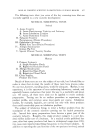
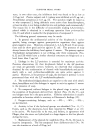
ELEVENTH MEDAL AWARD 313 tests in two other ones, the inhibitory level was found to be as low as 3.12 ug./ml. Proteus vulgaris and S. typhosa were inhibited at 6.25 ug./ml., Pseudomonas aeruginosa at 12.5 ug./ml. The question might be raised as to why compound 3, being definitely more active than hexachlorophene, at least in vitro, is not being studied in vivo and perhaps used commercially? The reason lies in the difficulty of economically making 3,4,5-trichloro- phenol which is obtained in a multistep operation from p-nitroaniline (14, 15) and which is needed for the preparation of compound 3. The following general statements may be made: 1. In general the antibacterial activity of the bis-phenols is rather specific, being stronger against gram-positive organisms than against gram-negative ones. However, compounds 1, 2, 3, 6, 30 and 31 are excep- tions and do show good activity against E. coli. The presence of soap always lowers the inhibitory level against S. aureus. The potency against Trichophyton mentagrophytes is not striking, only three compounds (Nos. 8, 32 and 33) which have a similar chemical structure are fungistatic at a level lower than 2 ug./ml. 2. Linkage in the 2,2'-positions is essential for maximum activity. Previous observations (4) that bis-phenols linked in the 4,4'-positions are weak are generally correct however, we observed that compounds obtained by the condensation of thymol with benzaldehyde and partic- ularly with o- and p-chlorobenzaldehyde are quite active against S. aureus. However, in the presence of soap, the decrease in potency is more pronounced than with the 2,2'-methylenebis-phenols. 3. The methylene-bridged phenols are superior to the ones with ethyli- dene, benzylidene and thio-linkages in regard to activity against S. aureus in the presence of soap. 4. No compound without halogen in the phenol rings is active, with the exception of bis-phenols derived from thymol (Nos. 25, 26, 27), and one halogen must be in the para position. Chlorine substitution is usually preferable to bromine which is contrary to Florestano's findings (12). 5. Oxygen-containing linkages, such as --CO---, --SO•, --SO,_--, are detrimental. 6. Activity is lost if the hydroxyl groups are etherified (Nos. 55, 57). Esters, such as the diacetates, have been reported by Pileget et al. (11) to be active. We found this to be true, and believe, in agreement with Pfleger, that the esters are hydrolyzed to a large degree to the free phenols during the tests. 7. Replacement of the phenols by naphthols (Nos. 39, 61, 62) leads to inactive compounds. The Ns-compound from dichloresorcinol (No. 54) was also inactive at a level of 50 •g./ml.
Purchased for the exclusive use of nofirst nolast (unknown)
From: SCC Media Library & Resource Center (library.scconline.org)