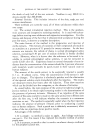
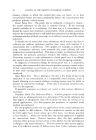
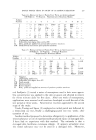
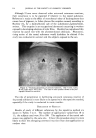
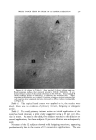
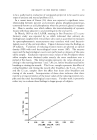
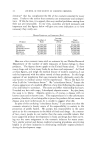
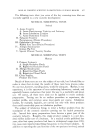
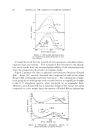
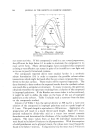
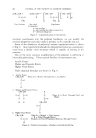
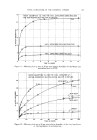
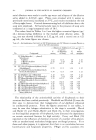
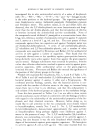
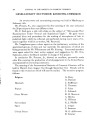
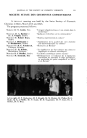
294 JOURNAL OF THE SOCIETY OF COSMETIC CHEMISTS nCH,,=CH + o--c:o I CH• Vinyl Acetate mCHz:CH --• -- X Any vinyl Comonomer CHa Copolymer n--any number m--any number less than or equal to n X--chemical side-group Figure 3.--Copolymerization of vinyl acetate. chemical consitutents into the polymer backbone, we can modify the intrinsic properties and tailoF make a product to fit a specific end use. Some of the chemistry of polyvinyl acetate copolymerization is shown in Fig. 3. Any material introduced into the polymerization as a comonomcr must have a similar vinyl structure which is capable of joining in the reaction. One of the more common modifications of the polymer is softening or internally plasticizing. Three typical families of comonomers are: Acrylic Esters Maleic and Fumaric Esters Higher Vinyl Esters Their chemical formulae are shown in Fig. 4. 1. Acrylic Esters CH_o=CH C=O I () I R Where R is Methyl Through Octyl and Higher 2. Maleic and Fumaric Esters CH--CH R I I •C C=O O Where R is Butyl Through OctyI and I I I Higher O O C=O I R R CH=CH I O=C I o 3. Higher Vinyl Esters R CH=:CH When R = Methyl -• Vinyl Acetate I .'. R = Ethyl Through Heptyl O--C•------O Products are Vinyl Propionate, Butyrate, Through Octoate I R Figure 4.--Typical comonomers softening or internal plasticizing.

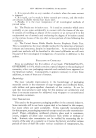
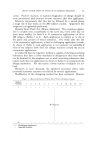
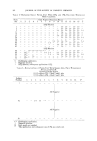
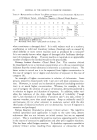
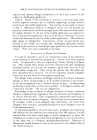
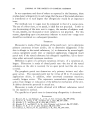
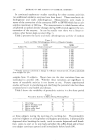
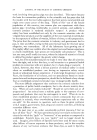
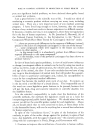
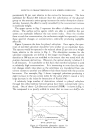
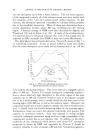
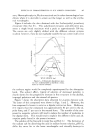
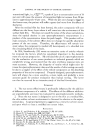
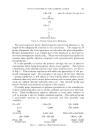
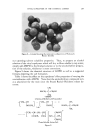
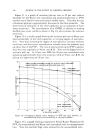
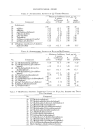
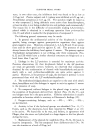
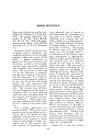
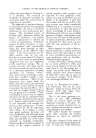
VINYl. COPOLYMER IN THE COSMETIC COSMOS 295 CH2:CH I c1 Vinyl Chloride CH I CH2:C i c=() () R Methacrylate Esters F gure 5.--Typical Comonomers Hardening. The most important factor determining the plasticizing efficiency is the length of the sidegroup R attached to the comonomer. The longer the R group, the greater the chain separation and therefore the plasticizing effect. Because the plasticizer is an integral part of the backbone we have perma- nent and nonmigratory plasticizing. Many internallyplasticized polyvinyl acetates show specific adhesion compared with conventionally plasticized homopolymers. It is also possible to harden the polymer through the use of selective comonomers which bring the polymer chains closer together. Two typical comonomers, vinyl chloride and the lower alkyl methacrylates, are shown in Fig. 5. The resultant copolymer will reflect the personality of the par- ticular comohomer used. For example, if we take a 50-50 vinyl chloride --acetate copolymer, it will adhere to vinyl chloride plastic (which acetate ordinarily does not) and to many polar surfaces such as metal, glass, wood, cloth, etc. (which chloride ordinarily does not). The chloride would also. bolster the heat and chemical resistance of the acetate. Of equally great importance in polymer pyrotechnics is the introduction of polar chemical groups such as amide, carboxyl and cyano into the back- bone. These modifications improve adhesion to more polar surfaces as well as provide a site for further chemical reaction. The carboxyl group is particularly sensitive to alkaline materials and thus provides soap solubility. CH_=CH I C=O NH= Acrylamide CH--C00H HOOC--CH Fumaric Ac d where R is Methyl Through Butvt• Acrylic Acid Maleic Acid (or Anhydride) CH•--CH:CH CH•=C--CH• COOH HOOC COOH Crotonic Acid Iraconic Acid Figure &--Addition of Polar Chemical Groups. CH2:CH CH--C00H C00H CH--C00H
Purchased for the exclusive use of nofirst nolast (unknown)
From: SCC Media Library & Resource Center (library.scconline.org)