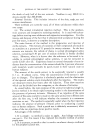
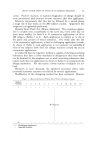
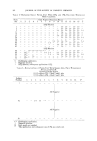
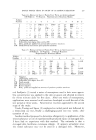
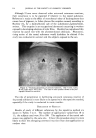
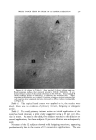
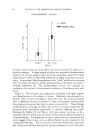
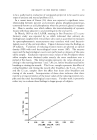
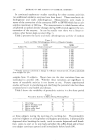
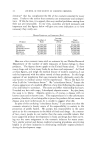
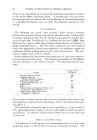
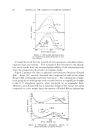
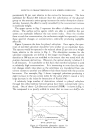
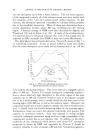
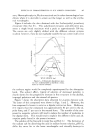
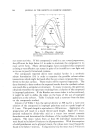
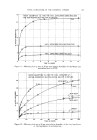
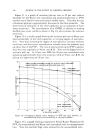
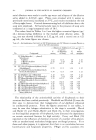
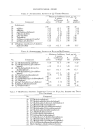
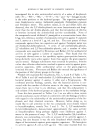
272 JOURNAL OF THE SOCIETY OF COSMETIC CHEMISTS In continued exploratory studies searching for other enzyme activities two additional oxidative enzymes have been found. These were lactic de- hydrogenase and malic dehydrogenase. Measurements were made in terms of the conversion of the coenzyme DPN to DPNH which has an ab- sorption maximum at 340 m/a. The measurements in whole human saliva are plotted as optical density changes during 1200 seconds against the con- centration of the enzyme. As can be readily seen there was a linear re- action other factors kept constant (Fig. 7). Table 2 presents the lactic and malic dehydrogenase activity of random T•.B I.E 2 Lactic and Malic Dehydrogenase Activity of Random Samples LDH MDH Subject No. Velocity Constant* Velocity Constant* 1 0.058 0.038 2 0. 073 0. 050 3 0.04O 0. 020 4 0. 094 0.010 5 0.095 0.035 6 0. 084 0.045 7 0. 072 0.014 8 0.058 0.023 9 0.131 0.022 10 0. 045 0. 037 11 0. 040 0.021 * Velocity constant calculated as change in O.D./per minute/per mi. of saliva calculated from straight line plot. samples from 11 subjects. Shown here are the titer variations from one individual to another (18). Whether these variations are significant in terms of metabolic activity is not known as yet. Future experimental studies will assist in elucidating and clarifying the potential role that these enzymes have in oral health and disease. Table 3 shows the variability of proteolytic activity in a five-hour period 'I'^ m.•: 3 Proteolytic Activity in Saliva During Morning Hours A B C 1. On arising 83 56 66 2. Before brushing teeth 18 7 0 3. Before breakfast 11 11 23 4. Before coffee break 22 32 5. Before lunch 29 -'8 27 on three subjects during the morning of a working day. The proteolytic activity is highest on arising before oral hygiene procedures is dramatically depressed after brushing the teeth tends to remain depressed until break- fast seems to start on its way back up before the coffee-break and at least one subject continues upward until immediately before lunch (19).

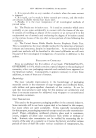
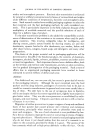
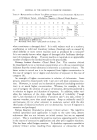
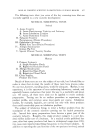
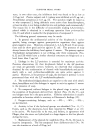
THE BEAUTY OF THE ENZYME SCREEN 273 A great deal of material is presented, some new, some old, some promising and some as yet of unknown value. The following should be kept in mind: (1) The field of oral enzymology as a means of understanding oral tissue metabolic processes is in the early phases of development, expansion, and appreciation. (2) Dentistry has much to learn from those disciplines in the field of biology which have provided all of the background and basic infor- mation which has made these studies possible. (3) Our ability in the future to describe satisfactorily, logically and scientifically the so-called normal and so-called abnormal states encountered in stomatology will depend on stomatological research oriented towards the understanding of the meta- bolic processes which occur in the various tissues of the oral cavity. (4) As these metabolic patterns are elucidated, described and utilized as a basis for therapy, better and more dependable products will become available to both the medical and dental profession. REFERENCES (1) Davenport, H. W., Physiol. Rev., 26, 506-573 (1946). (2) Roblin, R. O., Jr., and Clapp, J. W., )e. ,4m. Chem. Soc., 72, 48904897 (1950). (3) Hexahydropyrimidine Symposium, Northwestern University, October, 1958. (4) Lisanti, C. F., and Chauncey, H. H., Int. •lssoc.for Dent. Res., Thirty-Fourth General Meeting, March 22-25, St. Louis, Mo. (1956). (5) Mahler, I. R., and Lisanti, V. F., Oral Surg., Oral Med. and Oral Path., 5, 1235 (1952). (6) Lisanti, V. F., Unpublished 1952. (7) Joseph, J. M., and Shay, D. E., Bact. Proc., May 27, 1951. (8) Fleming, A., and Allison, V. D., Brit. )e. Exptl. Pathol., 8, 2, 214 (1927) Fleming, A., Proc. Roy. Soc. Med., 26 (1932). (9) Ridley, F.,lbid., 21, 1495 (1928). (10) Meyer, K., Gillhorn, A., Lehman, W. L., and Sternberg, A., Proc. Soc. Exptl. Biol. and Med., 65, 221 (1947). (11) Lisanti, V. F., )e. Dent. Res., 29, 392 (1950). (12) Johnson, V. M., Chauncey, H. H., and Lisanti, V. F., Int. •lssoc.for Dent. Res., Thirty- Fourth General Meeting, March 22-25, St. Louis, Mo., 1956. (13) Lorina, P. L., Lisanti, V. F., and Chauncey, H. H., OralSurg., OralMed. and Oral Path., 7, 998 (1954). (14) Chauncey, H. H., Lionetti, F., Weiner, F. A., and Lisanti, V. F., 5 e. Dent. Res., :33, 321 (1953). (15) Giddon, D. A., and Lisanti, V. F., A.A.A.S., Atlanta, Ga., Dec. 28, 1955. (16) Hoerman, K. C., Chauncey, H. H., and Herrold, R. D., Caner, 12, 359 (1959). (17) Lisanti, V. F., and Lionetti, F., y. Den. Res., t8, 846 (1959). (18) Lisanti, V. F., Eichel, B., and Lionetti, F., (Unpublished data) (1959). (19) Lisantl, V. F., and Lionetti, F., (Unpublished data) (1959). (20) These studies were supported in part by the Office of Naval Research, The Warner- Lambert Co. and by Grant D 1205 from the National Institute of Dental Research, U.S. Public Health Service.
Purchased for the exclusive use of nofirst nolast (unknown)
From: SCC Media Library & Resource Center (library.scconline.org)