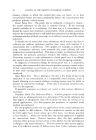
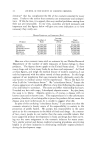
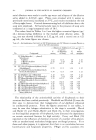
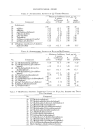
276 JOURNAL OF THE SOCIETY OF COSMETIC CHEMISTS chestnut" that has complicated the life of the cosmetic scientist for many years. I refer to the notion that cosmetics are unnecessary and unimpor- tant. If this be true, it is argued, then any medical problems arising from their use are inexcusable. In my view, cosmetics are both necessary and important and the figures below will give you some indication as to how necessary they really are: Hux4A• ExPosuP, E TO COSM• TICS (Esz.) Average Number of Frequency Daily Product Users of Use Exposures Lipstick 55,000,000 1.7/day 93,000,000 Dentifrices 148,000,000 1.4/day 207,000,000 Cleansing creams 36,000,000 1.1/day 40,000,000 Deodorants 78,000,000 0.9/day 70,000,000 Shampoos 105,000,000 0.2/day 21,000,000 Hair sprays 20,000,000 0.3/day 6,000,000 Here are a few cosmetic items with an estimate by our Market Research Department of the number of daily exposures of human beings to these products. The figures shown apply to the United States alone. To how many drugs and to how many foods do we have such exposure? As I look at these figures, and weigh the medical history of modern cosmetics, I can only be impressed with the safety record of these products. In this large segment of our population that uses cosmetics daily, obviously, every dis- ease known to medical science will be experienced. This is the basis for what I call the "coincidence factor." By "coincidence factor," I mean the chance appearance of a medical affliction of any kind following the exposure of an individual to a product. The cause and effect relationship that says: I washed my hair with soap I developed alopecia areata. So, ipsofacto, the soap is to blame. Alopecia areata is, of course, a disease with no known cause and no known cure. The soap producer is in the unfortunate position, therefore, of not being able to prove his product did not cause the disease and, more unfortunate, he is unable to suggest what did. In spite of this confusing "coincidence factor," I can assure you that the cosmetic scientist is keenly aware of his responsibility to society in the protection of public health. He accepts this responsibility in the same spirit as do his counterparts in the fields of foods and drugs. As a matter of fact, many people do not realize that the same scientific talents that have supported product developments in foods and drugs have been carry- ing out the same assignment in the cosmetic industry for many years. Very similar animal and human medical screening procedures are proving helpful in all three industries in eliminating medically suspect products during the development stage.

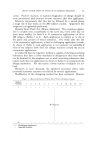
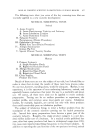
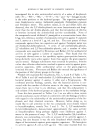
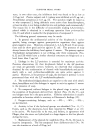
ROLE OF COSMETIC SCIENTIST IN PROTECTION OF PUBLIC HEALTH 277 The following tests show you some of the key screening tests that are routinely applied to a new cosmetic development: MEDICAL SCREENING TESTS Animal I. Acute Toxicity A. Acute Percutaneous Toxicity and Irritancy B. Acute Inhalation Toxicity C. Acute Parenteral Toxicity II. Subacute Toxicity Percutaneous (Draize Procedure) III. Ophthalmic Irritancy Rabbit Eye Test (Draize Procedure) IV. Allergic $ens•tlzat•on Guinea Pig Test V. Special Chronic Toxicity Studies MEDICAL SCREENING TESTS Human I. Primary Irritancy A. Single Occlusive Patch B. Repetitive Occlusive Patch II. Allergic Sensitization A. Repetitive Open Patch B. Repetitive Closed Patch III. Clinic Studies Product Use Tests Details of these tests are not the subject of my talk, but I should like to make it clear that in total, the results of these tests have proven value. No one test, however, standing alone, would be adequate. Rather, in my experience, it is this spectrum of tests embracing laboratory, animal, and especially human evaluations that point the way to a medically safe prod- uct. Of course, all these tests need not be applied to every cosmetic preparation. Testing can be an endless procedure so experience, the product profile, and common sense must guide our course. Inhalation studies, for example, logically, are carried out only with those products that could conceivably pose an inhalation problem. The subject of inhalation brings to mind 'a further problem from the standpoint of the cosmetic scientist carrying out his health protection role. Aerosol hair spray preparations have become a great part of the cosmetic industry. Roughly, this single product category is a one hun- dred million dollar sort of a business. In a medical article published last year, after hair spray products had been in widespread usage since 1951, two cases were reported describing thesaurosis in two female subjects. In addition to reporting the case histories of the two patients involved, animal
Purchased for the exclusive use of nofirst nolast (unknown)
From: SCC Media Library & Resource Center (library.scconline.org)