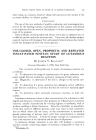
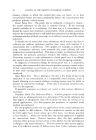
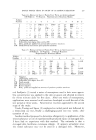
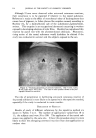
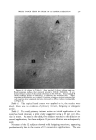
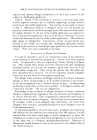
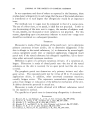
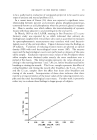
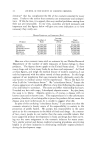
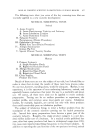
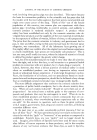
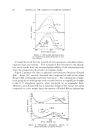
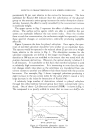
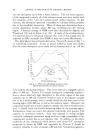
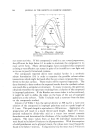
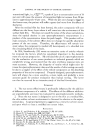
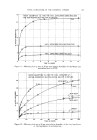
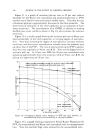
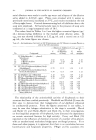
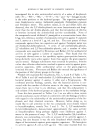
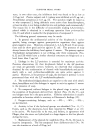
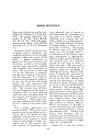
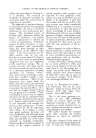
EFFECTS ON CHARACTERISTICS OF SUN SCREEN COMPOUNDS 287 sum, Hematophorphyria, Hydroa aestivale and in other dermatological con- ditions where it is desirable to screen out the longer as well as the erythe- real wavelengths. Figure 6 includes the data obtained with the 2-ethoxyethyl p-methoxy cinnamate (Giv-Tan F.). This substituted cinnamic acid derivative pos- sesses a single broad maximum with a peak at approximately 310 mt•. The curves are only slightly shifted with the different solvent systems studied however, these do not markedly modify the sun screen index since • ß 250 300 350 WAVE LENGTH Figure 6.--Ultraviolet absorption spec- tra for 2-ethoxyethyl p-methoxy cinna- mate in various solvents. the sunburn region would be completely superimposed by the absorption band. The solvent effect, typical of solvents of decreased polarity, is clearly shown by the progressive increase in fine structure in the alcohol, isopropyl palmirate and the mineral oil spectra. Figure 7 shows the absorption data obtained for p-amino benzoic acid. The esters of this compound were shown in Figs. 1 and 2. However, the free compound is known to exist as a dipolar zwitter ion form. Robinson, (15) reports that the compound was approximately 83 per cent in the di- polaf form, and 17 per cent in the neutral form. The transfer of the com- pound to nonpolar solvents will tend to reduce the number of molecules in the dipolar form. This would tend to explain the different shifts and ab- sorption peaks found in the present instance. The solution of the free acid in water has a pH of 3.7. The formation of the sodium salt by dissolving the acid in sodium borate solution, pH 9.2, shifts the curve far to the lower wavelengths and virtually destroys its

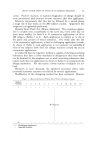
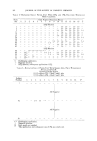
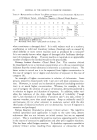
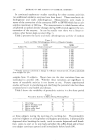
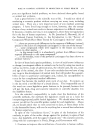
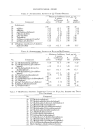
288 JOURNAL OF THE SOCIETY OF COSMETIC CHEMISTS 1.5 I PE AL 'IP 300 3,20 WAVE LENGTH (m•) Figure 7.--Ultraviolet absorption spectra for p-amino benzoic acid in vari- ous solvents. sun screen activity. If this compound is used in a sun screen'preparauon, the pH must be kept below 4.5 in order to maintain the compound in its most active form. Many dermatologists have considered this compound as being a very effective sun screen in spite of its instability to sun light and to its use in poorly formulated systems. The compounds reported above were studied further in a synthetic sebum formulation (16) in order to examine the possible solvent-solute interactions which might be found after the sun screen compound has trans- ferred to the skin surface. These results will be reported separately. The data obtained to date confirm the expected results that the synthetic sebum acts much like a semipolar environment. In many instances, the spectrum obtained resembles the spectrum resulting from a solution of the compound in isopropyl palmitate. If the Kumler sun screen index is to be continued, it might be well to define the index on the basis of the use of isopropyl palmitate as the solvent. Table 1 includes such a summary from the data on the compounds studied. Column 2 of Table 1 lists the optical density at 308 mu for a 1 per cent solution of the compound in isopropyl palmitate and at a path length of 0.1 mm. This path length is equivalent to 100 microns. Application of a preparation will result in a much thinner path length. Ippen (17) incor- porated radioactive diiodo-oleic acid as a tracer into several cosmetic formulations and determined the thickness of the residual fihns on human subjects. The mean values from at least 60 individual measurements were found to be below 10 microns in all preparations. With the exception of solid petrolatum and a glycerol cream, the values were most frequently found to be below 5 microns. Using mineral oil, the mean was 2-8 microns
Purchased for the exclusive use of nofirst nolast (unknown)
From: SCC Media Library & Resource Center (library.scconline.org)