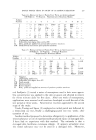
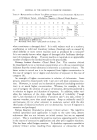
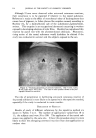
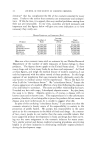
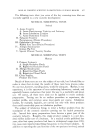
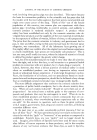
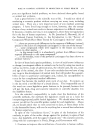
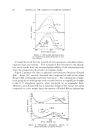
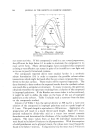
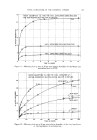
264 JOURNAL OF THE SOCIETY OF COSMETIC CHEMISTS Halvorson and his colleagues at Michigan that similar inhibitions in ternIs of growth of micro6rganism were observed. An interesting fact was discov- ered when these studies were compared. It was found that the micro- organisms when compared with the leucocytes and erythrocytes were 300 times more sensitive to hexetidine showing the selectivity of the anti- bacterial agent for the microbial species. Thus indicating at the cellular level that mammalian cells would not be damaged in potential use concen- tration (3). Turning now briefly to a consideration of the practical advantages of the enzymes as methodological tools, several properties make them highly ad- vantageous in the search for medicinal agents, or where applicable, in clinical testing procedures. First, enzyme methods are specific. A given enzyme will respond ordinarily only to the correct substance. Second, enzyme procedures are the most sensitive of the analytic procedures with few exceptions in the biologic field. This frequently makes possible the facility for multiple tests using several systems or methods for assay on small amounts of materials. Frequently, histochemistry reveals with clarity enzymes at the micro micro level of substrate in small samples of tissue. Responses to inhibitory agents may also be shown in this manner. Let us consider very briefly the nature of the human oral cavity in order to better understand the application of enzyme measurements to be dis- cussed. The oral cavity is an area of the human body composed of a variety of tissues, hard and soft, glandular secretions and excretions supplying the ubiquitous environment for all these tissues. Cellular components de- rived from the epithelial layers of the mucous membranes and gingival tissues as well as the tongue, are found in whole saliva. Included in the cells of mammalian source are leucocytes and erythrocytes. Also habiting the oral cavity. under both "normal" and "abnormal" conditions are various forms of the micro flora and fauna. It is therefi3re implicit that many forms of "normal and abnormal" metabolism coexist in the "normal" state. They also coexist for varying periods of time in disharmony during clinical and subclinical phases of the "abnormal" state. Since all of these tissues and cells pass through the cycles of reproduction and destruction they have become fruitful areas for the study of anabolic and catabolic processes, associated with various physiological activities found in the human. The comparison of these processes can be best described at the cellular and sub-cellular level by evaluating the enzyme systems at their sources with their relationship to, or with the state of the cells or tissues being observed. Some of these enzymes are secreted or excreted from the salivary glands or contained in the cells which make up the various tissues of the oral cavity. The other enzymes seem to have as their source micro- organisms wlfich are normal inhabitants of the human oral cavity or those

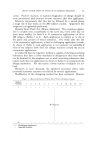
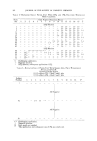
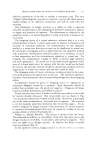
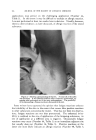
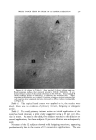
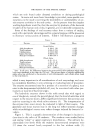
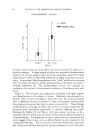
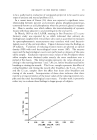
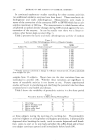
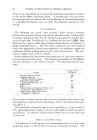
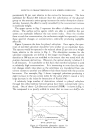
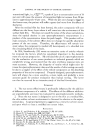
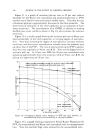
THE BEAUTY OF THE ENZYME SCREEN 265 which are only found under diseased conditions or during pathological states. As more and nqore basic knowledge is provided, more specific con- notations can be made concerning the desirability or undesirability of cer- tain enzyme activities in the oral cavity. At the present time the simplest working hypothesis would be, that the enzyme by-products of the bacterial invaders of the human oral cavity, in general, are not desirable components. Some of the findings of oral enzymes taken from a variety of studies, each with a particular advantage and for a special purpose will be presented to illustrate various points of interest. Table 1 will illustrate a property TABLE 1 Enzyme Range Mean Parotid Saliva Acid phosphatase 0.100-1.130 0. 432 Total esterases 0.006-0. 216 0. 050 Cholinesterase 0. 013-0. 860 0.036 Lipase (laurase) 0.000-0.165 0.032 Beta-glucuronidase 0.000-350.0 84.85 I•hole Saliva Acid phosphatase 0.50 -11.0 3.94 Total esterases l. 20 -13.40 3.69 Cholinesterase 0. 046-0. 212 0. 105 Lipase (laurase) 0.60 -5.00 1.55 Beta-glucuronidase 74.0 -1000.0 462.8 Note: In all cases, the differences between the mean parotid saliva and mean whole saliva levels were significant to less than the 1% level. The greater degree of activity exhibited by whole saliva was attributed to the presence of oral micro•Srganisms and cellular debris found in the total mixture. which is very important in all considerations of oral enzymology and must be considered, therefore, in any screening or evaluating type of procedure. The enzyme encountered may be a product of a secretion of a gland, may exist in the desquamated epithelial cell, may be associated with other par- ticulates or may be of bacterial origin. The hydrolytic enzymes shown in this table reveal that with regard to one of the glands, namely the parotid gland, that the level of activities with •espect to the enzyme shown, differs significantly between the secretion and activity occurring in the whole saliva mixture (4). The interpretation of the enzyme titers must always be evaluated in light of their source. The glandular and tissue sources may in the long run reflect systemic changes while microbiological sources may reflect changes induced by bacterial in- vaders. Figure 1. This is a graphic demonstration of the changes in hyaluroni- dase titer in the saliva of 30 students. The students were studied before and during "colds" or upper respiratory disturbances. The salivary hy- aluronidase titer levels while the students demonstrated symptoms were 3.2 times the normal level compared to the bar without colds (5).
Purchased for the exclusive use of nofirst nolast (unknown)
From: SCC Media Library & Resource Center (library.scconline.org)