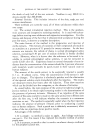
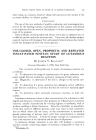
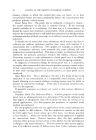
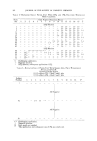
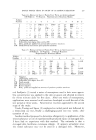
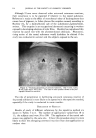
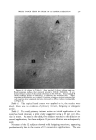
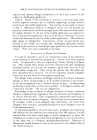
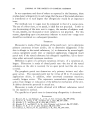
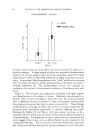
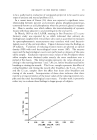
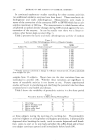
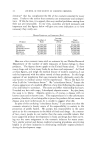
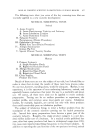
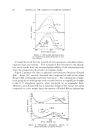
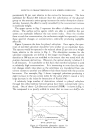
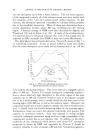
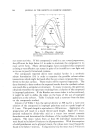
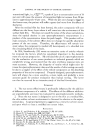
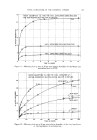
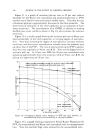
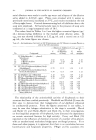
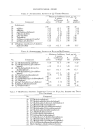
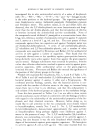
EFFECTS OF CHARACTERISTICS OF SUN SCREEN COMPOUNDS 285 proximately 23 per cent relative to the curves for benzocaine. The data published for Escalol 206 indicate that the substitution of the glucosy[ group on the aromatic amino group increases the molar absorption charac- teristic however, the effect is nearly cancelled by the concomitant increase in molecular weight. The upper curves in Fig. 2 represent the effect of different solvent ad- ditives. The surface active agents which are able to solubilize the sun screen can markedly influence the sun screen index. Since the micelles form at such low concentration, the surfactants might be expected to cause these spectral changes at concentrations ordinarily producing negligible effect (8). Figure 3 presents the data for phenyl salicylate. Once again, the spec- trum of menthyl salicylate should be very similar on an equimolar basis. The spectra would be expected to be reduced about 23 per cent on a weight basis, relative to the curves in Fig. 3. The absorption maxima for the saUcylate compounds are shifted to the longer wavelengths. The optical densities at 308 m/• are not modified to the extent that was noted with the p-amino benzoate derivatives. However, the optical density is below 0.3 in all instances. It is probably on this basis that menthyl saUcylate is used at relatively high concentrations. It is interesting to note that the spec- tral changes which take place as the salicylates are transferred from one solvent system to another are different than those found with the p-amino benzoates. For example, Fig. 3 shows isopropyl palmirate producing a slight increase in the sun screen index for the salol, while it caused a very large decrease in the index for benzocaine of Escalol 106. A relatively large number of derivatives related to phenyl salicylate through the ortho hydroxy benzoyl group have been commercially intro- duced. One of these--2,4 dibenzoyl resorcinol (DBR)--4s shown in Fig. 4. The compound is so poorly soluble in water that we were not able'to ob- '7 •m O0 .__1 u os -- o 0.0 2•0 ß [ c c 3O0 350 380 WAVE LENGIH Figure 4.--Ultraviolet absorption spectra for 2,4-dibenzoyl resorcinol in various solvents.

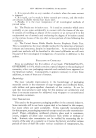
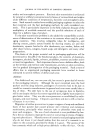
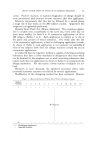
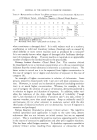
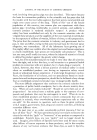
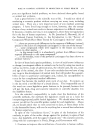
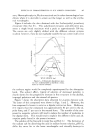
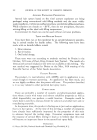
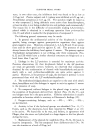
286 JOURNAL OF THE SOCIETY OF COSMETIC CHEMISTS tain the absorption curve from a water solution. The sun screen capacity of the compound in nearly all of the solvents tested were very similar with the exception of the $ per cent sodium lauryl sulfate solutions. In this instance, the absorption spectrum is modified in a unique fashion, possibly due to the micellular interaction. Many of these new derivatives show a second absorption maxima above 300 m•, extending into the tanning region. Chemical analogs of DBR have been discussed by Signore and Woodward (12) and by Knox, et al. (13). A study of the existing absorp- tion spectral data for the group indicates that none of the analogs may be expected to differ markedly from DBR in their sun screen effectiveness. The alkyl phenyl benzotriazole derivative, Tinuvin P, shown in Fig. $ is an interesting compound. It was so poorly soluble in water and alcohol that the water absorption curve could not be obtained and a 1 cm. cell had 06 [ ..... .•_ 04-- __ 02 • 0 4 • / 'NN MO • p 250 •0 350 ado WAVE LENGTH (m•) Figure 5.•Ultraviolet absorption spectra for alkyl phenyl benzotriazole in various solvents. to be used for the alcohol solution. The curves indicate a negligible solvent effect at 308 m•. Tinuvin P is unique among the compounds studied in that it shows relatively high absorption in the entire region of the solar radiation up to 380 mm Cosmetic chemists may at first glance consider this to be a disadvantage, since it would shield the skin &om most of the tanning region (320-400 m•) as well as the sunburn region. However, the compound would have cosmetic appeal to people who tend to keckle easily, since it should block the &eckle-darkening effect of the tanning region. Furthermore, there are many fair-skinned individuals who possess little capacity to synthesize melanin. Such skin exposed to strong sunlight eventually undergoes premature aging and has a high potentiality of de- veloping skin cancers due to sun exposure (14). In addition to the above conditions of use, compounds which possess such broad U.V. absorption properties as shown by'DBR and especially by Tinuvin P should be uniquely valuable in cases of people suffering kom Xeroderma pigmento-
Purchased for the exclusive use of nofirst nolast (unknown)
From: SCC Media Library & Resource Center (library.scconline.org)