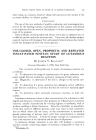
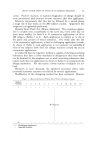
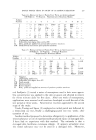
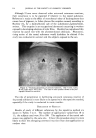
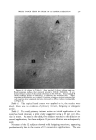
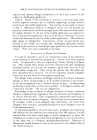
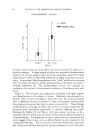
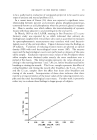
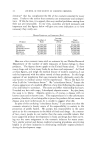
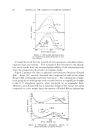
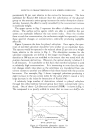
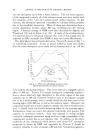
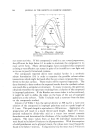
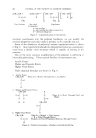
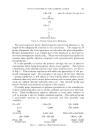
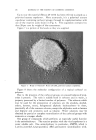
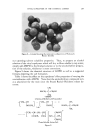
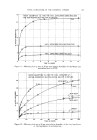
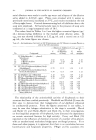
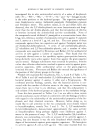
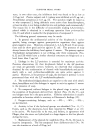
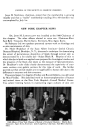
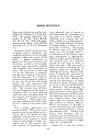
FHE BEAUTY OF THE ENZYME SCREEN 27I to be a useful tool in evaluation of compounds projected to be used in some types of anxiety and mental problems (15). In a recent issue of Cancer (16) there was reported a significant inter- relationship between parotid and prostatic gland, phosphomonoesterase, commonly known as acid phosphatase when the prostatic gland is neoplas- tic. Here is another case which reflects the interrelationship of systemic tissues with those adjacent to and secreting into the oral cavity. In March, 1959 at the I.A.D.R. meeting in San Francisco (17) a pre- liminary study was reported by us which indicated that salivary de- hydrogenases coupled with tetrazolium salts used as quantitative measures by spectrophotometric measurements may correlate with total bacterio- logical count of the oral microflora. Figure 6 demonstrates the findings on 29 subjects. Variations of reducing enzyme means are plotted as optical density (OD) with total bacteriological count means (10ø). The enzyme assay and the bacteriological counts were performed on aliquots of the same saliva sample. Each point represents mean values of the 29 subjects whose saliva samples were obtained under exactly the same conditions over a period of five hours. The initial sample represents the value obtained on arising in the morning between 7 and 7:30 a.m. before breakfast and before brushing or rinsing the mouth. The 8 a.m. sample represents the effect of eating breakfast and rinsing the mouth after breakfast, the 9 a.m., 10 a.m. and the 12 a.m. samples show the effect four hours after breakfast and rinsing of the mouth. interpretation of these data indicates that there may be a strong correlation of the mean values of the reducing enzyme com- plex and the total bacteriological count mean. Further work is presently under way to evaluate these findings in larger groups of subjects. .250- .200- .I 50- .o5o. .000 0 0.05 0.10 0.15 0.20 0.2•5 0.50 VOLUME SALIVA (ml) Figure 7.

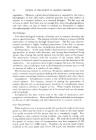
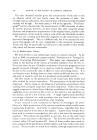
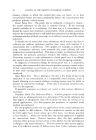
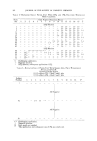
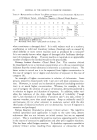
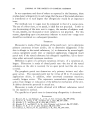
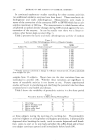
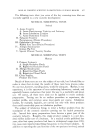
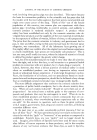
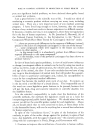
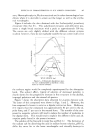
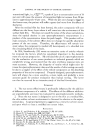
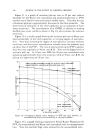
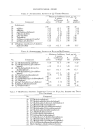
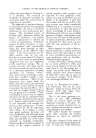
272 JOURNAL OF THE SOCIETY OF COSMETIC CHEMISTS In continued exploratory studies searching for other enzyme activities two additional oxidative enzymes have been found. These were lactic de- hydrogenase and malic dehydrogenase. Measurements were made in terms of the conversion of the coenzyme DPN to DPNH which has an ab- sorption maximum at 340 m/a. The measurements in whole human saliva are plotted as optical density changes during 1200 seconds against the con- centration of the enzyme. As can be readily seen there was a linear re- action other factors kept constant (Fig. 7). Table 2 presents the lactic and malic dehydrogenase activity of random T•.B I.E 2 Lactic and Malic Dehydrogenase Activity of Random Samples LDH MDH Subject No. Velocity Constant* Velocity Constant* 1 0.058 0.038 2 0. 073 0. 050 3 0.04O 0. 020 4 0. 094 0.010 5 0.095 0.035 6 0. 084 0.045 7 0. 072 0.014 8 0.058 0.023 9 0.131 0.022 10 0. 045 0. 037 11 0. 040 0.021 * Velocity constant calculated as change in O.D./per minute/per mi. of saliva calculated from straight line plot. samples from 11 subjects. Shown here are the titer variations from one individual to another (18). Whether these variations are significant in terms of metabolic activity is not known as yet. Future experimental studies will assist in elucidating and clarifying the potential role that these enzymes have in oral health and disease. Table 3 shows the variability of proteolytic activity in a five-hour period 'I'^ m.•: 3 Proteolytic Activity in Saliva During Morning Hours A B C 1. On arising 83 56 66 2. Before brushing teeth 18 7 0 3. Before breakfast 11 11 23 4. Before coffee break 22 32 5. Before lunch 29 -'8 27 on three subjects during the morning of a working day. The proteolytic activity is highest on arising before oral hygiene procedures is dramatically depressed after brushing the teeth tends to remain depressed until break- fast seems to start on its way back up before the coffee-break and at least one subject continues upward until immediately before lunch (19).
Purchased for the exclusive use of nofirst nolast (unknown)
From: SCC Media Library & Resource Center (library.scconline.org)