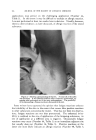
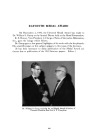
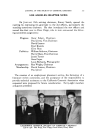
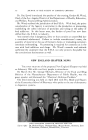
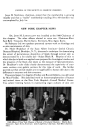
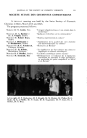
316 JOURNAl. OF THE SOCIETY OF COSMETIC CHEMISTS Dr. Paul Jewel introduced the speaker of the evening, Gordon R. Wood, Chief of the Los Angeles District of the Department of Health, Education, and Welfare, Food and Drug Administration. Mr. Wood outlined the jurisdiction of the F.D.A. With food, the prime consideration of the Agency is sanitation in the production or processing, establishing the safety tolerance of pesticides and ruling on the safety of food additives. In this latter area, the burden of proof has now been shifted from the F.D.A. to industry. Any cosmetic that is dangerous, dirty or that contains an uncertified dye is considered adulterated. Failure to include manufacturer's name, the quantity of material or the use of fantastic claims or misleading containers constitute misbranding. No pretesting is required for cosmetics as is the case with food additives and drugs. Mr. Wood's remarks and attitude confirmed the statement that the F.D.A. not only protects the public but the conscientious businessman as well. NEW ENGLAND CHAPTER NEWS THE FIRST MEETING of the proposed New England Chapter was held on February 18th with over forty people in attendance. On March 31st Mr. George Michaels, Director of the Food and Drug Division of the Massachusetts Department of Public Health, was the guest speaker and discussed the "Chemical Additives Problem." The third meeting was held on April 28th with Drs. Beale and Skauen of the Connecticut School of Pharmacy who spoke on the use of ultrasonics in dispersion systems. NEW ENGLAND CHAPTER OFFICES FOR 1960 Left to right: Dr. Richard Faust, Chairman-Elect, Myron Slotsky, Secretary, Jesse H. Starkman, Chairman, Donald Kirby, Treasurer.

316 JOURNAl. OF THE SOCIETY OF COSMETIC CHEMISTS Dr. Paul Jewel introduced the speaker of the evening, Gordon R. Wood, Chief of the Los Angeles District of the Department of Health, Education, and Welfare, Food and Drug Administration. Mr. Wood outlined the jurisdiction of the F.D.A. With food, the prime consideration of the Agency is sanitation in the production or processing, establishing the safety tolerance of pesticides and ruling on the safety of food additives. In this latter area, the burden of proof has now been shifted from the F.D.A. to industry. Any cosmetic that is dangerous, dirty or that contains an uncertified dye is considered adulterated. Failure to include manufacturer's name, the quantity of material or the use of fantastic claims or misleading containers constitute misbranding. No pretesting is required for cosmetics as is the case with food additives and drugs. Mr. Wood's remarks and attitude confirmed the statement that the F.D.A. not only protects the public but the conscientious businessman as well. NEW ENGLAND CHAPTER NEWS THE FIRST MEETING of the proposed New England Chapter was held on February 18th with over forty people in attendance. On March 31st Mr. George Michaels, Director of the Food and Drug Division of the Massachusetts Department of Public Health, was the guest speaker and discussed the "Chemical Additives Problem." The third meeting was held on April 28th with Drs. Beale and Skauen of the Connecticut School of Pharmacy who spoke on the use of ultrasonics in dispersion systems. NEW ENGLAND CHAPTER OFFICES FOR 1960 Left to right: Dr. Richard Faust, Chairman-Elect, Myron Slotsky, Secretary, Jesse H. Starkman, Chairman, Donald Kirby, Treasurer.
Purchased for the exclusive use of nofirst nolast (unknown)
From: SCC Media Library & Resource Center (library.scconline.org)