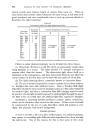
650 JOURNAL OF THE SOCIETY OF COSMETIC CHEMISTS stained specimens produce a similar density through the medium of mono- chrome photography, and in such a case as this a filter with a complementary colour must be chosen in order to create a difference in tones. COLOUR FILM We all know that colour photomicrography has a well established place in the laboratory, and it is also well known that satisfactory colour photo- micrographs can be obtained. However, the basic problems and difficulties connected with this application of photography have produced a certain amount of confusion to some, while others, perhaps professional photo- graphers, look upon this specialized field with a certain amount of misgiving. There are others, usually those who are used to taking simple colour shots while on holiday when fair results are obtained with little "knowhow", who definitely under-rate this branch of photography. It is not surprising that when such folk are working with the microscope/camera they are faced with failures, in spite of the fact that they are using materials which they are used to handling. I feel that too often we have cause for regrets, and postmortems which could be avoided, if we exercised more thought before the shutter is fired and the exposure made. Reversible and negative film Although reversible films differ from negative colour films each produces colours which are complementary to the other. Reds are green on the negative colour film and the negative-positive process enables controllable colour and black and white prints to be made, whilst the reversible colour produces slides suitable for projectors. The reversible film is usually employed when the operator does not process his own material and is not therefore in control of all the factors which determine the results. After making trial exposures, and after having them processed at a processing house, which could be the room next door, he makes adjustments, if necessary, to ensure good results. Colour of light Sensitivity of "light colour" is characteristic of reversible film, forcing us to a consciousness of colour casts, which are seen far too often in the final transparency. The results of the filament lamp when viewed by a light source of daylight colour or colour balance, often reveal that they are not too good. If the same transparency is viewed with an ordinary tungsten filament lamp the colours appear to change towards the yellow bands. What has really happened is that the colour temperature of the viewing source has changed. This so-called colour temperature of a source is expressed in degrees Kelvin(øK). This then is a measure of the light colour (Table I). Low colour temperature expresses yellowish light, while

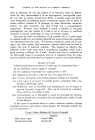
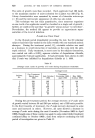
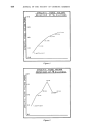
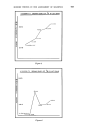
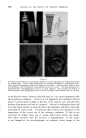
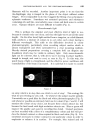
PHOTOMICROGRAPHY AND THE PHOTOMICROGRAPHER 651 high colour temperature is expressed by a bluish tint. Both of these will be encountered during the course of making colour photomicrographs, and so before venturing into this field it is advisable to determine the colour tem- perature of the light source in use. Table I The approximate colour temperature of various light-sources Candle flame (yellow light) 2,000 Incandescent Bulb 230V 60W 2,500 Microscope Bulb 6V 12W 2,800 Microscope Bulb 6V 30W 3,000 Microscope Bulb 12V 100V 3,200 Projection Bulb 3,200 Clear Flashbulb 3,400 500W Photoflood Bulb 3,450 Warm fluorescent tube 3,500 Winter sunlight 5,000 Flash tube 5,500 Haze sunlight 5,800 Blue flashbulb 6,000 Xenon lamp 6,000 Daylight, blue sky (blue light) 15,000 It can be seen from Table I! that if the colour balance of the source does not correspond with that of the colour film, it is necessary to use a correction filter (Figs. 7 and 8), and if such a filter is not used it will not be possible to produce high quality transparencies. Over the years I have discovered that 6 volt 12 and 30 watt lamps give me good results provided, of course, that all other considerations have been attended to. It should be borne in mind, however, that during the winter months voltage changes can affect the colour balance of the photomicrograph, and when this occurs it is particularly noticeable in the colour background areas, nevertheless, a constant standard can be obtained if the source is modified by the correct filter. As seen in Table I, one source will produce a blue effect, whilst another will give a yellow effect. The photomicrographer must adjust this balance and the use of filters in colour work needs much more care than in black and white. More experiments are usually called for than when filtering light for black and white work. A change of colour temperature can also be brought about in the ap- paratus itself. This is most evident when switching from low power, with- out a substage condenser, to high power, with the use of the substage. Such a change, perhaps unnoticed by the eye, is due to the many optical elements used in high power photomicrography. Theoretically, the correct filter for the particular source required may not correct the light falling on the film. Therefore, some thai exposures may be necessary. It should, of course, be borne in mind that if there is a yellow cast a blue filter is needed, and visa versa. I suggest that a strict log is kept, giving details of the
Purchased for the exclusive use of nofirst nolast (unknown)
From: SCC Media Library & Resource Center (library.scconline.org)