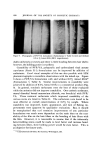
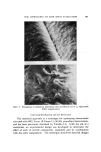
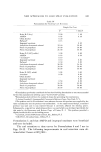
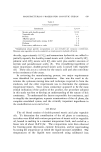
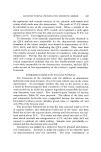
638 JOURNAL OF THE SOCIETY OF COSMETIC CHEMISTS formed in situ during the batch process. It is this product around which this study is keyed and will hereinafter be referred to as the "cream" or "product." At the present time, the cream is manufactured in several 1000-gal- lon batches per day. The procedure consists of the separate preparation of the oil and aqueous phases, the blending of these phases in a combina- tion kettle to form an emulsion, the cooling of the blended materials while stirring, the filling of the product, the refrigeration of the pack- aged product, and, finally, warehousing. During the blending procedure, emulsion formation, and subsequent cooling, certain constituents of the cream crystallize. This crystalliza- tion is believed to be vital for the particular consistency and texture .that is so characteristic of the product in question. Thus, the consistency and texture of the product must be maintained and was the parameter which received considerable attention in the evaluation of the cream itself and its ability to be continuously processed. In order to meet marketing requirements, it became necessary to consider increasing the present manufacturing capacity. Realizing the current drawbacks of the present batch system, such as long preparation time, exposure of hot product to varying holding periods due to filling line stoppages, undue product waste, cleaning difficulties, and operator errors, it was decided to study the feasibility of manufacturing by a continuous process. In order to accomplish this objective it was im- portant to study the formulation itself in terms of chemistry, emulsifi- cation behavior, and crystallization. Before proceeding, it is well to further define what the term continu- ous processing means in this report. By continuous processing we mean continuous in-line manufacture or continuous flow processing. Two liquid streams, one aqueous and one oily, are brought together under continuous flow to form the emulsion with the finished product ulti- matdy being supplied without process interruption. OBSERVATION AND CALORIMETRY MEASUREMENTS OF CRITICAL CRYSTALLIZATION PHENOMENA Product Composition The composition of the cosmetic cream under study is presented in Table I. As can be readily noted, the nature of the emulsion forma- tion and the crystallization behavior of the cream depend on the ac- tion of several of the constituents. Both lime water (calcium hy-

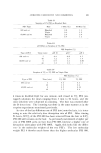
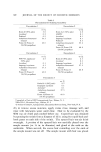
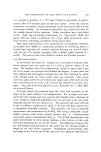
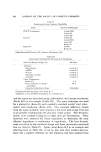
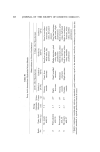
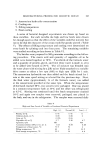
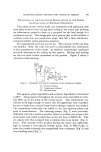
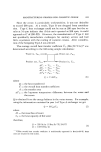
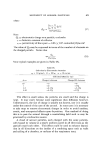
MANUFACTURING PROCESS FOR COShIETIC CREAM Table I Cream Composition" Constituent % w/w 639 Stearic acid, double-pressed 12-14 Vegetable oils 5-6 Protein 0.5 Alkylene glycol 1.0 Ammonium hydroxide, strong, U.S.P. 1.0 Perfume 2.0 Lime water, sufficient to make 100.0 "Constituents whose specific compositions are not revealed are company confidential. However, any vegetable oil, such as salad oil, or simple protein or glycol will work. droxide, approximately 0.15%) and ammonium hydroxide are added to partially saponify the double-pressed stearic acid (which is actually 50% palmitic acid, 40% stearic acid, 6% oleic acid, plus smaller amounts of myristic and pentadecanoic acids) (2). The crystallizing ingredient of major importance, double-pressed stearic acid, is mixed with vegetable oils. These oils act as a solvent for the stearic acid and also contribute to the consistency of the cream. In reviewing the manufacturing process, two major requirements were identified for process optimization. One was the need to de- termine the optimum mixing time and technique required to form the emulsion, and the other requirement was to determine the optimum temperature history. Since cream consistency appeared to be the most critical indication of the quality of the product, the procedure adopted in this study was first to develop an understanding of the nature of this consistency. To understand the factors responsible for consistency, and to simplify the investigation, separate examinations of the oil phase, the complete emulsified system, and the critically important ingredients in the emulsification were carried out. Oil Blend The oil blend consists of double-pressed stearic acid plus vegetable oils. To determine the contribution of the oil phase to consistency, test tubes were filled with various proportions of stearic acid to vegetable oil, heated to melting in a constant temperature bath, and cooled at a linear rate of about 16.6øC/hr. The compositions were then observed for freezing point depression, eutectic formation, and/or supercooling by noting the temperature at which the liquid mixtures solidified. The temperatures of the liquids were monitored using calibrated iron
Purchased for the exclusive use of nofirst nolast (unknown)
From: SCC Media Library & Resource Center (library.scconline.org)