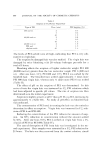
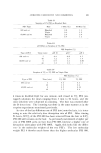
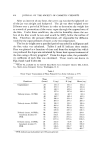
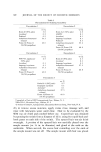
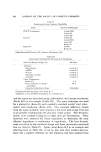
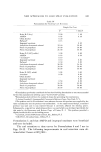
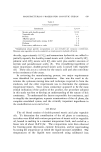
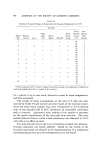
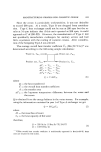
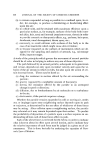
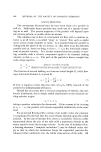
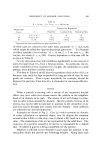
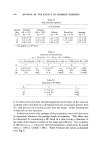
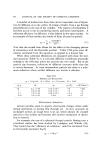
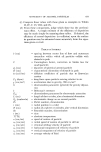
640 JOURNAL OF THE SOCIETY OF COSMETIC CHEMISTS constantan thermocouples connected to a multipoint recorder. Ratios of double-pressed stearic acid to vegetable oil lower than the 2.54 ratio in the cream formulation were tested because some of the slightly soluble stearic acid can be leached from the oil phase droplets dispersed in the cream emulsion, thus changing the original ratio. Furthermore, reac- tion of double-pressed stearic acid with ammonia may be expected to extract proportionally more stearic acid from small emulsion droplets than from larger droplets, creating a further source of oil/stearic acid ratio alteration. Table II lists the ratios and the comments on the solidification behavior of the oil blend observed in these experiments. Table II Solidification Behavior of Various Mixtures of Stearic Acid and Vegetable Oil Ratio of Acid/Oil Comments on Solidification 2.54 Rapid solidification at 52.6øC, hard crystal formation 2.00 Rapid solidification at 51.7øC, hard crystal formation 1.67 Rapid solidification at 50øC, moderately hard crystal formation 1.00 Rapid solidification at 49 øC, moderately hard crystal formation All mixtures were liquid at 54.4øC and were solid by 49øC. No reluctance to solidify was noted. The characteristic consistency found in the cream during the filling process, which occurs between 40-42øC, is one of a thick, smooth texture. Since the oil blend solidifies at 49øC or above, it must be dispersed in the cream in the form of very fine particles or crystals. However, the presence of many small crystals is thermodynamically unstable and leads to the gradual growth of larger ones. A structure that conceivably takes days to develop fully can be built up in the cream. Whether this mechanism was the one responsible for the characteristic consistency of the cream, however, remained to be proved. Complete Emulsified System Samples of cream taken from a normal production-size batch of product were examined to obtain heat-energy information and to de- termine the reversibility of the characteristic consistency forming mecha- nism.

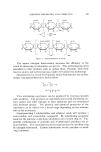
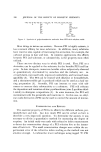
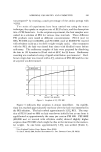
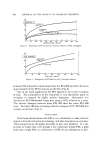
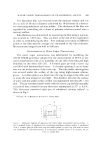
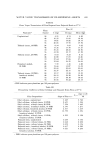
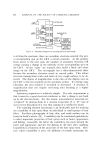
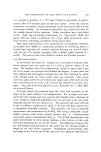
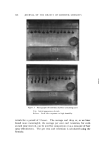
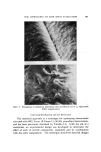
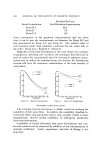
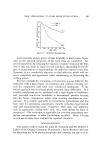
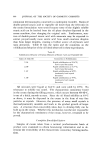
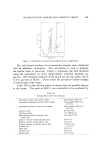
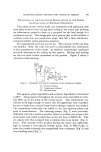
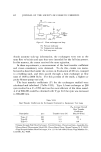
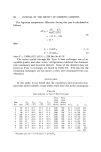
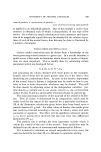
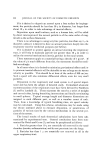
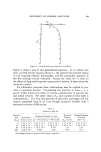
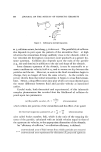
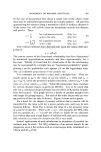
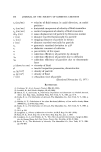
MANUFACTURING PROCESS FOR COSMETIC CREAM 641 t.500- 0.730 ' l igure 1. Calorimetric measurements of specific heat vs. temperature The calorimetric analyses of representative samples were conducted with an adiabatic calorimeter. The calorimeter is used to measure the specific heats of materials. Figure 1 represents the data obtained using the calorimeter or QTA (Quantitative Thermal Analysis) ap- paratus. The important features of the graph are the two peaks, one at 37.4øC and one at 56.20C. These reveal the presence of phase changes oF constituents of the cream. Table III lists the melting points of species that are possibly present in the cream. The peak at 56.2øC was concluded to be produced by Table III Melting Points of Pertinent Species Ammonium oleate: oleic acid complex Ammonium palmitate.palmitic acid complex Ammonium stearate:stearic acid complex Calcium oleate Calcium stearate Equimolar mixture of palmitic acid- stearic acid Eutectic mixture of oleic-palmitic acid Eutectic mixture of oleic-stearic acid Eutectic mixture of palmitic-stearic acid Linoleic acid Oleic acid Palmitic acid Stearic acid Decomposes 70øC (3) Decomposes 100øC (3), 89øc (5) Decomposes 110øC (3), 93øC (5) 83-84øC (3) 179-180øC (3) 55.5-56.5øC (4) 12øC (4) 13øC (4) 54-55øG (4) -•tøc (3) 14øc (3) 64øc (3) 69.4oc (3)
Purchased for the exclusive use of nofirst nolast (unknown)
From: SCC Media Library & Resource Center (library.scconline.org)