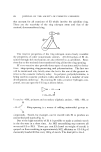
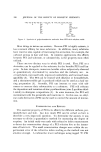
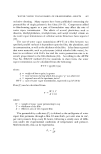
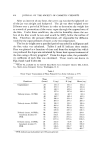
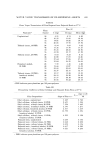
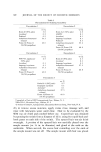
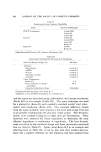
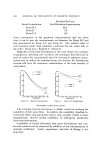
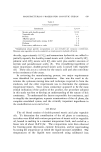
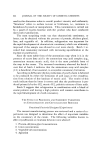
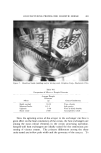
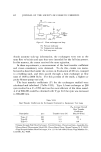
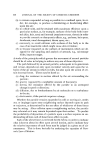
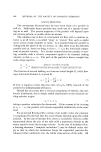
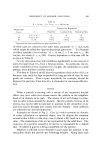
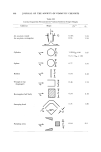
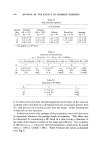
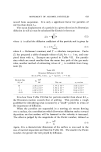
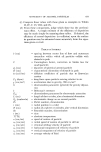
668• JOURNAL OF THE SOCIETY OF COSMETIC CHEMISTS Table III Inertial Impaction Parameters for Various Collector Target Shapes Collector Shape ½•t 1/2as Jet on plate, round 0. 373 Jet on plate, rectangular 0.55 Cylinder ¾---•-•,- O• ½ 1 . 253N/•-0.1.65150NR, 0.2 •- 0.77 Sphere ¾o Ribbon • /9 0.54 Vo Trough or cup I • 0.46 (impinger) ¾o = ,, • •,.•-- /9 O. 54 Rectangular half body ¾o t Sweeping bend • 0.71 Focusing away =_ • tQ 0.14 ¾o T 1.24 1.24 1.91 2.22 1.91 2.32 1.80 2.9

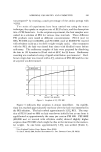
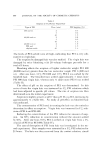
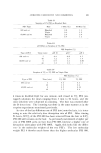
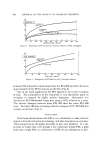
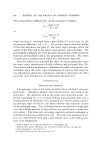
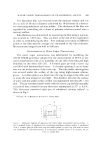
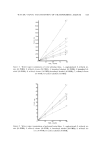
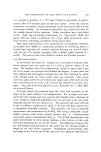
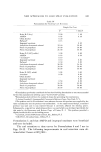
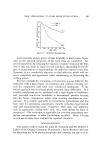
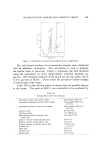
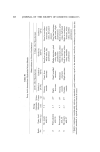
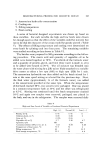
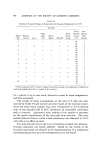
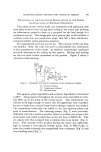
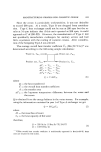
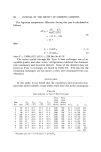
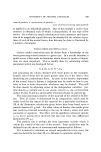
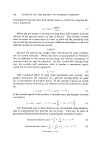
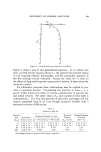
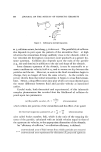
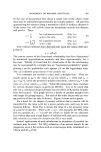
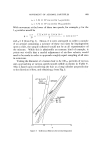
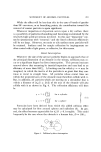
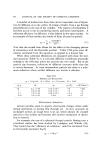
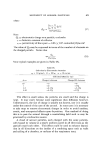
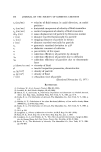
MOVEMENT OF AEROSOL PARTICLES 669 v0 = 1.24 X 10⁷ crn/sec for 1-• particles v0 = 5.72 X 10 • cm/sec for 50-• particles With movement at the lower of these two speeds, for example, q, for the 1-v particles would be vo.r 5.72 X 103 X 3.54 X 10 -6 • - D - 2 = 1.01 X 10 -• and v • 0 (from Fig. 3). Hence, if it were attempted to collect a sample of an aerosol containing a mixture of these two sizes by impingement upon a slide, the sample collected would not be at all representative of the mixture. While this is admittedly an extreme kind of example, it points out vividly that a careful adjustment of air flow velocity would need to be made in order to approach roughly equal sampling of all sizes in a mixture. Taking the diameter of a human hair to be 100 v, particles of various sizes approaching at various speeds would collide as shown in Table V. This is based upon considering the hair as a long cylinder perpendicular to the direction of flow, and obtaining q, from Fig. 3. JET ON PLATE Round CYLINDERS I00 Re = I0 Re= 0.2 0.1 a/2 1 10 ,1, Figure 3. Collection efficiency by inertial impaction
Purchased for the exclusive use of nofirst nolast (unknown)
From: SCC Media Library & Resource Center (library.scconline.org)