DIE VERTRfi•GLICHKEIT VON HEXACHLOROPHEN 305 (10) Report, Industrial Bio-Test Laboratories Inc. to Givaudan Corp. No. E 9 737 A, September 1, 1971. (11) Mitteilung yon Sterling-Winthrop Research Institute. (12) Reports, Industrial Bio-Test Laboratories Inc. to Givaudan Corp. No. E 9 066, November 12, 1970 No. 9253, February 25, 1971. (13) Report, Industrial Bio-Test Laboratories Inc. to Givaudan Corp. No. P 9050, February 12, 1971. (14) Report, Industrial Bio-Test Laboratories Inc. to Givaudan Corp. No. J 9051, August 3, 1971. (15) Report, Industrial Bio-Test Laboratories Inc. to Givaudan Corp. No. E 9514, June 11, 1971. (16) Report, Industrial Bio-Test Laboratories Inc. to Givaudan Corp. No. B 9047, February 15, 1972 No. J 9048, February 1, 1972. (17) Stoughton, R. B., Arch. Dermatology 94, 657 (1965). (18) Taber, D., Lazanas, J. C., Fanchef, D. E., and Calandra, J. C., J. Soc. Cosmetic Chemists 22, 369 (1971). (19) Compeau, G. M., jr. Amer. pharmac. Assoc. 49, 574 (1960). (20) Manowitz, M., and Johnston, V. D., jr. Soc. Cosmetic Chemists 18, 527 (1967). (21) Mitteilung von H. I. Maibach, University of California in San Francisco. (22) Mitteilung von Sterling-Winthrop Research Institute. (23) Mitteilung von Amour-Dial Inc. (24) Ulsamer, A. G., Yoder, P. D., and Marzulli, F. N., 10th Ann. Meeting Society of Toxico- logy, March 1971. (25) Plueckhahn, V. D., and Banks, J., Med. J. Austr. 1, 897 (1972). (26) Federal Register, January 7, 1972 (37 F. R., 235).

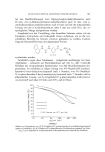
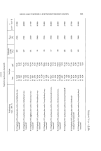
jr. Soc. Cosmetic Chemists 24, 307-315 (1973) Die Wechselwirkung zwischen Riechstoff und Riechzelle, ein Kernproblem des Riechvorgangs W. STEINER* und M. KAIB** I7ortrag anla)elich des Ifil IFSCC-Kongresses in Hamburg yore ! !.-!5. September !972 Synopsis--The interaction between odorant and olfactory cell, a basis problem. Chemically defined compounds were studied to find those which are able to stimulate a particular olfactory cell of the fly, CALLIPHORA ERYTHROCEPHALA. These ELECTROPHYSIOLOGICAL EX- PERIMENTS showed that the ODORANTS for one single CELL can l•e divided into four groups: (1) OXYGEN CONTAINING AROMATIC COMPOUNDS (2) OXYGEN CONTAIN- ING ALIPHATIC COMPOUNDS (3) PRIMARY and SECONDARY ALIPHATIC AL- COHOLS (4) SATURATED AND UNSATURATED HYDROCARBONS. All stimulating compounds were found to be ASYMMETRICAL MOLECULES which can be divided into a POLAR GROUP and into a HYDROCARBON RESIDUE. Both parts--the polar group by its type and the hydrocarbon residue by its length and branching- are reponsible for cell-excita- tion. The characteristic properties of a molecule responsible for excitation seem to be a SPECIFIC ARRANGEMENT OF DIPOLE MOMENTS AT THE POLAR GROUP as well as a CERTAIN POLARIZABILITY OF THE HYDROCARBON RESIDUE. It was not possible to quantitate the molecular characteristics which were common to all the 4 groups. It is not out of question that the sensory cell may possess more than one type of receptor site. Der chemische Sinn verschiedener Tiere ist zu einem NSchst empfindlichen und extrem spezifischen System entwickelt, das bislang in der Technik in keinem Bereich auch nut ann•ihernd erreicht wurde. Mehrere Autoten glau- ben, dab z. B. bei Schmetterlingen, bei Hunden oder auch beim Menschen Duftwahrnehmungen schon dutch wenige Molekille ausgel•Sst wetden k•Sn- nen. Nach neueren Berechnungen (1) (2) reicht beim Seidenspinner Bombyx mori ein einziges Molekill des vom Weibchen abgesonderten Sexuallock- stoffes Bombykol aus, um bei einer Sexuallockstoffzelle des M•innchens einen Nervenimpuls auszul•Ssen. Bombykol (10-trans, 12-cis-Hexadekadien- 1-ol) hat filr die Akzeptorstelle in der Membran der entsprechenden Sinnes- * Dr. W. Steiner, c/o drom Dr. Martens & Co. Nachf., D-8021 Baierbrunn. ** Mitarbeiter yon Prof. Dr. Jiirgen Boeckh, Fachbereich Biologie der Universitfit Regensburg. 307
Purchased for the exclusive use of nofirst nolast (unknown)
From: SCC Media Library & Resource Center (library.scconline.org)