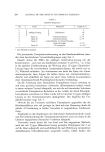
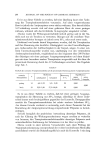
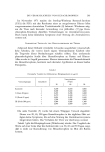
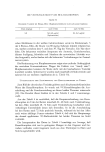
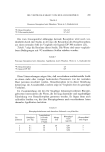
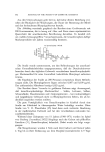
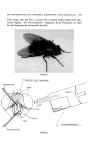
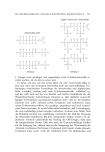
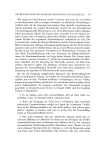
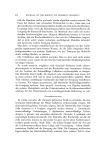
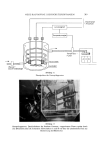
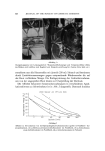
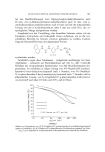
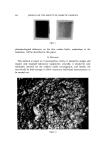
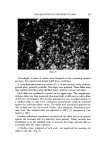
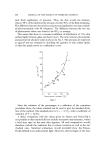
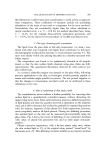
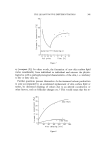
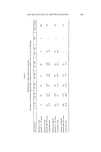
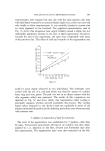
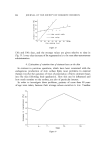
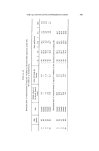
THE QUANTITATIVE DIFFERENTIATION 335 Figure 2 b Accordingly, a series of studies were designed so that, assuming optimal accuracy, the experimental details fulfill these conditions. A 3 mm thick glass-pane was cut into 12 X 16 mm sections, using ordinary ground glass, generally available. The edges were polished. These slides were than cleaned and dried using distilled water, ethanol, acetone and ether. Each slide was numbered by pencil on the upper edge. The transparency of these slides was than measured photometrically at 460 nm (or with a filter of 436 nm wavelength). The percent transmission was recorded relative to a standard slide, so that every subsequent measurement could be corrected against the individual blank values. The slides were introduced opposite the side of light exit into the cuvette holder, since maximum illumination per- tains here. The standard slide was adjusted to 100% (!) transmission (see .footnote p. $42). Further preliminary experiments showed that the slides had to be pressed against the forehead skin for relatively short periods. Thirty seconds was established to be the standard time, as pressure for longer periods did not essentially alter the values obtained. A flexible strap, weighted at both ends, was employed for pressing the slides to the skin (Fig. 3).

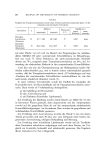
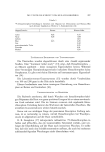
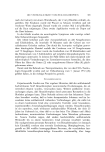
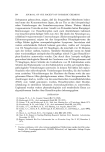
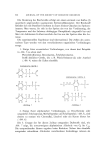
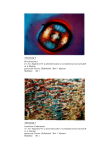
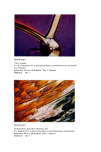
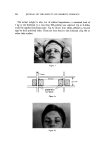
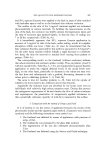
336 JOURNAL OF THE SOCIETY OF COSMETIC CHEMISTS The actual weight is also not of critical importance a standard load of 1 kg to the forehead (i.e. less than 100 g/slide) was selected. Up to 8 slides could be applied simultaneously. Fig. 4a shows four slides, affixed to Scotch tape by their polished sides. These are then fixed to the forehead (Fig. 4b) or other skin surface. Figure plc•telets 12x16mrn Figure 4 a Figure 4b
Purchased for the exclusive use of nofirst nolast (unknown)
From: SCC Media Library & Resource Center (library.scconline.org)