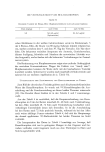
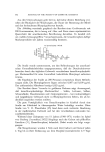
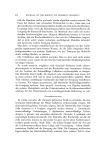
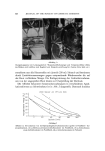
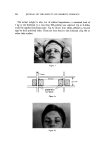
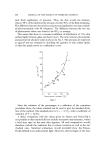
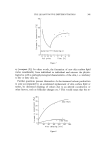
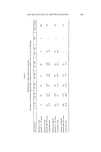
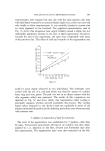
THE QUANTITATIVE DIFFERENTIATION 339 dard deviations could be taken into consideration to yield, at best, an approxi- mate comparison. These coefficients of variation include the preceeding calculations of the mean of error and so compensate for the error involved. Nevertheless, they are considerably higher than the values calculated as simple standard error, i.e., V = 12.8 for the method described here, being V = 16.5% for the original Strauss-Pochi methodical procedure, and V = 13.4% for the improved test procedure of Cunliffe and Shuster (11). 3. Thin layer chromatographic examination The lipids from the glass slide or foil-strip impressions (see below) were eluted with ether and compared with lipids from comedories by thin layer chromatography in chloroform: benzene, 9: 1 and n-hexane: acetone, 9:1. The spots were clearly visible after placing the plates in a chamber saturated with iodine vapour. The composition was found to be qualitatively identical in all samples tested, so that the skin surface lipids obtained using glass slides aze fully representative. The quantitative fluctuation observed by other authors was also evident here. As a control, ninhydrin reagent was sprayed on the glass slides, following pressure applications to the skin, to investigate whether protein, pepfide or amino acid moieties might possibly be present. The test proved negative so that the changes in transmission recorded could not be attributed to these substances, in any way. 4. Rate of replacemen of skin surface lipids The considerations above indicate a further possibility for removing skin surface lipid in a quantitatively controlled manner, without disturbing the deeper lying horny layer. Since each impression removes a definite proportion of lipid present and since the quantity removed is dependent on the materials used, one is able to decrease skin surface fat gradually by repeated impressions with, for instance, segments of thin plastic foil. Such impressions, however, never completely remove all lipids present. During the defatdng procedure, this residual lipid on the skin can be measured photometrically using the glass slides. Fig. 6 shows the course of defatting of one volunteer's forehead with strips of plastic foil (protective foil used in radio paper chromato- graphy). Fifteen successive impressions, with a fat-free plastic strip, each, reduce the skin surface lipid to 5 % of the original value, termed "casual level" by Herrmann et al. (9). This defatting procedure exhibits an asymptotic decrease

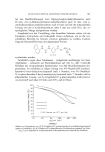
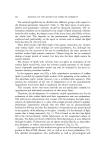
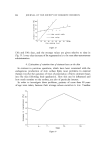
340 JOURNAL OF THE SOCIETY OF COSMETIC CHEMISTS 5O • •o .-- ._ • 3o ._ • 2o •o \\ \ x x defatting \ x\ with x \ defattlngk by • \\ foil prints •x \\ \ \ x 0 2 4 6 8 10 14 16 Foil prints Figure 6 and proceeds logarithmically. For this reason, this residual level is always attained (with minor variations) using a standard procedure, despite the variations of lipid content of the skin. Comparative investigations with alcohol defatting indicate that the degree of defatting is highly dependent on the length of solvent interactions as well as the frictional interactions. Thus, a partial or complete defatting from the deeper horny layers can be attained dependent on the procedure. The degree of defatting with solvents is, therefore, variable and difficult to standardize. The foil strips-impressions were then employed as described, for defatting in the measurement of the rate of regeneration of lipids. Subsequently, the values were estimated photometrically at regular intervals in successive closely neighboring segments (see _Fig. 7). Corresponding investigations using a large group of patients later showed that the results vary individually, not only in terms of the residual level after 5 h but also in the shape of the curves. Extreme cases were found in which the curves begin in a linear fashion and then inflect to the residual value. The slope, which is a direct measure of the rate of replacement varies from subject to subject (_Fig. 8). The curves show that even the small quantities of lipid appearing within a short time after the defatting process can be measured with sufficient accura-
Purchased for the exclusive use of nofirst nolast (unknown)
From: SCC Media Library & Resource Center (library.scconline.org)