J. Soc. Cosmetic Chemists 24, 331-353 (1973) The Quantitative Differentiation of Sebum Excretion Using Physical Methods H. SCHAEFER* This work was amarded the "Oskar-Gans-Pri•e", donated by the 2•llendorf Compan•y [vuppertal, on the occasion of the Congress of the German Dermatological Socie•, in [Vest Berlin, October 1971. Synopsis--The methods for determining SEBUM EXCRETION as well as the subsequent for- mation of a LIPID LAYER ON THE SKIN SURFACE are discussed. The different stages of this process are measured by techniques appropriate to the physical parameters. A new method which allows the quantitative determination of the lipid layer of the skin surface exclusively is also described. This method takes advantage of the known effect tath the LIGHT-TRANSMISSION OF GROUND GLASS increases after contact with skin lipid which results, for example, by pres- sing it to the forehead. This INCREASE IN LIGHT TRANSMISSION OF THE GLASS at 460 nm is PROPORTIONAL TO THE AMOUNT OF SURFACE LIPID. Determinations at different levels of skin lipid show that both the known physiological relations of sebum excretion and its pharmacological alterations can be reproduced by this method. The standard deviation of the method is S = •: 6.5% (coefficient of variation, V = 12.8%). Comparison of assays by the method of Strauss and Pochi and by this method, combined with an analysis of the shape of the resulting curves, permits DIFFERENTIATION BETWEEN SEBUM EXCRETION AND THE SUBSEQUENT FORMATION OF THE SURFACE LIPID LAYER. This method enables one to follow the distribution of ENDOGENOUS LIPIDS on the skin as well as the fate of EXOGE- NOUSLY APPLIED LIPIDS at brief intervals. Thus, novel approaches to various physiological, dermatopharmacological and cosmetic problems should be possible xvith the aid of this new me- thod. A. INTRODUCTION The production of skin lipids by the sebaceous glands and epidermal cells and the resultant maintainance of lipid supply to the horny layer is of con- siderable significance for skin surface function. Numerous authors have described qualitative and quantitative investigations of these skin lipids (1) (2). * Prof. Dr. rer. nat. H. Schaefer, Hautklinik der Freien Universitit im Rudolf-Virchow-Kranken- haus, D-1 Berlin 65, Augustenburger Platz 1. 331

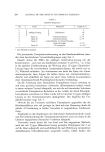
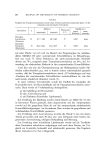
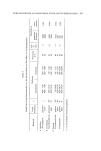
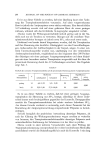
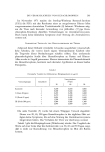
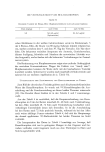
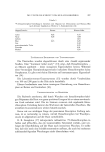
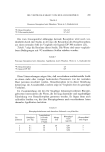
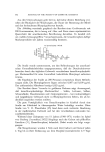
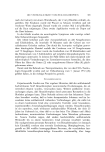
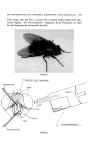
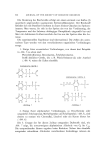
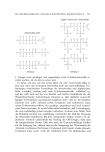
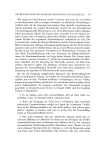
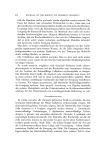
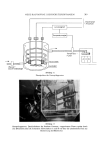
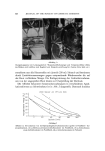
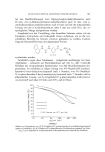
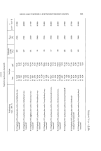
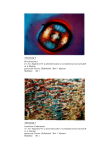
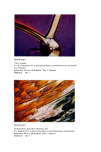
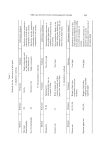
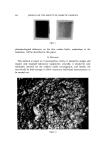
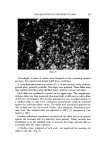
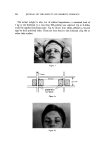
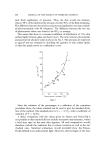
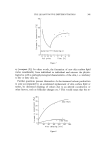
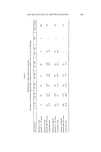
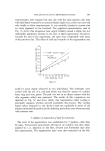
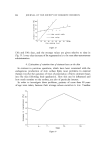
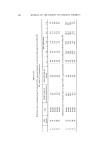
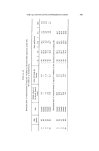
332 JOURNAL OF THE SOCIETY OF COSMETIC CHEMISTS The methods applied can be divided into different groups with respect to the physical parameters measured (Table 1). The basic types of semi-quan- titative and quantitative methods should be discussed separately. The in- formation obtained can be classified by the origin of lipids measured, whether from the skin surface, the deeper zones of the horny layer, the follicle or from the whole skin. This depends on the pretreatment (defatting) procedure employed and, particularly, on the agent or solvent used to extract the lipid from the skin (5) (12) (13) (14). Thus, brief contact with filter paper, linen gauze, metal pins, etc. extracts only surface lipids. Such findings are semi-quantitative, for, although the technique for the removal of fat can be standardized, the exact amount of residual surface lipid remains unknown. Deeper lying fat can be extracted during a longer period of contact, but here also the layer depth cannot be exactly defined. The elution of lipids with solvents does not allow an estimation of the surface lipids exclusively, since the solvents usually penetrate to the deeper layers. Optimally quantitative results can only be obtained by the most ex- haustive elution procedure feasible. In the cigarette paper test (10), a fully quantitative extraction of surface lipids is possible by repeated light suction of fat appearing at the surface by this absorbant paper (under pressure over a occluded skin segment). This permits the estimation of the rate of replacement or, if the quantitatively insignificant horny layer lipid is neglected, the sebum excretion rate. This synopsis shows that these methods are not particularly suitable for quantitative and individual estimations of skin surface lipids. Therefore, the development of a relatively simple quantitative test for the estimation of skin surface lipids and their regeneration rate was undertaken. The well known phenomenon that contact with fat increases the light trans- mission of opalescent glass (i.e. glass with a single ground surface) is applied. Preliminary experiments indicate that this effect can be photometrically followed at 460 nm and that the alterations of transmission are proportional to the quantity of fat adhering to the glass. Actually, it is the decrease of light scatter that is being measured (Fig. 1). This is based on the fact that lipids fill in the microscopically visible depressions on the toughened surface of the glass. The light, previously reflected by these depressions, is now refracted through the glass. Furthermore, any air spaces are also filled in, so that reflec- tion decreases, or rather, transmission is increased (Fig. 2a, 2b). A preliminary report of this method was given at the Dermatological Sym- posium in Brno/•SSR (Brtinn) (16), as well as in a short publication (17). The detailed investigations into methodical as well as physiological and
Purchased for the exclusive use of nofirst nolast (unknown)
From: SCC Media Library & Resource Center (library.scconline.org)