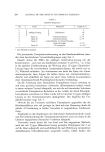
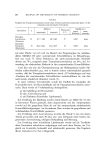
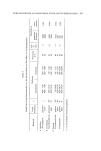
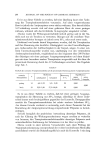
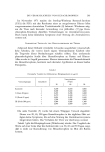
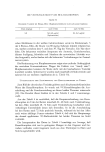
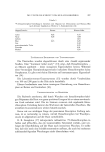
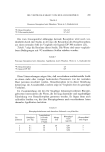
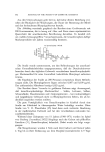
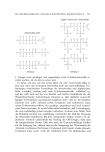
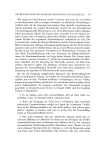
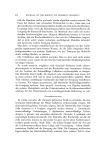
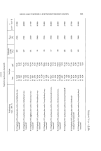
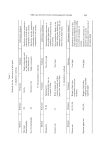
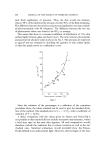
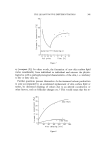
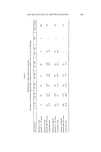
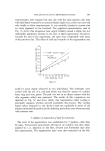
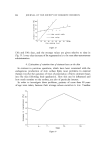
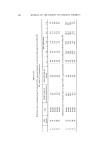
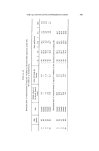
THE QUANTITATIVE DIFFERENTIATION 347 and 50 % aqueous Eucerin were applied to the back in areas of skin occluded with leukofiex tape as well as to the forehead skin without occlusion. The residue on the skin of the i mg/cm •' ointment applied was estimated photometrically at various intervals. To facilitate the measurements on the skin of the back, the occlusion was briefly opened, the impressions taken and the strip of occlusion tape replaced tightly, so that the time of sealing was 7 or 20 hrs. respectively (Table 4a, 4c). It is immediately apparent that 50% aqueous Eucerin application in amounts of 1 mg/cm •' to skin of the back, under sealing, results in complete absorption within one hour (Table 4a). (It must be remembered that the fatty substance Eucerin, measured by this method, amounted to 0.5 mg/cm% On the other hand, vaseline exhibits initially a rapid decrease to a relatively low level, the time for removal to residual level varying from patient to patient (Table 4 c). The corresponding results on the forehead (without occlusion) indicate that sebum excretion and ointment uptake overlap. Thus, in patients (4 and 5) with low casual levels (Table 4b), 3-- 7 hrs. are required after aqueous Eucerin application to attain the original defatted levels. If the casual levels were high, on the other hand, practically no decrease in the values are seen over the first hour and subsequently only a gradual, fluctuating decrease to the values prior to defatting (patients 1--3, Table 4b). The same is true for vaseline (patients 6--10, Table 4d) the uptake of which by the horny layer is also relatively slower than Eucerin. Apparently the ointment bases are absorbed by the horny layer even in individuals with relatively high sebum excretion rates. During this process the endogenous regeneration of fat and thereby the flow of sebum continues and superimposes the penetration of exogenously applied substances so that a practically stationary quantity of total fat is measured at the surface. 5. Comparison with the method of Strauss and Pochi It is of interest to see the extent of agreement between the results of the photometric studies and the cigarette paper method. 21 patients were selected randomly and the following estimations were carried out: 1. The forehead was defatted by means of application with pressure of strips of foil. 2. The residual fat was estimated by the glass slide method. 3. The regeneration of fat was also estimated photometrically after 3 hrs. 4. The forehead was defatted using the Strauss and Pochi-technique.

348 JOURNAL OF THE SOCIETY OF COSMETIC CHEMISTS
Purchased for the exclusive use of nofirst nolast (unknown)
From: SCC Media Library & Resource Center (library.scconline.org)