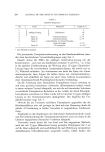
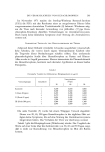
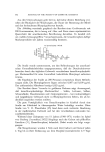
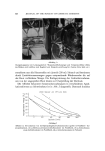
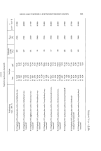
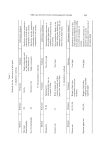
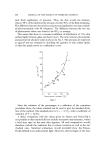
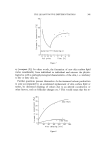
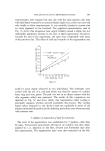
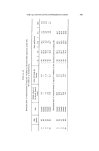
THE QUANTITATIVE DIFFERENTIATION 40 341 i X X• x x x x x x x )e fatt ing--• -'•--Re fat t ing--• 0 5 10 1 2 3 4 5 Foil prints Time [h] cy [compare (2)]. In other words, the formation of new skin surface lipid varies considerably from individual to individual and mirrors the physio- logical as well as pathophysiological characteristics of the skin, i.e. tendency to dry or fatty skin etc. Further questions present themselves: Is the increased sebum production in acne accompanied by an accelerated replacement of skin surface lipid or rather, by decreased draining of sebum due to an altered constitution or other factors, such as follicular changes etc. ? This would mean that the re- • 30 - •15 '-10 • 5 [- o o ars x x /x/ x $55 Years • I I I I I I 30 60 90 120 150 180 After defatting [mini Figure 8

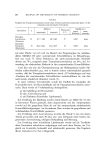
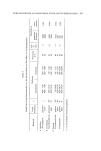
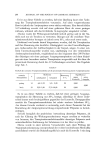
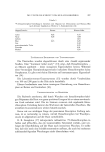
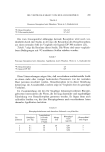
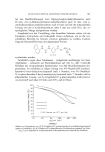
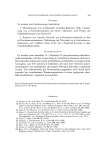
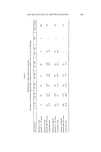
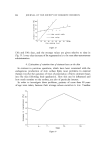
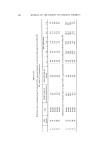
342 JOURNAL OF THE SOCIETY OF COSMETIC CHEMISTS generation mentioned is slowed. The procedures in investigations up to date have failed to answer such questions, since the obstruction of sebum drainage would simulate an increased excretion. The same is also true for the question as to whether the flow of sebum is independent of the quantity of skin surface lipid already present or whether the latter lipids inhibit sebum excretion by a feed back mechanism (9) (18) (19). Every elution or adsorbant material (solvent or cigarette paper) influences the follicular excretion so that a constant rate of sebum excretion results. If one wishes to arrive at valid conclusions in the face of these individual characteristics, then the time chosen for the measurements of regeneration of surface lipid must be made with the highest accuracy possible. For this purpose, measurements of the half maximum regeneration were suitable. Thus, about 1« hrs. after defatting, some 50 % of the fat film removed had been replaced. This 1« hrs. was subsequently taken as a standard. As a result, the measurements were performed with the following experi- mental conditions: Changes in transmission of defatted glass slides at 460 nm after 30 sec skin impressions with a 1.000 g weight on the forehead, followed by defatting of skin surface by impressions with 15 strips of fat free foils, and renewed measurement later 1« hrs.* These tests could be carried out on 20 patients daily. C. RESULTS 1. Distribution curve Using these conditions, the rate of lipid replacement was established for 262 volunteers of both sexes and various ages (Table 3, _Fig. 9, 10). The individuals were divided into groups by sex and by age (17-35, 35-70). In order to be able to compare values of different individuals within these groups, the patients were further grouped as to fat removed after 1 « hrs. (0-21 3tg/cm•' 22-27 3tg/cm •' etc.). These results were expressed relative to the number of persons in the largest group. (105 men were in the 17-35 group, 62 in the 35-70 group. Thus, all values in the latter group were multi- 105 _ 1.7 so that the distribution curves are truly comparable.) plied by 62 The tables and figures show that the maxima of the graphs decrease con- siderably in women over 35 years and slightly in older men relative in each * In order to obtain maximum photometer sensitivity, the transmission was adjusted to 100% (I) with the respective glass slides, and the non fatty standard slide was measured against this. Dis- crepancies in results recently published [M. Gloor, J. Soc. Cosmetic Chemists 22, 783 (1971) Fig. 5] can be explained by the error of measuring the standard adjusted to 0% transmission.
Purchased for the exclusive use of nofirst nolast (unknown)
From: SCC Media Library & Resource Center (library.scconline.org)