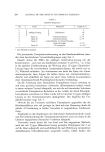
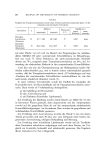
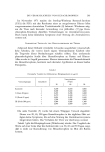
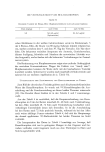
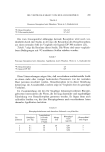
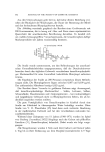
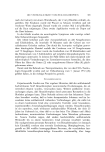
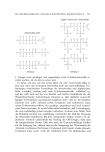
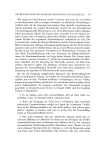
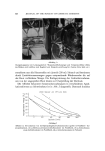
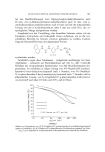
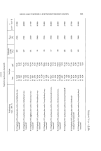
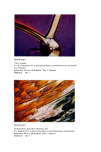
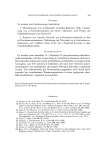
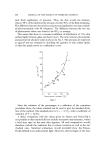
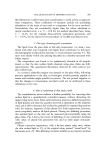
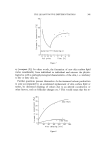
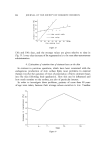
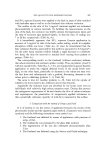
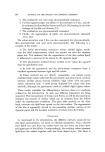
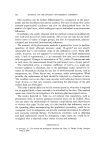
THE QUANTITATIVE DIFFERENTIATION 345 measurements were repeated the next day with the same patients, this time with their heads warmed by an external heater (light box), which was removed only briefly to allow measurements. It was carefully checked to ensure that no sweat appeared on the forehead. The graphical representation, seen in Fig. ! !, shows that exogenous heat supply initially caused a slight, but not statistically significant increase in the rate of lipid regeneration. However, towards the end of the experiment, the rates were comparable with those of the previous day. This effect of cold and warmth on the regeneration rate 26 2/+ 22 ---Under warmth suppry 20 -- At room x 15 temperature x// 16 L 14 • x/// 0 5 10 15 20 25 30 35 40 45 After defatting [m•n] F•ure I I could be more clearly observed in two individuals. The foreheads were cooled with the aid of a cold pad which was fitted by means of a rubber foam ring and wire gauze. The pad was not in no direct contact with the skin segments which was measured. The results of this comparison are depicted on Fig. 12, and show clearly that regeneration under cooling is practically stagnant, whereas warmth accelerates this process. The varying initial values obtained by the alcohol wash are explicable in terms of the already mentioned fluctuation in this defatting procedure, even when executed with extreme care. 3. Influence of regeneration of lipid by testosterone The level of fat regeneration was established for 9 patients older than 50 years. Testosterone proprionate (50 mg) in oil solution was then admi- nistered by i. m. injection on the first, seventh and fourteenth days after this measurement. The regeneration rates were then measured on the 4th,

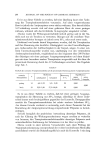
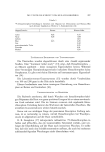
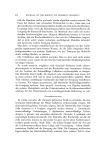
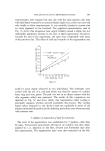
346 JOURNAL OF THE SOCIETY OF COSMETIC CHEMISTS 28 24. 20 •'i2 8 0 x / / x/ // / x• / / / ------Under warmth supply / / -- Under cooting /x / 10 20 3'0 40 5'0 50 ?•0 80 85 After defatting [min] Figure 12 13th and 19th days, and the average values are given relative to time in Fig. 13. A very clear increase of fat regeneration is to be seen after testosterone administration. 4. s•stimations of retention time of ointment bases on the skin In contrast to previous questions, which have been concerned with the endogenous production of skin surface lipid, most problems in external therapy involve the question of time of penetration of fatty ointment bases into the skin following their application. How this can be influenced and how much remains on the surface, are also of particular interest. In order to investigate these problems, patients of more than 50 years of age were taken, because their average sebum excretion is low. Vaseline 12 •1o ._ • 8 ._ E c- ? 6: .E g 2 I I 13. .19. Day. s Figure
Purchased for the exclusive use of nofirst nolast (unknown)
From: SCC Media Library & Resource Center (library.scconline.org)