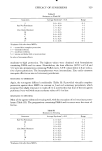
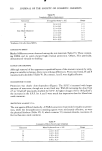
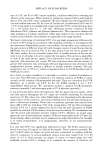
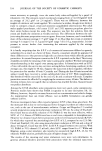
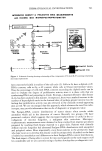
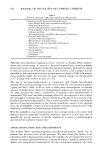
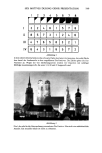
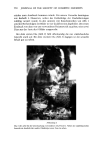
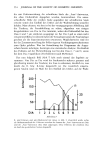
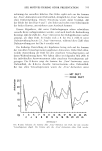
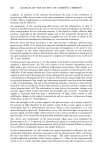
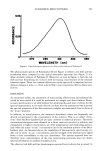
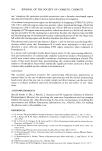
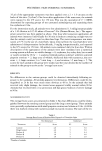
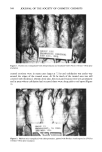
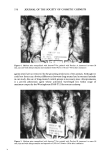
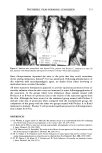
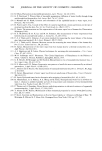
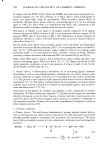
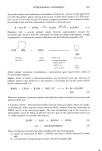
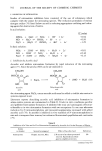
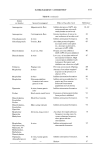
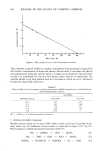
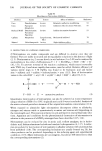
570 JOURNAL OF THE SOCIETY OF COSMETIC CHEMISTS Figure 4. Hairless mice tranquilized with Innovar©-Vet, painted with Product A, immersed in water 30 min, injected with chlorpromazine and irradiated with UVL for 150 min--96 hr after irradiation agents tested are not removed by the grooming tendencies of the animals. Although we could not detect any obvious differences between drug-treated and nontreated animals in our study, the use of drug-treated control groups is necessary since chlorpromazine is a proven phototoxic agent whose activation wavelength lies within range of maximum output by the Westinghouse FS40-T12 fluorescent sunlamp. . .- • •- •-•.•..: . % •. ::.'• •,.•. ß •'• :5- .: :: . • "•- • "' •. .-• • • .• - .. . ' %• 7 ' : . ß {.g Z • . -'• •: ... - . •- ,•(., ß , • .• . •.- .• / •-•-• • •.- • • , ß • .¾ • . . .. :..."' P Rt i S IJN • -:.• Figure 5. Hairless mice tranquilized with Innovar©-Vet, painted with Product B, immersed in water 30 min, injected with chlorpromazine and exposed to UVL for 150 min--96 hr after irradiation

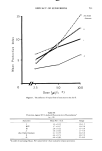
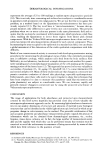
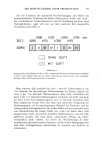
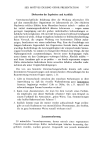
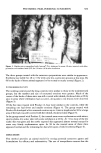
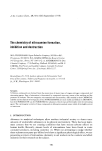
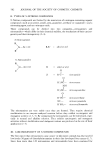
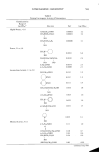
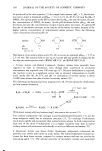
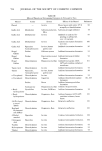
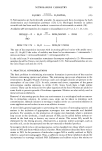
POLYMERIC FILM-FORMING SUNSCREEN 571 . ß .. .., fiR()!lP VII .q I IN I)( )W N © 3f) l•ll N. l'lXllXlliRS I C•ll PlIN. ItVL, Figure 6. Hairless mice tranquilized with Innovar©-Vet, painted with Product C, immersed in water 30 min, injected with chlorpromazine and exposed to UVL for 150 min--96 hr after irradiation Since chlorpromazine depressed the mice to the point that they would sometimes drown during immersion, Innovar©-Vet was substituted. Following administration of this relatively mild neuroleptanalgesic agent, no deaths (from either drowning or medication) were recorded thereafter. All three sunscreen formulations appeared to provide equivalent protection from ul- traviolet radiation when the mice were not immersed in water following application of the sunscreen. In the groups which were immersed, those animals treated with Products A or B were not protected due to the elution of the sunscreen agents from the skin. Although the burn scores for the immersed group treated with Product C indicate some loss of protection when compared with the nonimmersed group, the comparison of this group with the other two groups treated with Product A or B and immersed is dramatic. Product C still provided significant protection following immer- sion in water for 0.5 hr. REFERENCES (1) H. Wolska, A. Lagner and F. N. Marzulli, The hairless mouse as an experimental model for evaluating the effectiveness of sunscreen preparations, J. Soc. Cosmet. Chem., 25,639 (! 974). (2) G. Kahn and G. Wilcox, Sunscreen testing using sunlight: photographic and in vivo methods compared, J. Invest. Dermatol., 53,200 (1969). (3) T. M. Macleod and N. Frain-Bell, The study of the efficacy of some agents used for the protection of the skin from exposure to light, Brit. J. Dermatol., 84, 266 (1971). (4) M. A. Pathak, T. B. Fitzpatrick and E. Frenk, Evaluation of topical agents that prevent sunburn--supe- riority ofpara-aminobenzoic acid and its ester in ethyl alcohol, New EnglandJ. Med., 280, 1459 (1969). (5) D. W. Owens, J. M. Knox, H. T. Hudson and D. Troll, Influence of humidity on ultraviolet injury, J. Invest. Dermatol., 64, 250 (1975).
Purchased for the exclusive use of nofirst nolast (unknown)
From: SCC Media Library & Resource Center (library.scconline.org)