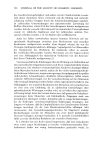
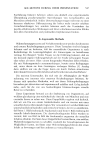
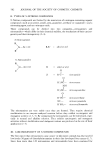
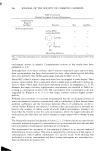
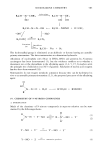
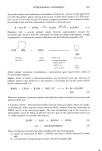
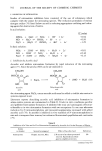
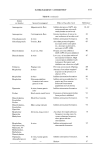
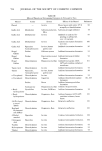
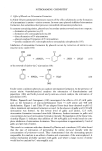
NITROSAMINE CHEMISTRY 589 Secondary amines and subsequent nitrosamines formed by reaction of the diazonium ion with the primary amine starting material (eq 11) have been isolated (22). This reac- tion occurs in low yield because the amine is largely protonated and unreactive under the strongly acidic and low temperature conditions commonly used. R--N•N + + RNH2 --N., NO%,H + ) R.,NH ) R.,NNO (11) Diamines with a second primary amine function appropriately located for intramolecular reaction with the diazonium ion form secondary nitrosamines at high temperatures or long reaction times as illustrated by the following examples (59). H2N NH2 + 2NO• ) HCI salt moist 160øC, 2 hr 22% yield 0.025 M 0.050 M in citrate-phosphate buffer, pH 3.4 100øC, 1 hr 22øC, 6 days 1.6% 0.39% Under similar conditions n-butylamine, a monoamine, gave much lower yields of N- nitrosodibutylamine. Higher levels of stable o•-alkoxynitrosamines are produced from the reaction of primary amines with aldehydes in the presence of alcohols and nitrite under mildly acidic conditions (60, 61). RNH= + CH20 + R'OH + NOj, H + R--N--CH=OR' I NO (12) However, mixtures of primary amines and aldehydes without alcohol do not react with nitrite at pH 3 (62). b. Secondary Amines. Nitrosamines formed directly from secondary amines are stable. In moderately acidic aqueous nitrite solutions N2Oa, formed from two molecules of HNO2 (eq 6) is the nitrosating agent. The rate-determining step in the reaction is electrophilic attack by N=Oa on the free electron pair of the unprotonated amine (eq 13). Rate equation 14 describes the kinetics. R=NH + NzOa -- RzNNO + HNOz (13) rate = k[R2NH] [HNO=] z (14) Thus, two factors determine the effect ofpH on the rate of nitrosation: (i) extent of conversion of NO2- to HNO2 and thus to NzOa (favored by lower pH) (ii) concentration of unprotonated amine (favored by higher pH).

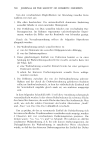
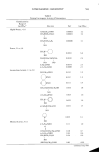
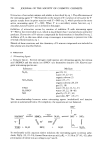
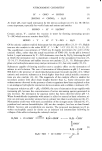
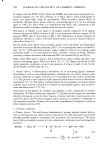
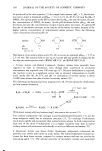
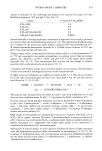
590 JOURNAL OF THE SOCIETY OF COSMETIC CHEMISTS As predicted by the rate equation (33) for simple basic amines (pKa 5), the nitrosa- tion rate in water is maximum at pHmax = 3 to 3.4 (23, 24, 40, 63, 64) near the pKa of HNO2. For a given amine as the pH increases above pHmax the rate decreases, because the concentration of HNO2 decreases. As the pH decreases below pHmax the rate decreases, because the concentration of unprotonated amine decreases. At a given pH the rate of nitrosation increases as the basicity of the amine decreases, because of the higher relative concentration of unprotonated amine present. Thus, the following order of reactivity is found at pH 3.0: Amine •/NH OX /NH H=+N/•NH \ / pKa 11.2 8.7 5.57 Relative 1 930 180,000 rate (23, 33) Nitrosation of secondary amino acids (65, 66) occurs at an optimum pHm•x = 2.25 to 2.5 (34, 40). The reaction follows rate eq 14, but the pH-rate profile is changed by the fact that two amine species react--RNHCHR'CO=- and RNHCHR'CO2H. c. Tertiary Amines and Related Compounds. Tertiary amines have generally been regarded as inert to nitrosation, even though their conversion to secondary nitrosamines was reported over 100 years ago (67). Because dealkylation is required, the reaction occurs to a significant extent only at elevated temperatures in weakly acidic media (68-70). At 25øC and pH 3.4 nitrosation of tertiary amines is about 10,000 times slower than that of related secondary amines (23). The following mechanism has been proposed (23, 68, 69) for nitrosative dealkylation and nitrosamine formation: I ' N•0 + H•0 --HN0 R=N--CHR' I I ON H RzN•CH2R' + N=Oa N20a R•NNO ( R•NH + R'CHO H•O R,N=CHR' (15) With mixed tertiary alkyl aryl amines ring C-nitrosation also occurs (19). Two related compounds--the nitrogen acetal hexamethylenetetramine (71) and the drug antipyrine which has an eneamine structure (23, 72)--undergo N-nitrosation much more rapidly and extensively than normal tertiary amines. In both compounds at least one of the three N-substituents is in a higher oxidation state than in typical tertiary amines and nitrosation undoubtedly occurs by a different mechanism (70). d. Quaternary Amines and Amine Oxides. Quaternary ammonium compounds ap- parently react slowly with nitrite in acidic media. The initial dealkylation required ac- counts for their lower activity compared to tertiary amines and may not involve the nitrosating agent (73). The relative reactivity of secondary, tertiary and quaternary
Purchased for the exclusive use of nofirst nolast (unknown)
From: SCC Media Library & Resource Center (library.scconline.org)