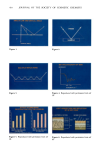
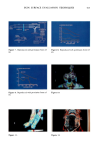
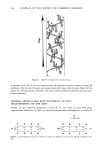
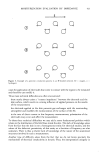
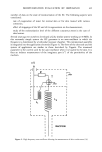
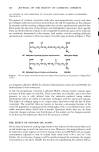
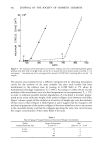
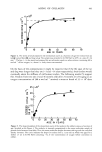
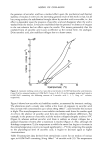
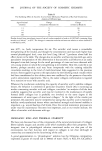
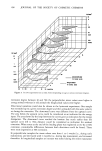
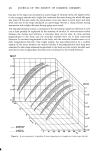
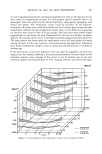
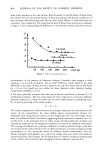
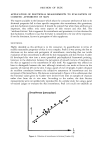
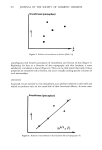
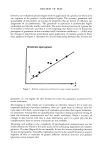
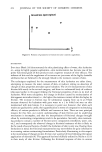
j. Soc. Cosmet. Chem., 34, 419-428 (December 1983) Impedance methods for studying skin moisturization J. L. LEVEQUE and J. DE RIGAL, DJpartement de Physique, Laboratoires de Recherche de L 'OrJal, I, Avenue de Saint-Germain, 93601 Aulnay- sous- Bols, France. Received September 1983. Presented at the IFSCC/SCCJoint Conference on Skin, San Francisco, September 1983. INTRODUCTION For the last several years the primary claim for skin cosmetics has been moisturization. This complies, on the one hand, with the desires of consumers who confusedly associate moisture and good skin condition. On the other hand, it corresponds to an objective reality since we now know to what extent water is capable of modifying all the physical properties of the stratum corneum (SC), the elected target of cosmetic treatments. For a physicist keratin is, above all, a dielectric medium, that is, a medium of weak electrical conduction. This is especially true when the keratin is dry. When the keratin is moisturized, the situation is somewhat changed, since the water molecule, because of its very strong dipolar character, combines very readily with the keratin chains and, thus, makes them more sensitive to the electrical field. In fact, the skin and, more precisely, the SC is sensitive to the effects of an applied electrical field. At least three types of mediating structural components may be involved: keratin chains, which have a dipolar moment (Figure 1), are made more movable by the plasticizing effect of water ions, in the intercellular spaces, can react to the application of an electrical field and even, to a certain extent, move with it if their mobility is sufficient, that is, if the viscosity of their environment permits it (1) (Figure 2) water molecules themselves are able to form a continuous network of hydrogen bonds allowing the exchange of a proton between two radicals of the type OH 3 and OH (Figure 3). These three mechanisms illustrate how the water molecule, either directly or indirectly, acts upon the electrical properties of the SC. There are thus good reasons for selecting electrical methods for the study of moisturization of a medium that is itself only slightly conductive. 419

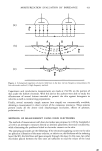
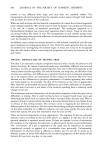
420 JOURNAL OF THE SOCIETY OF COSMETIC CHEMISTS E Figure 1. Dipoles orientation for a keratin chain. In studies of the SC the in vivo measurement of impedance poses a certain number of problems. For the last 10 years numerous researchers have tried to solve them. In this paper we will enumerate, describe, and discuss these different methods and the main results obtained. GENERAL DIFFICULTIES WITH ELECTRICAL IN VIVO MEASUREMENTS ON THE SKIN Studies on the electrical properties of the SC in vivo have to deal with great experimental difficulties. In fact, an electrical measurement presupposes in nearly all + + + _+_) 6 + + +6- -- -- -+ + - - - - + + + + d- + + + + Figure 2. Ion relaxation around a corneocyte under the influence of an electric field [according to Clar (3)].
Purchased for the exclusive use of nofirst nolast (unknown)
From: SCC Media Library & Resource Center (library.scconline.org)