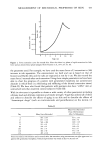
j. Soc. Cosmet. Chem., 34, 453-463 (December 1983) Effects of age on the biomechanical and biochemical properties of rat and human skin H. G. VOGEL, Hoechst Aktiengesellschaft, D-6230 Frankfurt/Main 80, [Vest Germany Received September 1983. Presented at the IFSCC/SCCJoint Conference on Skin, San Francisco, September 1983. INTRODUCTION Several studies have been performed concerning the effects of maturation and age on the biomechanical and biochemical properties of rat skin. Most of the experiments were performed in samples obtained ex vivo (i.e., in skin strips) tested in vitro using various biomechanical methods (1-9). Likewise, skin samples of human cadaver skin were analyzed (10-11). In v•ivo studies had recently been performed in rats using newly developed methods (11-14). MATERIAL AND METHODS For the in vitro studies male rats were sacrificed in carbon dioxide anaesthesia. The fur was shaved mechanically. A flap of dorsal skin was removed, and a dumbbell-shaped sample was punched. A similar procedure was performed in samples obtained from human cadaver skin. The samples were fastened in the clamps of an Instron ©- instrument, and various extension and loading programs, to be mentioned later, were performed. Usually, stress-strain curves were recorded until the sample broke. The stress-strain curves showed a characteristic pattern. In the beginning they followed an exponential function. Later an almost straight part was achieved from which the modulus of elasticity could be calculated according to Hooke's law. In the upper part some yielding was observed after which a sudden break occurred. From this point ultimate strain and ultimate load could be measured. Ultimate stress was calculated from ultimate load, divided by initial cross sectional area. The methods were modified to study additional parameters such as relaxation and mechanical recovery, hysteresis, and creeping behavior. RESULTS Ultimate values were tested in young animals (from 2 weeks onwards), and in adult as well as in aging rats (up to 30 months). In rats skin thickness decreased from 2 to 3 453

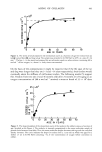
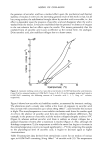
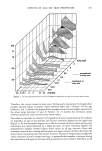
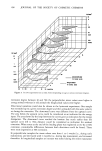
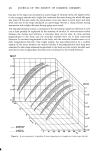
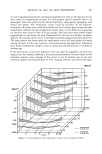
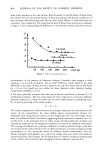
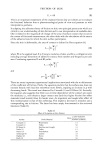
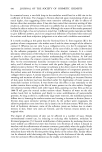
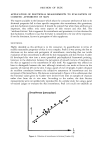
454 JOURNAL OF THE SOCIETY OF COSMETIC CHEMISTS weeks and later showed a continuous increase which reached the maximum at 12 months. The slight decrease of skin thickness in aged rats was statistically significant. Ultimate strain showed a continuous, almost linear increase, depending on logarithm of age, from 2 weeks up to 4 months. At 4 months a maximum was achieved. The decrease until 24 months was statistically significant. Ultimate load increased during the maturation period and also during the adult life. However, at 12 months a maximum was achieved followed by a slight decrease. Therefore, one has to separate an increase during the maturation period from a decrease during senescence. A similar pattern was found for tensile strength and modulus of elasticity. These experiments were performed in several series. The increase during maturation was always followed by a decrease in the aging period. In some experimental series biochemical parameters were determined simultaneously. Collagen was measured in the soluble fractions and as insoluble collagen by hydroxyproline determinations. For total collagen and insoluble collagen an increase during the maturation period and a slight decrease during aging was found. Thus, collagen reflects closely the ultimate parameters in the stress-strain experiment. Elastin content behaved quite differently. The increase during the maturation period continued in a further increase during aging. No decrease during senescence was found. Total glycosaminoglycans and the fractions thereof were determined simultaneously. A decrease was found during the maturation period which was mostly caused by the decrease of hyaluronic acid. Between 12 and 24 months the values remained rather constant. An attempt was made to correlate the biochemical and biomechanical parameters. Only total or insoluble collagen could be correlated with ultimate values. A very good correlation was found between tensile strength and content of insoluble collagen obtained from many experimental series. However, no correlation was found between glycosaminoglycans or elastin or soluble collagen with the ultimate values of the stress-strain experiment. Recently, the age-dependence of biomechanical and biochemical parameters in human skin obtained from about 300 specimens of various ages was studied. Computer analysis was performed in order to find the closest correlation of the various parameters with age. Skin thickness increased during maturation and reached a clearcut maximum at the age of 27 years. A clear decrease during the senescence period could be seen. A similar pattern was observed for ultimate load. The increase during maturation is even more pronounced, as is the decrease during aging. The maximum was found at an age of 22 years. Tensile strength shows a somewhat different pattern. The increase during maturation was quite sharp. The maximum was already achieved at 10 years. Afterwards an almost linear decrease was noted. The pattern of modulus of elasticity was similar. Again a sharp increase during maturation occurred, achieving a maximum at 15 years. The age-dependent decrease was much less pronounced. Ultimate extension showed a pattern different from the other ultimate values. The increase during maturation was much less pronounced, as the decrease was during aging. The maximum was found at 29 years. In addition to the ultimate values indicating strength and elasticity, several other parameters indicating plasticity or viscosity were analyzed. In the creep experiment, performed on rat skin, a sample was loaded with a given load and the extension over time was measured. After several minutes the extension rate was almost constant and could be calculated. Furthermore, the time until rupture was recorded. Both values
Purchased for the exclusive use of nofirst nolast (unknown)
From: SCC Media Library & Resource Center (library.scconline.org)