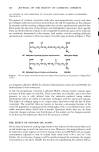
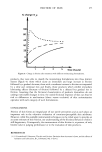
470 JOURNAL OF THE SOCIETY OF COSMETIC CHEMISTS In numerical terms, a two-fold drop in the modulus would lead to a 60% rise in the coefficient of friction. The changes in friction observed upon moisturizing of skin are much higher, thus suggesting either more extensive softening of skin or effects of factors other than modulus alone. It has also been noted that extensive wetting of skin results in a decrease of friction (7,8) and it is unlikely that an excess of water can either harden the skin or reduce the contact area. Although the scatter of the results presented in Table II is high, it has to be borne in mind that 1) different probe materials are likely to give different answers, and 2) no unequivocal definition of hydrated skin exists and the authors used their subjective judgement as to when such condition was attained. It is worth recalling at this point that the frictional force F t froIn equation (II) is the product of two components--the surface area A and the shear strength of the adhesive contact S. Whereas we can view A as a colligative term, it is the S component that represents the intrinsic intensity of adhesion. In the case of skin, its value is determined by the adhesive properties of its biosurface--the stratum corneum. It is a trivial laboratory observation of the behavior of this tissue at different humidities that appears to provide a clue to gain some further understanding of skin friction. At low and ambient humidities, the stratum corneum handles like a thin, fragile, parchment-like film. As the environmental humidity increases the stratum corneum becomes more tacky, and if allowed to dry in contact with the probe (finger, glass rod, etc.) a firin adhesive joint is formed. The increase in tackiness is the direct result of hydration the underlying mechanism is most probably the solubilization of component proteins in the sorbed water and formation of a strong protein adhesive resembling in its action collagen-derived glues. A similar situation exists in vivo it is compounded, however, by sweating and secretion of sebum. The sequence of events leading to increased friction of skin upon hydration has been described earlier (9). Application of water causes an immediate increase in friction. It was shown that this effect is due essentially to the surface tension forces acting in the film of water present on the skin surface. Budgert (10) observed similar effects with other liquid films, pointing out that films as thin as 1000 • still gave the normal surface tension values. Presence of water on the skin surface leads first to hydration and finally to some solubilization of water-soluble proteins. As long as there is a sufficiently large water reservoir, the solubilized proteins diffuse into it, lowering the surface tension and causing a decrease in friction (hence a friction drop upon extensive wetting of skin). As the surface water evaporates, the adhesive properties come into force and a drastic rise in friction ensues. With time, the level of hydration decreases, some of the adhesive joints are broken due to elastic stresses in skin, fewer new ones are formed, and the friction returns slowly to its original value. The degree of adhesiveness of skin can be affected in a number of ways. Simple environmental control can, by inducing or reducing skin hydration, modulate its frictional properties (7). Chemical modification of skin proteins by rendering them less water soluble can effectively lower skin friction (12). Secretion of sebum is bound to interfere with the adhesiveness of stratum corneum, particularly when the applied loads are high. Under such conditions some of the sebum might be literally squeezed out of sebaceous ducts with the friction probe riding freely on the sebum film. Similar effects can be obtained with lubricating oils. Depending on the thickness of the oily residue, even the occlusive effects (hydration) can be readily overshadowed (5, 9).

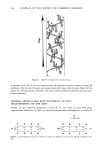
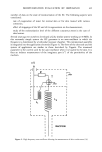
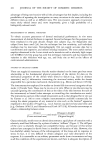
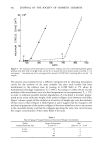
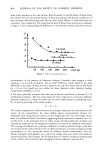
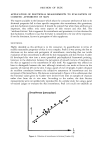
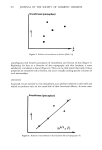
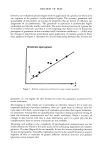
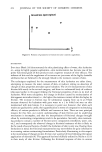
FRICTION OF SKIN 471 APPLICATION OF FRICTIONAL MEASUREMENTS TO EVALUATION OF COSMETIC ATTRIBUTES OF SKIN The reports available in the literature which relate the consumer attributes of skin to its frictional properties fall in three specific categories: skin smoothness, skin greasiness, and skin hydration (moisturization). It should be realized that while these attributes are important, they reflect only some aspects of skin texture and skin feel. The "attribute-friction" link is apparent for smoothness and greasiness it is less obvious for skin hydradon. It suffices to say that the latter is considered to be one of the important, if not the dominant, factors in perception of skin suppleness. SMOOTHNESS Highly desirable as this attribute is to the consumer, its quantification in terms of readily measurable properties of skin is very complex. Prall (13) was among the first to discourse on the nature and perception of smoothness, concluding that our tactile evaluation of skin smoothness is affected by skin topography and skin friction. Cussler (6) developed this view into a more quantified psychophysical framework pointing, however, to the distinction between the perception of smooth texture of materials on the skin as opposed to the smoothness of skin itself. No suggestion was offered on how to distinguish between the two, although intuitively one tends to focus on the quantity of material left on the skin. Using a panel of over 20 people, Cussler obtained an excellent correlation between the subjective assessment of smoothness and the reciprocal of frictional force. His data are summarized in Figure 4. It is unfortunate that the frictional values given by Cussler were derived from tests on samples of chamois rather than from the in vivo tests. According to the author, the skin friction measurements were not satisfactorily reproducible. In a similar study but using a panel of trained judges to evaluate the skin smoothness, Prall (13) could not establish an Smoothness (perception) ß ß ....i Figure 4. Relation of smoothness to friction [Cussler (6)].
Purchased for the exclusive use of nofirst nolast (unknown)
From: SCC Media Library & Resource Center (library.scconline.org)