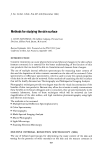
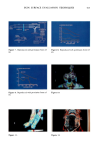
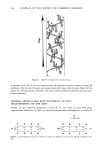
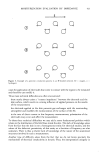
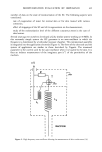
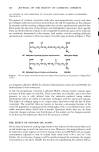
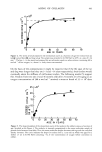
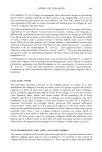
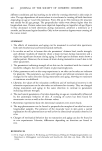
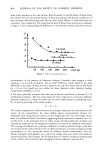
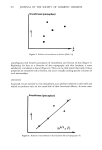
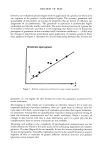
MOISTURIZATION EVALUATION BY IMPEDANCE 421 Figure 3. Example of a protonic conduction process in an H-bonded network. (O = oxygen, o = hydrogen). cases the application of electrodes that come in contact with the region to be measured and therefore can modify it. Three main technical difficulties are often encountered: there nearly always exists a "contact impedance" between the electrode and the skin surface, which results in a strong influence of applied pressure on the results of the measurement the electrode applied to the skin prevents gas exchanges with the surrounding atmosphere and modifies the moisturization of the surface of the SC in the case of direct current or low frequency measurements, polarization of the electrodes may occur and affect the measurement. To these three technical difficulties we may add a more fundamental problem which relates to the distribution of the field lines inside the skin. This lack of knowledge arises from the fact that the skin is not a homogeneous entity for electrical studies, and the values of the dielectric permittivity of this entity as a function of frequency are also unknown. There is thus a relative lack of knowledge of the nature of the anatomical structures involved in such a measurement. Another type of difficulty arises from the fact that we do not know precisely the mechanisms of electrical conductivity in keratin. Thus, the interpretation uniquely in

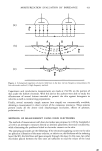
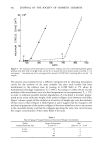
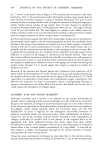
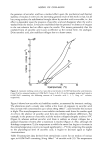
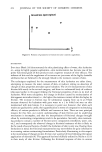
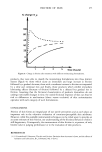
422 JOURNAL OF THE SOCIETY OF COSMETIC CHEMISTS terms of moisturization of some experimental results is complicated by the effects of products active on proteins (urea, for example), which can change the ratio between the water molecules, tightly bound to the protein, loosely bound and "free" without changing their total amount. There is also the extreme case where the applied product is an irritant. The inflammatory process is usually accompanied by a decrease in impedance. The effect is similar to moisturizing, but it does not reflect the goal of the treatment. Despite these practical and theoretical difficulties, impedance methods remain the simplest technique for relative measurements of variations of moisturization in the skin and the SC. LOW-FREQUENCY METHODS The dielectric study of the skin involves three main dispersion zones: c•,/• and 'y (2). The dispersion zone 'y situated between 5 and 15 GHz (10 9 Hz) iS due to the dipolar relaxation of free water. Relaxation/• located around 400 MHz (106 Hz) is due to bound water, and the dispersion zone c• observed at very low frequency originates in the SC (it disappears when the SC is stripped). The measurement of the impedance Z of the skin at low frequency and of the relaxation time r of the dispersion c• was proposed by Clar in 1974 for the study of the moisturization of the SC (3). In Clar's method, the problem of the electrode skin contact is solved by the use of a conductivity joint (NaCl, PEG, H20) to make contact between electrode and skin. According to the relative humidity of the environment, the relative proportions of these three (NaC1, PEG, H20) components should be adjusted so that the conductivity joint does not modify the equilibrium of water on the skin surface (4). In fact, the non-influence of this joint on the moisturization of the SC is difficult to demonstrate. When one wants to measure the effect of indirect moisturization due, for example, to petrolatum, the measurement of Z is not suitable because the lipids present on the skin hinder contact with the electrode. In this case, a thorough study of the dispersion zone c• is necessary to determine the time of relaxation r (an intrinsic physical parameter which characterizes the mobility of the charges). Such an investigation is fairly lengthy, and its accuracy depends, in fact, on the computerized techniques of calculation used. It should be noted here that the "1ow-frequency" methods measure the SC over its entire thickness (see Figure 4), and from that point of view, the distribution of the electrical field is simple. This method has allowed studying the efficiency of various moisturizers, the effect of stripping, and the regeneration of the epidermis, as well as the effect of treatments on psoriasis (5,6). We will come back to these questions later. Other experimental systems have been proposed in order to make simpler measure- ments of the skin impedance. Isherwood proposed a system of electrodes made of pins ventilated so as not to interfere with the transepidermal water loss (7). Another simpler system has been devised by Serban et al. in order to eliminate the occluding effects of the electrodes and the problems due to pressure variations (8,9). It consists of an electrode equipped with a fine grid maintained on the skin by a partial vacuum. In this experiment the second electrode is placed in the mouth of the subject.
Purchased for the exclusive use of nofirst nolast (unknown)
From: SCC Media Library & Resource Center (library.scconline.org)