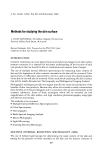
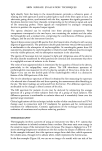
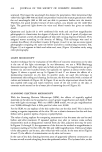
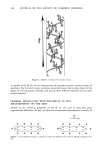
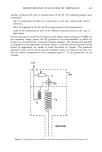
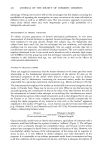
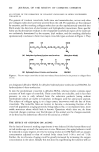
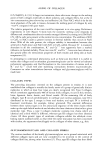
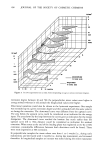
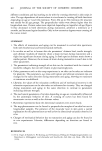
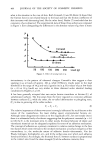
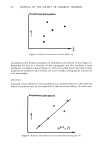
440 JOURNAL OF THE SOCIETY OF COSMETIC CHEMISTS AN OUTLINE OF THE FORMATION OF COVALENT CROSS-LINKS IN NEWLY-SYNTHESIZED COLLAGEN (8) The genesis of covalent cross-links, both intra and intermolecular, occurs only after pro-collagen molecules have been secreted from the cell. Pro-peptides are first released by enzymes, and the resulting collagen molecules can then spontaneously assemble into fibrils under the direction of electrostatic and hydrophobic interactions. Next, specific lysine and hydroxylysine residues in the telopeptide (nonhelical) region of the molecule are oxidatively deaminated by the enzyme, lysyl oxidase, and the resulting aldehydes spontaneously condense to form two major cross-link types as shown in Figure 1. They C(•H OH COOH •2 •2 (A) Dehydro-hydroxylysino-norleucine (dehydro-HLNL) COOH OH 0 COOH NH 2 NH 2 (B) Hydroxylsino-5-keto-norleucine (HLONL) Figure 1. The two major cross-links in their non-reduced forms believed to be present in collagen fibers in vivo. are designated dehydro-HLNL for dehydro-hydroxylysino-norleucine and HLONL for hy d roxylysino- 5- keto-norleu c ine. In skin the predominant cross-link is dehydro-HLNL, whereas tendon contains equal amounts of both types of cross-link. These cross-links are reducible, and in fact their presence in vivo is only inferred from the reduction products (using sodium borohydride) which are stable to hydrolytic techniques used for amino-acid analysis. The subject of collagen aging is, to a large extent, interwoven with the fate of these cross-links. The reducible links are known to become a decreasing fraction of the cross-link population as aging proceeds, being replaced by, or incorporated into, more stable structures about which little is known. Questions which arise are, do these cross-link changes continue over the life-span of the animal are the changes essential or do they lead to deleterious effects for the animal as a whole? THE EFFECT OF OXYGEN ON AGING On the basis of isometric melting experiments it was deduced (4) that human flexor and rat tail tendon age at much the same rate in vivo. Moreover, this aging behavior could be mimiced in many respects in vitro, by storing tendon in 0.15M NaC1 with an oxygen concentration adjusted to that of normal body tissue level (-50 n mol ml -•) (9). Further, the in vitro rate of aging could be greatly increased by increasing the oxygen concentration in the saline. Initially this was done by equilibrating the solution with air

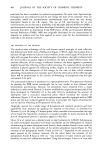
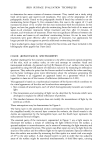
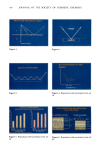
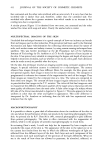
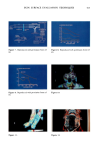
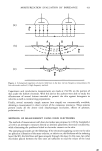
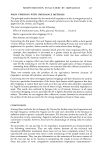
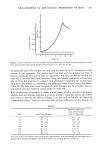
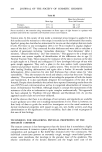
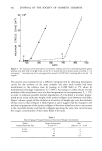
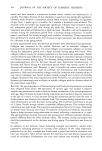
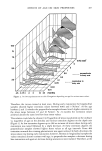
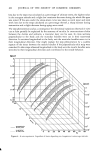
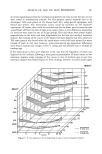
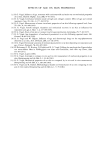
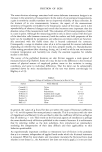
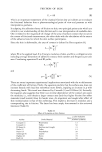
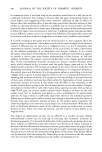
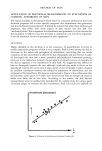
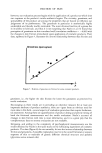
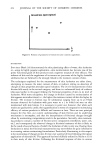
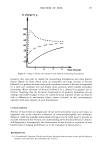
AGING OF COLLAGEN 441 20- ,• 106 so 6'o 78 8b 90 TEMPERATURE Figure 2. Isometric melting curves for rat tail tendon, in O.15M NaCI from an animal killed at 40 days. A. No in vitro aging. B. 180 days in vitro aging in O.15M NaC1 containing 50 n tool ml -• oxygen, (body tissue level) 20øC. C. 180 days in vitro aging in O.15M NaCI containing 300 n mol ml • oxygen, 20øC. Curve B is similar to that which would be obtained with tendon from a rat killed at (40 + 180) days. at atmospheric pressure (i.e., a partial pressure of oxygen of 20 kPa). Experiments in progress with oxygen at high pressure (7M Pa) show a very rapid rate of increase in aging under certain conditions (•1200 X in vivo rate), although some features appear in the isometric melting curves which do not occur at lower oxygen concentration. Figures 2 and 3 summarize the general behavior and the aging rates at different oxygen concentrations, expressed as the increase in maximum stress per year, in an isometric melting experiment, are tabulated in Table 1. In another experiment (5) tendons from three mammals (man, rat, and dog of widely differing life-spans, but whose collagens with respect to amino acid composition are virtually identical) were extended in O.15M NaC1 at body temperature (36øC) until they broke. Plots of stress at break and tensile modulus as a function of age resulted in smooth curves linking data for all animals. The curve shape as represented by the data for stress at break (Figure 4), for example, suggests that as the animal ages its tendon approaches a limiting stability caused in part by an increase in the cross-link density and/or a change in the nature of the cross-link.
Purchased for the exclusive use of nofirst nolast (unknown)
From: SCC Media Library & Resource Center (library.scconline.org)