EFFECTS OF AGE ON SKIN PROPERTIES 459 and aging period. Therefore, perpendicular samples were higher in young animals and lower in old animals. The same also holds true for the extension degree of 60%. As far as the modulus of elasticity was concerned, the same relation between longitudinal and perpendicular samples was found as for the stress values. The differences at 40% extension degrees were even more pronounced. Concerning the energy input during the loading phase similar differences could again be stated. In old animals the longitudinal samples had considerably higher values. At 40% extension degree an increase was noted for both directions during early maturation, followed by a decrease during late maturation, a minimum at 2 months, and an increase during aging. Energy dissipation showed a similar pattern for all extension degrees. Again a crossing of the curves was noted at 40% and 60% extension. The most important value for the hysteresis experiment is the ratio between energy dissipation and energy input at each hysteresis cycle. At the low extension degree of 20% a more or less steady decrease of this ratio was noted during the whole maturation and aging period for both directions. The values for the longitudinal samples were higher at each age interval. At 40% extension the continuous decrease was noted for longitudinal samples only. Perpendicular samples showed an increase during matura- tion, a maximum at 4 months, and a slight decrease later on. Therefore, once more a crossing of the curves was noted, resulting in higher values for the perpendicular samples in adult and old animals. Crossing of the curves was also noted at 60% extension degree. Residual extension was higher in longitudinal samples at 20% extension in all animals. No clear age-dependence of this parameter had been found at this extension degree. At 40% extension there was an increase during early maturation however, the values kept rather constant later on. In adult and old animals the perpendicular samples were higher. A similar observation was made at 60% extension, where a slight decrease was found during the senescence period. If residual extension was calculated as percentage of ultimate strain, the differences between longitudinal and perpendicular samples were more impressive. In this case a crossing of the curves was already observed at 20% extension, where the longitudinal values were higher in adult and old animals. At 40% extension the perpendicular samples showed an increase during early maturation, a sharp decrease during late maturation, and a slight increase thereafter. Longitudinal samples had a much less pronounced age-dependence. In young animals the perpendic- ular values were much higher than in adult and old animals and somewhat lower than in the longitudinal samples. At 60% extension a similar pattern was observed. The directional variations found in vitro can at least partially be explained by the step-phenomenon. This phenomenon was observed in the skin of several animal species. In rat skin the step-phenomenon was found in perpendicular samples only. If the lower part of the stress-strain curves were analyzed very closely, an almost exponential increase of stress up to 25% of total extension was found. Then a sudden decrease of stress was noted, followed by an almost linear increase. Then again a sudden decrease was observed, followed by a steeper increase. The step-phenomenon could be noticed up to 3 times in one sample. The stress loss and the elongation gain due to each step could be measured. The total stress loss or the elongation gain due to the steps or the total work loss depending on maturation and age were increased due to maturation and due to aging. If elongation gain due to the steps was calculated as a percentage of ultimate strain, again a maximum at 4 months was found. If total stress

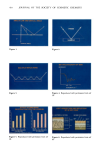
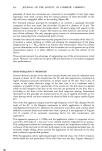
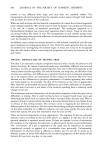
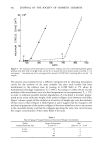
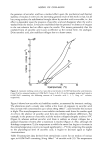
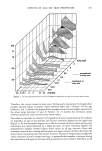
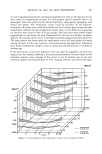
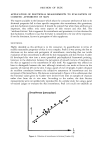
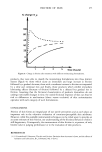
460 JOURNAL OF THE SOCIETY OF COSMETIC CHEMISTS loss due to the steps was calculated as a percentage of ultimate stress, the highest value in the youngest animals and a slight but continous decrease during the whole life-span was noted. If the area under the stress-strain curve was taken as work input and total work loss due to the steps calculated as a percentage thereof, a sharp increase during maturation and a slight decrease during aging were noted. The step phenomenon and as a consequence the directional variations observed in vitro can at least partially be explained by the anatomy of rat skin. In cross sections of skin between the dermis and subcutis, a muscular layer can be seen. In cross sections perpendicular to the body axis the muscular bundles were cut in their transversal direction. In sections longitudinal to the body axis the muscular bundles were cut in their longitudinal direction. One might explain the step phenomenon by a sudden rupture of the tissue between the muscle bundles if the perpendicular skin strip were extended. In skin strips obtained longitudinal to the body axis the muscle bundles were stretched in their longitudinal direction and contributed to the tensile behavior. I!•nrn• 5q 1 30 24 [l•rnrn •] 2 1 5•1• • ld' 5.1d = 4' perpendlculer to body axil ........ tO body axle 0 10 20 30 40 50 60 70 80 [4] Figure 4. In vivo experiment. Logarithm of stress depending on elongation at various age intervals.
Purchased for the exclusive use of nofirst nolast (unknown)
From: SCC Media Library & Resource Center (library.scconline.org)