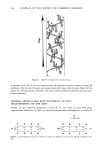
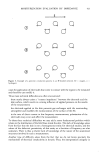
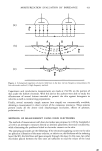
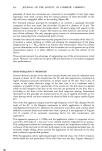
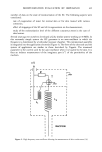
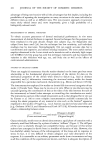
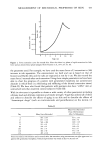
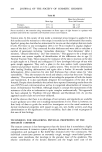
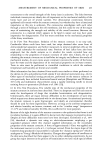
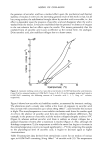
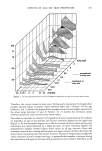
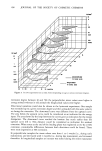
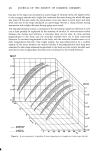
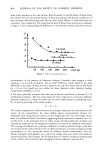
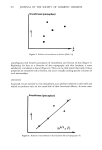
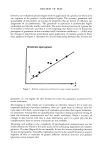
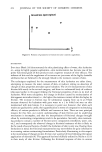
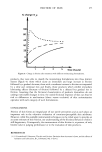
474 JOURNAL OF THE SOCIETY OF COSMETIC CHEMISTS Greasiness (perception) 0 1 Figure 8. Relation of greasiness to friction for some cosmetic ingredients. HYDRATION Ever since Blank (14) demonstrated the skin plasticizing effect of water, skin hydration or--using its highly popular euphemism--skin moisturization has become one of the prime functional goals of skin products and a supreme measure of their efficacy. The softness of skin and the suppleness of its texture are just some of the highly desirable attributes that are believed to be strongly linked to the moisture content of skin. The techniques employed for the measurement of skin hydration are either direct, attempting to measure the water content of skin, or indirect, relying on detection of changes in skin properties attendant upon hydration. The in vivo measurements of skin friction falls neatly in the second category, and there is a substantial body of evidence (discussed earlier in this paper) linking the frictional properties of skin to its level of hydration. With some exceptions, the change in friction caused by moisturization of skin appears monodirectional, i.e., the higher the moisture content of skin the higher its friction. The increase in friction may be substantial, ranging from up to an 8-fold increase observed for hydration with pure water to a 2 to 4-fold rise seen on skin moisturized with skin lotions. It is necessary to point out, however, that while such results are qualitatively useful, their quantification in terms of comparative moisturizing efficacy of various products is difficult and tenuous at best. There are two principal reasons for this: first, our current understanding of skin friction and its underlying mechanism is incomplete, and thus the interpretation of frictional changes brought about by moisturizing compositions tends to be speculative. Secondly, skin moisturiz- ing products contain a number of friction-active components (emollients, water, oils, etc.), and consequently the observed change in frictional resistance of skin is likely to be the result of several factors, of which the hydration of skin is only one. Bearing these limitations in mind, the frictional measurements may nevertheless be quite informative in screening various moisturizing formulations. Particularly illuminating in this respect is the monitoring of changes in skin friction over a period of time following the topical application of materials (9). This approach has been skillfully utilized by Nacht et al. (5) in their study of skin friction. Following the frictional response of skin to various

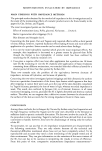
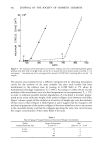
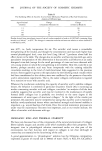
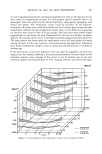
FRICTION OF SKIN 475 % change in lOO 0 ß 0 0 ß ß 60 : ',,oo...,, . ß ß . 2O 0 -20 1 2 3 • Time (hours) Figure 9. Change in friction after treatment with different moisturizing formulations. products, they were able to classify the moisturizing formulations into three distinct classes (Figure 9): those which cause an immediate and large increase in friction followed by a gradual decrease those with a moderate increase in friction accompanied by a slow and continual rise and finally, those products which exhibit immediate lubricating effects (decrease of friction) followed by a delayed but gradual rise in friction. Assuming that the frictional characteristics of products themselves do not undergo noticeable changes in time, the varied frictional response of skin can thus be tied to differences in mechanisms (direct versus occlusive) of skin moisturization operative with each category of such formulations. CONCLUSIONS Friction of skin forms an integral part of our tactile perception and as such plays an important role in the objective evaluation of consumer-perceptible skin attributes. However, while the available instrumental techniques can be relied upon to provide an accurate estimate of skin friction, our understanding of the frictional behavior of skin is still fragmentary. Consequently, the measurement of skin friction is, at present, of only limited value in judging performance or in the evaluation of skin products. REFERENCES (1) S. Comaish and E. Bottoms, The skin and friction: Deviation from Amonton's Laws, and the effects of hydration and lubrication, Br.J. Dermatol., 84, 37 (1971).
Purchased for the exclusive use of nofirst nolast (unknown)
From: SCC Media Library & Resource Center (library.scconline.org)