j. Soc. Cosmet. Chem., 34, 429-437 (December 1983) Techniques for measuring mechanical properties of skin R. MARKS, Department of Medicine, [Velsh National School of Medidne, Heath Park, Cardiff CF4 4XN, [Vales. Received September 1983. Presented at the IFSCC/SCCJoint Conference on Skin, San Francisco, September 1983. INTRODUCTION The study of the skin's mechanical properties is still regarded with a mixture of quizzical amusement and disguised cynicism. It is rare to find one of the many techniques available being used to answer a question in which a mechanical property testing technique is not inherent to the problem. A wide variety of pharmacological, biochemical, and strictly clinical inquiries could be tackled using mechanical testing methods. Why is it that so many investigators shun these techniques? This paper discusses the reasons for the underutilization of physical testing procedures. It will also suggest techniques for the measurement of the skin's mechanical properties which can provide useful information for practicing skin biologists (clinicians, skin pharmacolo- gists, cosmetic scientists) and which take account of the many intrinsic difficulties in the subject. GENERAL REASONS FOR UNDERUTILIZATION OF PHYSICAL TESTING PROCEDURES Our educational system has much to answer for. In general terms the sciences are split into the soft, qualitative variety exemplified by biology and its various subdisciplines and the hard, quantitative type exemplified by mathematics and the physical sciences. It is true that in the past two decades there has been an increasing recognition of the importance of the latter to the former, but we are still suffering from the basic separation between them. Although biologists now realize the benefit of being numerate, the schism is maintained by mathematicians who see little benefit from contact with the biologists. This is the basic disadvantage with which those interested in the mechanical performance of tissues have to cope. In my view it is one reason for the comparatively late development of bioengineering as a separate discipline as compared with biochemistry. Another major reason for the reluctance of biologists to use engineering methodology concerns the physical heterogeneity of tissue. Bone is not constructed like steel girder, 429

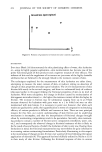
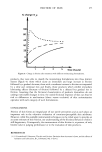
430 JOURNAL OF THE SOCIETY OF COSMETIC CHEMISTS tendon is very different from rope, and skin does not resemble rubber. The interpretation of tests borrowed from the material science arena is fraught with hazard and accounts for much of the confusion. When we wish to know the biochemical composition of a tissue the technical approach has an elegant simplicity. We merely remove some by biopsy or at autopsy and examine it by one of a variety of analytical procedures. The analogous approach to a biomechanical problem may create more questions than it solves. Tissue in vitro does not always behave like tissue in vivo. The juxtaposition to and variably strong union with neighboring tissues provide influences on the physical performances of tissue that can't be emulated in vitro. In addition, many tissues are acutely sensitive to the ambient conditions, and this also puts constraints on testing procedures in vitro. There are some questions that can only be answered by investigating the isolated organ or tissue, but it has to be recognized that this will mostly inform concerning the properties and rarely the function of the part tested. SPECIFIC DIFFICULTIES IN TESTING SKIN The skin is an extremely complex composite structure with a variety of protective and barrier functions. Its various constituent parts have identifiably different structure and functions, yet they are strongly bonded together. Not only is there heterogeneity in the vertical sense but also regionally. The sole of the foot, the scalp skin, and the skin of the scrotum are extremes, and differences in physical function and mechanical properties are to be expected from an examination of their respective structures. But even more irksome are the differences in physical performance of similar appearing skin within one body region as, for example, the skin of the forearm as the wrist is approached. Here there are no detectable structural differences, and clearly difficulties in interpreta- tion will arise if account is not taken of the variation resulting from a relatively small change in test site. The anisotropy and time dependence of the physical properties of skin also give rise to difficulties in testing. Skin is under resting tension as Langer found many years ago observing that holes made in cadaver skin with a rounded object became oval. When a segment of skin is removed from the body it becomes thicker than in vivo (Table I) due to release of this resting tension. The tension varies in magnitude and direction in different parts of the anatomy. For this reason when taking multiple observations either on the same individual or in different subjects, not only must exactly the same site be tested but exactly the same test orientation must be used as well. There are several components to time dependence. The response of skin to a physical stimulus varies according to the rate with which it is applied. It will also vary if the physical stimulus is repeated several times. If there are repeated cycles of stimulation the variation in the response becomes less--a phenomenon known as preconditioning. The "test history" of a site is important as the result may be influenced by stresses experienced recently or applied at a considerable time previously. Unfortunately, information on this last point is difficult to obtain, and we are left in doubt as to whether a game of tennis will influence the mechanical properties of the dermis of the forearm for one hour, one day, or one week.
Purchased for the exclusive use of nofirst nolast (unknown)
From: SCC Media Library & Resource Center (library.scconline.org)