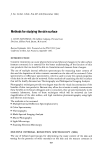
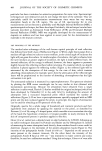
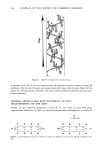
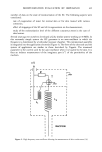
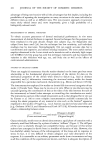
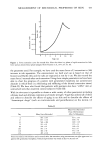
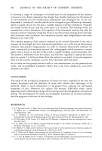
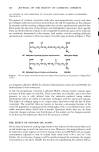
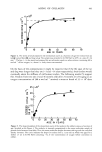
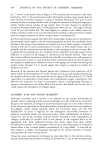
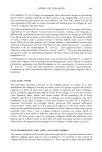
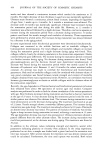
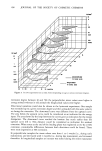
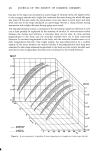
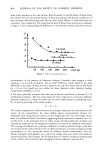
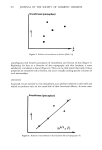
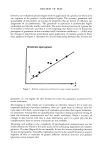
420 JOURNAL OF THE SOCIETY OF COSMETIC CHEMISTS E Figure 1. Dipoles orientation for a keratin chain. In studies of the SC the in vivo measurement of impedance poses a certain number of problems. For the last 10 years numerous researchers have tried to solve them. In this paper we will enumerate, describe, and discuss these different methods and the main results obtained. GENERAL DIFFICULTIES WITH ELECTRICAL IN VIVO MEASUREMENTS ON THE SKIN Studies on the electrical properties of the SC in vivo have to deal with great experimental difficulties. In fact, an electrical measurement presupposes in nearly all + + + _+_) 6 + + +6- -- -- -+ + - - - - + + + + d- + + + + Figure 2. Ion relaxation around a corneocyte under the influence of an electric field [according to Clar (3)].

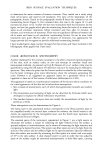
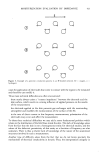
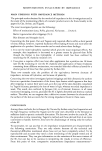
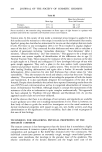
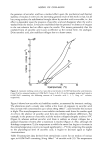
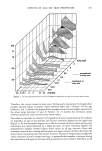
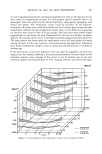
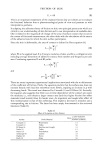
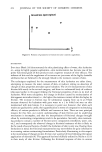
MOISTURIZATION EVALUATION BY IMPEDANCE 421 Figure 3. Example of a protonic conduction process in an H-bonded network. (O = oxygen, o = hydrogen). cases the application of electrodes that come in contact with the region to be measured and therefore can modify it. Three main technical difficulties are often encountered: there nearly always exists a "contact impedance" between the electrode and the skin surface, which results in a strong influence of applied pressure on the results of the measurement the electrode applied to the skin prevents gas exchanges with the surrounding atmosphere and modifies the moisturization of the surface of the SC in the case of direct current or low frequency measurements, polarization of the electrodes may occur and affect the measurement. To these three technical difficulties we may add a more fundamental problem which relates to the distribution of the field lines inside the skin. This lack of knowledge arises from the fact that the skin is not a homogeneous entity for electrical studies, and the values of the dielectric permittivity of this entity as a function of frequency are also unknown. There is thus a relative lack of knowledge of the nature of the anatomical structures involved in such a measurement. Another type of difficulty arises from the fact that we do not know precisely the mechanisms of electrical conductivity in keratin. Thus, the interpretation uniquely in
Purchased for the exclusive use of nofirst nolast (unknown)
From: SCC Media Library & Resource Center (library.scconline.org)