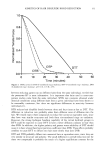
ABSTRACTS 103 and 3 h for the above organisms. At these concen- trations, the N-chloramine mostly gave biphasic curves. A combination of minimal inhibitory con- centrations of the N-chloramine (0.005%) and diazo- lidinyl urea (0.015%) gave synergistic activity against bacteria but not the fungi. This synergistic activity was not adversely affected in the presence of the organic enrichment. At the higher concen- trations, the combination of the N-chloramine and the diazolidinyl urea gave synergistic activity against species of Aspergillus and Fusarium. In pre- liminary tests with a water-based mascara, the com- bination of the diazolidinyl with parabens was cidal for P. aeruginosa at concentrations over l0 cells/g of mascara. Self preservation in cosmetics Charles Fuchs, B.S., Clairol Inc., 2 Blachley Road, Stamford, CT 06902 Cosmetic products are often developed with pres- ervation as an afterthought or final consideration. This can result in a substandard preservative system and add unnecessary cost to the formulation. Op- timization of intrinsic antimicrobial attributes such as pH, water content, and/or key raw materials may reduce or eliminate the need for adding preserva- tives. The food and dairy industry has practiced this research and development style for many years, cap- italizing on natural ingredients wherever possible. Two cosmetic preservative studies illustrate the benefits possible. In one instance, formula analysis resulted in a reduction in preservative levels, while basic changes in a second product enhanced preser- vative activity or eliminated the need for preserva- tives. When cosmetic preservation is an integral part of the R&D process, it results in a higher stan- dard of quality. SCIENTIFIC SESSION III COMEDOGENICITY Comedogenicity-structure/activity correlations and formulating considerations Monroe Lanzet, B.S., Max Factor & Co., 1655 North McCadden Place, Hollywood, CA 90028 Myra O. Barker, Ph.D., Mary Kay Cosmetics, 1330 Regal Row, Dallas, TX 75247 A large number of surfactants and emollients have been studied at varying concentrations using the Kligman modified rabbit ear procedure. Formula- tions containing ingredients which produced high scores were likewise tested. These contained single ingredients and products with a combination of sus- pected comedogenic substances. From these data, hypothetical correlations were made between ap- parent comedogenicity and molecular size, degree of branching, unsaturation, and types of molecules (i.e., alcohols, acids, esters, and ethers). We learned that degree of comedogenicity was concentration- dependent and that the concentration of all come- dogenic ingredients was additive with respect to severity of the comedogenic response. On this basis, certain guidelines for formulators could be devel- oped. To test the structure-activity relationships postulated, new molecular entities were created with predictions as to their degree of comedogen- icity. Subsequent rabbit ear testing confirmed our predictions. Evaluation of test methods for comedogenicity Otto H. Mills, Jr., Ph.D., Hill Top Research, Inc., 222 Route 18, East Brunswick, NJ 08816 and Rut- gers Medical School, Academic Health Science Center, Div. of Dermatology CN19, New Bruvs- wick, NJ 08903 Both animal and human bioassays for comedogen- icity have been described in the literature. In order to evaluate these screens, this presentation will de- fine comedogenicity and review the specific methods and modifications of the animal and human model assays that have been reported in use. Aspects of the rabbit ear and human back tests which will be covered are: (1) number of animals or humans per assay (2) duration of assay (3) inclusion of positive and/or negative controls and (4) sam- pling and evaluation ted•niques (tissue biopsy, whole mount, follicular biopsy, clinical grading, etc.). The data reported in the literature will also be surveyed, giving emphasis to the areas of interest to the cosmetic chemist. Cosmetic acne--A clinical picture Alan R. Shalita, M.D., SUNY Downstate Medical Center, 450 Clarkson Avenue, Brooklyn, NY 11203 :' Cosmetic ache is usually a disease of young adult women manifested by numerous closed coinedones (whiteheads) and occasional inflammatory lesions. Variants, however, may occur in teenagers as well as in older women. Selected fo•ms, such as Pomade ache, may occur in men. Although attributable to certain comedogenic ingredients in cosmetics, cos- metic ache does not occur universally. Specific subgrounds of the population appear to be at greater risk. In our experience, two contrasting groups, blacks and those of Celtic background, appear to be more susceptible. In addition, contributing factors such as hormonal disorders, stress, and physical fac- tors may play a role. The common denominator in all forms of cosmetic ache appears to be an induction of abnormal follicular keratosis. The latter produces the plugging of the follicular canal which results in comedo formation either clinically or microscopi- cally.

104 JOURNAL OF THE SOCIETY OF COSMETIC CHEMISTS SCIENTIFIC SESSION IV POLYMERS Polymers in cosmetics--An overview of recent commercial product Robert L. Raymond, B.S., Firmenich, Inc., P.O. Box 5880, Princeton, NJ 08536 As moderator the author will present an overview of the cosmetic new product activity in recent years using various functional polymers. Product cate- gories such as hair care, skin care, suntan/sunscreen products, make-up, shaving preparations, etc. will be reviewed as a general introduction to the tech- nical papers that will be presented in the technical session. Silicon polymers in skin-care products Helen M. Klimisch, M.S., Stefan F. Rentsch, B.S., and Grish Chandra, Ph.D., Dow Corning Corp., Box 994-Mailstop C4ID01, Midland, MI 48640 Since the first silicone-containing lotion was intro- duced over 30 years ago, silicones have grown in- creasingly important in skin-care formulations. With the advances in silicone chemistry, many dif- ferent structures and compositions have been de- veloped. We were interested in identifying what benefits these new materials might have for care of skin. To this end, an Attentuated Total Reflectance (ATR) method using Fourier transform infrared spectroscopy (FTIR) was developed to quantitate the level of silicones on human skin. This methodology will be discussed. In addition, data will be pre- sented demonstrating the utility of this technique in the study of structure/performance relationships of silicone polymer systems applied to the skin. Methods for evaluating new hair care polymers Stephen C. Johnson, Ph.D., GAF Corporation, 1361 Alps Road, Wayne, NJ 07470 The ability of the formulating chemist to develop new efficacious marketable products is limited by the raw materials available. Synthetic chemists at the raw material suppliers have the ability to create a wide variety of new compounds. They are limited by their understanding of the needs and desires of the formulating chemist. The challenge, therefore, exists to have meaningful communications between the cosmetic manufacturers and the raw material suppliers at the chemist level. By doing this, spe- cific product goals and relevant screening proce- dures can be established for the synthetic chemist. The purpose of this presentation is to describe sev- eral of the screening tests used to design new and efficacious hair care polymers. Cationic polymer substantivity measurements using different in vitro animal skin models William L. Klein, B.A., and Arthur R. Sykes, B.S., Calgon Corporation, P.O. Box 2000, Rahway, NJ 07065 An extensive number of studies were performed to assess the substantivity of high molecular weight poly-(dimethyldially-ammonium chloride) and its acrylamide copolymer to keratin. This effort was intended to advance understanding of the behavior of these highly charged, cationic polymers under realistic cosmetic use conditions. 14C-tagged polymer systems tested included: aqueous solutions, liquid surfactants, and anionic and nonionic lotions and creams. The primary focus of this paper is di- rected toward results obtained from in vitro studies conducted on the outermost skin surfaces of hairless mice, fetal pigs/calves, and adult pigs. The results indicate that both poly-(dimethyldially-ammonium chloride) and its acrylamide copolymer are substan- tive to the stratum comeurn of all animal models tested under realistic use conditions and that sub- stantivity levels are affected by polymer concentra- tion, vehicle, exposure time, rinse solution, and temperature. Skin care applications based on the physico- chemical properties of hyaluronic acid Philip A. Band, Ph.D., and Endre A. Balazs, M.D., Biomatrix, Inc., 65 Railroad Ave., Ridge- field, NJ 07657 Elastoviscous molecular networks of hyaluronk: acid (HA) hold water, maintain turgor, and provide vis- coelasticity in healthy human skin. Using a medical technology known as Matrix Engineering, these unique biological properties can be preserved in HA-based materials. Matrix Engineering exploits the beneficial attributes of high molecular weight HA in topical skin care products. Methods for mea- suring the dynamic rheological properties of HA preparations and relating these to cosmetic end ben- efits will be presented.
Purchased for the exclusive use of nofirst nolast (unknown)
From: SCC Media Library & Resource Center (library.scconline.org)