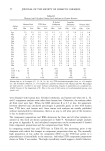
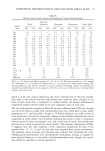
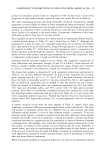
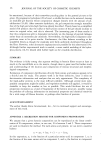
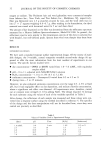
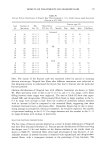
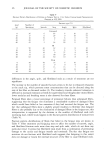
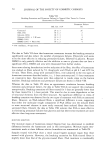
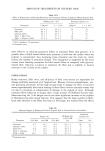
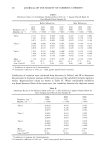
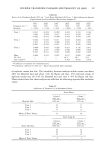
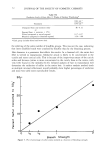
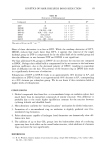
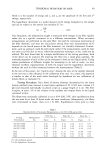
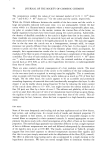
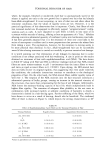
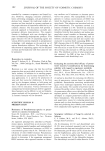
50 JOURNAL OF THE SOCIETY OF COSMETIC CHEMISTS Table VII Breaking Extensions and Premature Failures for Negroid Hair Treated in Various Humectants for Three Days Premature Failures Treatment Brk. Ext. (%)* (%) Untreated 29 --- 3 26 PAA (5%) 38 --- 2 2 Glycerin (30%) 38 + 3 6 Glycerin (30%) + 2 M urea 39 + 2 4 DMSO (10%) 33 --- 3 14 DMSO (10%) + PAA (5%) 38 + 2 4 * 95% confidence, 50 specimens. The data in Table VII show that humectant treatments increase the breaking extension significantly and also reduce the number of premature failures. Polyacrylic acid seems to be the most effective in reducing premature failures, followed by glycerin. Because DMSO is only partially effective and the addition to urea to glycerin does not have a significant effect, DMSO and urea were eliminated from further studies. Since most relaxing formulations involve reduction of the fiber, the effect of humectants was studied on fibers reduced by 5% thioglycolic acid (TGA) at pH 8.5 and 40øC for 30 min. These fibers, along with untreated fibers, were subjected to the two types of humectant treatment described earlier, i.e., 3 days continuous and 3 1-hour treatments on consecutive days. Specimens were then subjected to tensile stress on the Instron machine. Breaking extensions and premature failures are shown in Table VIII. Whereas the data in Table VII show an approximate correlation between breaking extension and premature failure, the data in Table VIII do not support this conclusion unequivocally. Breaking extensions of fibers treated for 3 days are generally lower than for those treated for 3 1-hour periods. This must be due to some degradation or loss of structural elements from the fiber structure. No significant difference in terms of breaking extension was observed for the two types of treatment with PAA on untreated fibers. However, on TGA-reduced fibers, a significant difference is seen, suggesting that either low molecular weight components of PAA diffuse into the reduced fibers or some structural element is more easily extracted from reduced fibers than from untreated fibers. Overall, the data in Table VIII indicate that PAA is more effective in eliminating premature failures than glycerin and that short-term treatments are more effective than long-term treatments. MOISTURE SORPTION The moisture regain of humectant-treated Negroid hair was determined to establish differences between the humectants used in this investigation. Moisture regain mea- surements made at three different relative humidities are summarized in Table IX. Samples treated with PAA show a trend toward higher moisture regain than those treated with glycerin. However, the breaking extension for PAA-treated fibers is slightly lower than that of the glycerin-treated fibers. PAA treatment is considerably

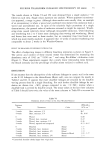
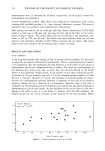
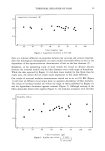
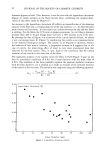
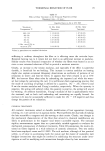
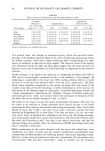
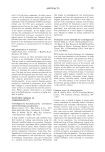
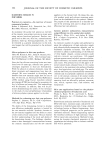
EFFECTS OF TREATMENTS ON NEGROID HAIR 51 Table VIII Effect of Humectants on Breaking Extensions and Premature Failures of Reduced (TGA) Negroid Hair Breaking Ext. (%)* Premature failures (%) Treatment 3 Days** 3 X 1 h** 3 Days** 3 X 1 h** Untreated 29 -+ 3 29 -+ 3 26 26 PAA (5%) 38 + 2 38 -+ 3 2 6 Glycerin (30%) 38 + 3 42 ___ 1 6 14 TGA + PAA (5%) 34 -+ 3 47 q- 3 10 4 TGA + Glycerin (30%) 43 - 4 52 -+ 5 10 16 * 95% confidence, 50 specimens. ** Treatment time. more effective in reducing premature failure in untreated fibers than glycerin. It is possible that in PAA-treated fibers more moisture is held near the surface where the polymer is concentrated, thus increasing stress relaxation near the crack tip, which reduces the number of premature failures. This assumption is supported by the trend toward lower breaking extensions for PAA-treated fibers as compared with glycerin- treated fiber. Glycerin is known to penetrate the fiber and is unlikely to localize moisture in the vicinity of the surface. CONCLUSIONS Kinky structure, fiber twist, and ellipticity of fiber cross section are responsible for damage problems associated with Negroid hair. Because of severe entanglements, rou- tine grooming procedures involve high enough loads to damage the fiber. It has been shown experimentally that tensile loading of these fibers involves torsional stresses that can lead to initiation or enhancement of damage in the regions of twist. Although untreated fibers subjected to fatigue show a large number of fibrillated fracture ends, fibers surviving the 11-kc fatigue test do not show significant increases in the number of fibrillated ends after tensile fracture. This suggests that the large number of fibril- lated ends observed in the fibers that failed in the fatigue test resulted from the effects Table IX Moisture Regain of Humectant-Treated Negroid Hair at Various Relative Humidities Premature Regain (%) Breaking Ext. Failures (%) at 65% RH Treatment 33% RH 44% RH 65% RH (%) 3 Day* 3 h* Untreated 8.7 10.3 15.3 29 q- 3 26 26 Glycerin (30%) 7.1 9.5 15.1 42 _+ 1 6 14 PAA (5%) 9.6 12.4 17.2 38 -+ 3 2 6 TGA + Glycerin 7.5 11.5 15.6 52 q- 5 10 16 TGA + PAA 10.7 11.8 15.9 47 q- 3 10 4 Treatment time.
Purchased for the exclusive use of nofirst nolast (unknown)
From: SCC Media Library & Resource Center (library.scconline.org)