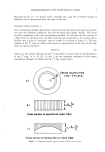
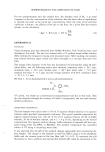
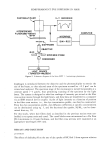
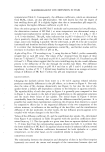
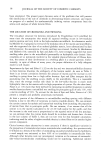
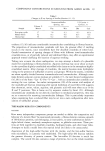
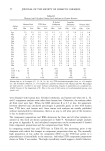
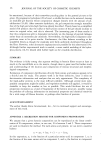
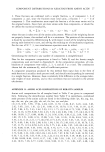
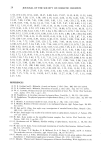
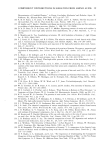
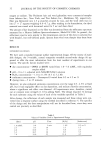
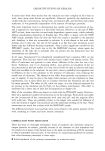
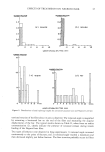
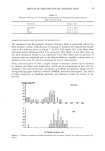
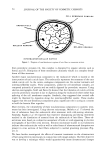
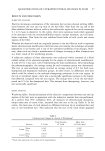
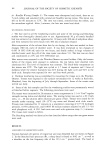
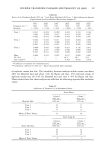
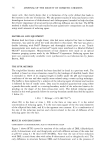
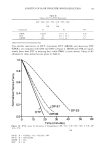
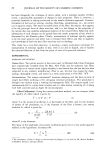
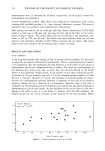
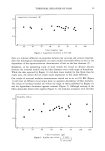
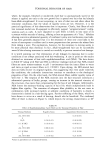
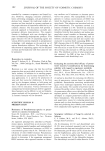
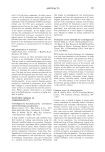
SEMIPERMANENT DYE DIFFUSION IN HAIR 7 PHOTOMULTI PLIER i NTE RFE R E NCE•'""•'I FILTER (360-700n rn) I X-Y RECORDER INTERFACE COMPUTER --i--- •.• IBM-RDC • DIAPHRAGSTAGESPECIMEN OBJECTIVE • I---'1 i• CONDENSER I LIGHT SOURCE ( TUNGSTEN-HALOGEN ) Figure 2. Schematic diagram of the Leitz MPV l. 1 microscope photometer. diaphragm is introduced between the objective and the photomultiplier to restrict the size of the beam, so that selected areas of the specimen as small as --0.5 •m 2 can be viewed and analyzed. The specimen stage of the microscope is moved horizontally at a constant speed (--3 •m/s), thus permitting scanning of the specimen by the light beam. The system is designed to take four readings of intensity per second as the fiber cross section moves through the light beam, and these data are transferred to a computer via an IBM research device coupler. A plot of light intensity as a function of position in the fiber cross section, i.e., the dye concentration profile, can then be constructed. From the dye concentration profile, dye diffusion coefficients at specific concentrations can be determined using eq. 3, and the fractional dye uptake, Mt/M•, can be deter- mined from eq. 10. For this study, white hair fibers dyed as described in the previous section were em- bedded in an epoxy resin and cured. The cured blocks were microtomed on a Du Pont JB-4 microtome to 10 •m thickness, and the fiber cross sections were examined at an appropriate wavelength (491 nm). RESULTS AND DISCUSSION pH EFFECTS The effects of dyebath pH on the rate of dye uptake of HC Red 3 from aqueous solution

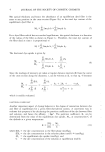
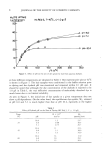
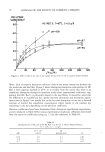
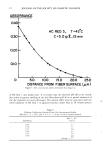
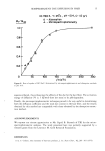
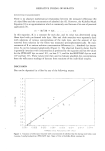
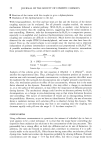
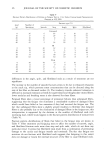
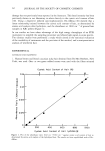
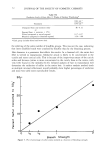
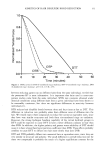
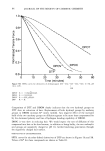
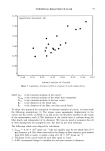
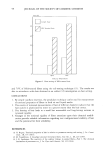
8 JOURNAL OF THE SOCIETY OF COSMETIC CHEMISTS Mt, DYE UPTAKE [p. mol/g hair) HGRED $, T=42'C, G=l.O g/oe 5O 40 • =6.0 pH=5.t
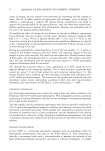
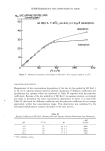
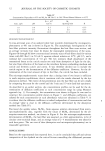
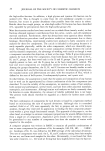
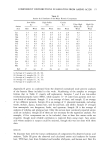
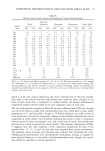
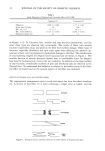
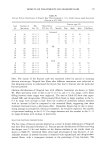
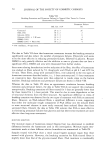
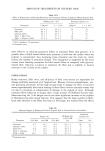
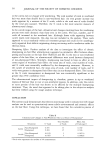
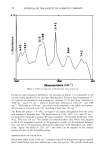
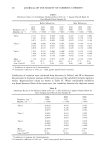
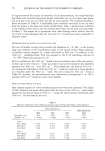
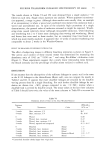
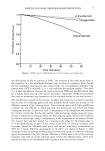
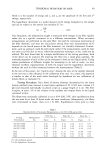
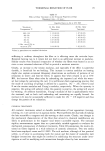
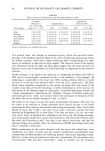
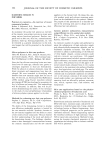
pH $0 pH = 10.4 20 I0• i • • i i i 0 50 tO0 t50 200 250 :500 tV2 (SV2) Figure 3. Effect of pH on the rate of dye uptake by hair from aqueous dyebath. at three different temperatures are tabulated in Table I. One representative plot at 42øC is shown in Figure 3. The hair samples were conditioned in the buffer solution prior to dyeing and the dyebath pH was monitored and remained within 0.1 pH unit. It should be noted that although the dye concentration of the dyebath is reported to be 1.0 g/1 in Table I, the true (effective) concentration of molecularly dissolved dye is much lower due to its limited solubility. As seen in Figure 3, the initial rate of dye uptake at a given temperature does not show a pH dependence. On the other hand, the equilibrium dye uptake, Ms, attained at pH 6.0 and 5.1 is much higher than that at pH 10.4, especially at the higher Table I Effect of Dyebath pH on the Rate of Dyeing (HC Red 3, C = 1.0 g/l) Temp. D x 1020 (øC) pH (cm2/s) M•c (ptrnol/g hair) 10.4 1.5 25 6.0 0.68 5.1 0.75 10.4 11 42 6.0 3.1 5.1 3.3 10.4 33 6O 6.O 10 5.1 12 23.7 38.5 29.7 22.3 38.9 34.9 17.9 29.1 26.4
Purchased for the exclusive use of nofirst nolast (unknown)
From: SCC Media Library & Resource Center (library.scconline.org)