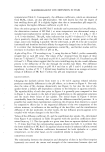
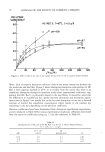
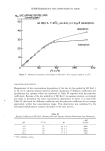
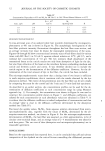
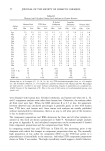
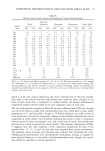
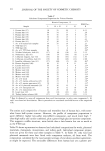
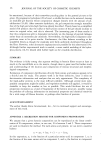
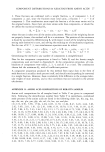
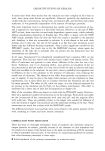
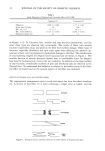
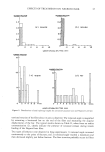
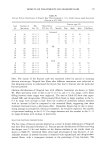
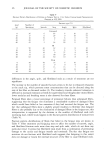
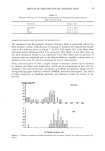
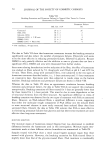
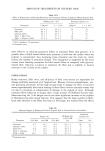
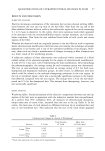
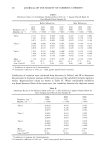
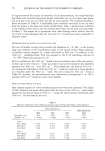
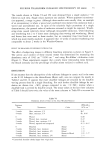
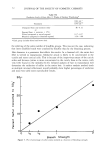
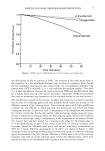
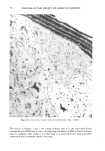
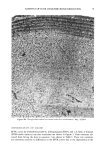
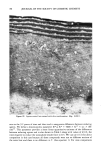
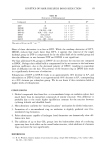
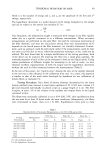
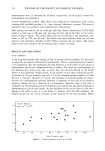
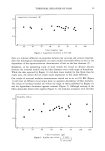
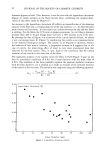
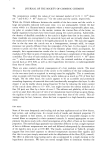
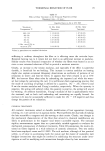
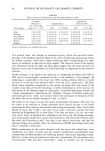
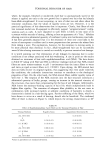
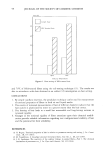
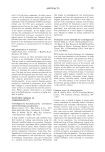
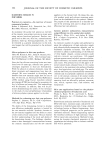
58 JOURNAL OF THE SOCIETY OF COSMETIC CHEMISTS in the cortex did not change with weathering. The total number of voids in weathered hair was more than double that in non-weathered hair. An even greater increase was made apparent by a measure of the % voids, which is the total area of voids divided by the total area scanned. Therefore, the % voids is the more sensitive measure of ultrastructural change. In the cuticle reigon of the hair, ultrastructural changes resulting from the weathering process were more dramatic than those seen in the cortex. The size, number, and % voids all increased in the weathered hair. Although linear voids appearing between cuticle layers were measured, this data was not included in the analysis. These voids appeared to occur randomly within all treatment groups and could not be unambigu- ously separated from defects originating during sectioning and/or irradiation under the electron beam. Shampooing EfJ•cts. Further analysis of the data to investigate the effect of chronic shampooing on hair fiber ultrastructure suggested an interactive effect between sham- pooing and location on the hair fiber (Tables II and III). In the root or non-weathered region of the hair fiber, no ultrastructural differences were noted between shampooed or non-shampooed fibers. Similarly, shampooing was found to have no effect in the cortex region of weathered hair fibers: the mean area of voids, total number of voids, and % voids were essentially unaffected by the shampooing treatment. However, in the cuticle of weathered hair, the mean area of voids, total number of voids, and % voids were greater in shampooed hair fibers than in non-shampooed fibers. The increase in the % voids measurement in shampooed hair was statistically significant at the greater than 95% confidence level. The ultrastructural impact of shampooing is, therefore, greater in tip or weathered regions of the hair than in root or non-weathered regions. In addition, only the cuticle or outer portion of the hair was shown to be affected by the multiple shampooing treatment. Thus, the trend that appeared to be taking place in the subjective analysis has been verified using the image analysis technique. CONCLUSION The current study demonstrates that electron microscopy used in conjunction with image analysis can be used to quantitatively assess subtle environmental and cosmetic effects on the hair fiber. Using this technique, we have found that the cumulative process of Table II Ultrastructural Changes in Non-Weathered Hair as a Result of Shampooing* Total Number Mean Area Treatment 73 Voids of Voids of Voids (•Lm 2) Cortex I Nøn-Shampøøed lShampooed Cuticle l Nøn'Shampøøed LShampooed 0.365 33 0.189 0.484 35 0.186 0.0335 5 0.00710 0.0165 4 0.00826 * Each value represents the median of 40 measurements.

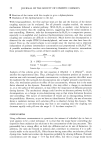
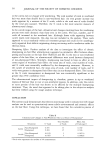
QUANTIFICATION OF ULTRASTRUCTURAL CHANGES IN HAIR 59 Table III Ultrastructural Changes in Weathered Hair as a Result of Shampooing* Total Number Mean Area Treatment % Voids of Voids of Voids (ptm 2) Non-Shampooed 1.05 Cortex [Shampooed 0.903 -Shampooed 0.412 Cuticle LShampooed 0. 725 76 0.176 67 0.187 35 0.0358 57 0.0448 * Each value represents the median of 40 measurements. weathering is reflected in ultrastructural changes in the cuticle and cortex of hair fiber cross sections. In addition, the impact of chronic shampooing on hair fiber ultrastruc- ture is limited to the cuticle region of weathered hair fibers. The use of electron microscopy to assess subtle changes in fiber structure requires that a representative sampling be made and a sufficiently large set of micrographs be re- viewed. Image analysis allows a more objective quantitative approach to electron mi- crograph interpretation and allows one to analytically verify observed ultrastructural effects. ACKNOWLEDGEMENTS We gratefully acknowledge the contributions of our statistician Steve Pozzi, Carrie Ackerman for computer programming assistance, Don Coble for providing the trans- mission electron micrograph, and Dr. Miklos Breuer for helpful discussions and con- tinued support. REFERENCES (1) G. E. Rogers, Electron microscope studies of wool and hair, Ann. N.Y. Acad. Sci., 83, 378-399 (1959). (2) R. D. B. Fraser, T. P. MacRae, and G. E. Rogers, Keratins, (Charles C. Thomas, Illinois, 1972), p 70. (3) J. D. Leeder, D. G. Bishop, and L. N. Jones, Internal lipids of wool fibers, Textile Res. J., 402- 407 (July 1983). (4) J. A. Swift and B. Bews, The chemistry of human hair cuticle. Part II: The isolation and amino acid analysis of the cell membranes and A-layer, J. Soc. Cosmet. Chem., 25, 355-366 (1974). (5) J. H. Bradbury, J. D. Leeder, and I. C. Watt, The cell membrane complex of wool, Appl. Polymer Syrup., 18, 227-235 (1971). (6) J. A. Swift and B. Bews, The chemistry of human hair cuticle. Part III: The isolated and amino acid analysis of various subfractions of the cuticle obtained by pronase and trypsin digestion. J. Soc. Cosmet. Chem., 27, 289-300 (1976). (7) G. Mahrle, W. Sterry, and C. E. Orfanos, "The Use of Scanning-Electron Microscopy to Assess Damage of Hair," in Hair Research, C. E. Orfanos, W. Montagna, and G. St•ttgen, Eds. (Springer- Verlag, New York, 1981), pp 524-528. (8) I. J. Kaplin, A. Schwan, and H. Zahn, Effects of cosmetic treatments on the ultrastructure of hair. Cosmetics and Toiletries, 97, 22-26 (1982).
Purchased for the exclusive use of nofirst nolast (unknown)
From: SCC Media Library & Resource Center (library.scconline.org)