i02 JOURNAL OF THE SOCIETY OF COSMETIC CHEMISTS rewarded by consumer acceptance and brand loy- alty. However, changing consumer preferences, heavy advertising campaigns, and government reg- ulations have changed the traditional market ori- entation and have resulted in a greater emphasis on the proper selection of formulation additives by the cosmetic chemist. The discussion will provide a practical approach in formulating successful anti- perspirant delivery characteristics. The cosmetic chemist is challenged with new rheological deci- sions in formulating antiperspiran, t products. This paper discusses the role of suspending agents and various delivery systems employed in antiperspirant technology, with emphasis on the practical use of various formulation additives. The technology and effectiveness of suspending agents will be discussed and data and formulations with these additives will be presented. Bentonites in cosmetics Joseph T. Suchan, B. S., Whittaker, Clark & Dan- iels, Inc., 1000 Coolidge St., South Plainfield, NJ 07080 Bentonite is a very unique clay that has swelling properties that are particularly attractive to the cos- metic industry. In addition to its swelling proper- ties, bentonites are used in many industries for var- ious applications. It is used in the production of wine and fruit juices for clarification. It has been used in the detergent industry to hold grease and dirt. The physical and chemical properties of ben- tonite will be discussed. Various bentonites are compared and recommended uses will be suggested. Since bentonite can be difficult to wet and disperse, proper methods will be mentioned. The proper use in cosmetic formulas will be discussed. SCIENTIFIC SESSION II PRESERVATION Resistance of Pseudomonas species to preser- vatives in cosmetic formulations Susan M. Lindstrom, M.S., and Patricia Imig Bowman, Ph.D., Avon Products, Inc., Division Street, Suffbrn, NY 10901 An organism presumptively identified as Pseudo- monas cepacia, isolated from an oil-in-water emul- sion containing methyl paraben and imidazolidinyl urea (IDZU), demonstrated resistance to IDZU at concentrations greater than 0.5 %. This led to iden- tification $f other IDZU-resistant Pseudomonas species from cosmetic products. Studies were con- ducted to determine if the organisms maintained IDZU resistance after repeated transfers on labora- tory medium and if resistance to alternate preser- vatives was present. The susceptibility of the or- ganisms to various concentrations of IDZU was tested by dissolving the compound in 0.1% nu- trient broth. This solution was inoculated and sam- pled intermittently. The organisms survived in a solution of IDZU at 2.0%. Growth was measured only after prolonged incubation (72 hours). Isolates transferred directly from products and isolates pre- pared after several transfers on laboratory medium exhibited similar resistance patterns. Minimal in- hibitory concentrations and kill rate studies were conducted in nutrient broth containing IDZU. An MIC of greater than 4.0% IDZU was demonstrated. During the kill rate study, a 106 org./ml inoculum was reduced by at least 99.9% within 24 hours and the surviving cells increased to 108 org./ml after 7 days. The inhibitory activity of other preservatives was examined. An MIC of less than 0.25% was demonstrated with diazolidinyl urea. Evaluating the antimicrobial efficacy of preser- vative systems: Considerations for determining stability with regard to regulatory standards Ronald L. Schlitzer, Ph.D., and Ruth Ann Rosen- thal, M.S., Alcon Laboratories, Inc., 6201 S. Freeway, P.O. Box 1959, Fort Worth, TX 76101 A method is described for evaluating the eft&five- ness of preservative systems based on regulatory guidelines. Formulations containing antimicrobial agents were challenged separately with bacteria, yeast, and molds. The number of survivors was de- termined by aerobic culture. Kinetic values defining the preservation efficacy were calculated for different exposure periods. A numerical ranking profile was developed to compare preservative systems in dif- ferent formulations. This method provides a rapid and quantitative means for evaluating preservative systems early in their development and monitoring them and predicting their stability and compliance with compendial and regulatory guidelines. Synergistic inhibition of fungi by selected in- hibitors C. S. Llabres, M.S., and D. G. Ahearn, Ph.D., Georgia State University An N-chloramine (0.1%) and diazolidinyl urea (0.3%) were evaluated separately and in various combinations for their anti-microbial activities. The N-chloramine gave D-values (26øC) of less than one rain for Staphylococcus aureus and Pseudomonas aeru- ginosa, 5 min for Candida Lipolytica, 11 min for Serratia marcescens and 2 h for Alperigillusfumigatus. The diazolidinyl urea had D-values between 42 rain

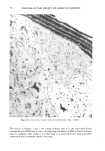
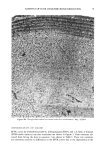
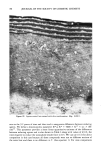
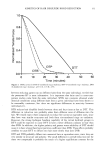
ABSTRACTS 103 and 3 h for the above organisms. At these concen- trations, the N-chloramine mostly gave biphasic curves. A combination of minimal inhibitory con- centrations of the N-chloramine (0.005%) and diazo- lidinyl urea (0.015%) gave synergistic activity against bacteria but not the fungi. This synergistic activity was not adversely affected in the presence of the organic enrichment. At the higher concen- trations, the combination of the N-chloramine and the diazolidinyl urea gave synergistic activity against species of Aspergillus and Fusarium. In pre- liminary tests with a water-based mascara, the com- bination of the diazolidinyl with parabens was cidal for P. aeruginosa at concentrations over l0 cells/g of mascara. Self preservation in cosmetics Charles Fuchs, B.S., Clairol Inc., 2 Blachley Road, Stamford, CT 06902 Cosmetic products are often developed with pres- ervation as an afterthought or final consideration. This can result in a substandard preservative system and add unnecessary cost to the formulation. Op- timization of intrinsic antimicrobial attributes such as pH, water content, and/or key raw materials may reduce or eliminate the need for adding preserva- tives. The food and dairy industry has practiced this research and development style for many years, cap- italizing on natural ingredients wherever possible. Two cosmetic preservative studies illustrate the benefits possible. In one instance, formula analysis resulted in a reduction in preservative levels, while basic changes in a second product enhanced preser- vative activity or eliminated the need for preserva- tives. When cosmetic preservation is an integral part of the R&D process, it results in a higher stan- dard of quality. SCIENTIFIC SESSION III COMEDOGENICITY Comedogenicity-structure/activity correlations and formulating considerations Monroe Lanzet, B.S., Max Factor & Co., 1655 North McCadden Place, Hollywood, CA 90028 Myra O. Barker, Ph.D., Mary Kay Cosmetics, 1330 Regal Row, Dallas, TX 75247 A large number of surfactants and emollients have been studied at varying concentrations using the Kligman modified rabbit ear procedure. Formula- tions containing ingredients which produced high scores were likewise tested. These contained single ingredients and products with a combination of sus- pected comedogenic substances. From these data, hypothetical correlations were made between ap- parent comedogenicity and molecular size, degree of branching, unsaturation, and types of molecules (i.e., alcohols, acids, esters, and ethers). We learned that degree of comedogenicity was concentration- dependent and that the concentration of all come- dogenic ingredients was additive with respect to severity of the comedogenic response. On this basis, certain guidelines for formulators could be devel- oped. To test the structure-activity relationships postulated, new molecular entities were created with predictions as to their degree of comedogen- icity. Subsequent rabbit ear testing confirmed our predictions. Evaluation of test methods for comedogenicity Otto H. Mills, Jr., Ph.D., Hill Top Research, Inc., 222 Route 18, East Brunswick, NJ 08816 and Rut- gers Medical School, Academic Health Science Center, Div. of Dermatology CN19, New Bruvs- wick, NJ 08903 Both animal and human bioassays for comedogen- icity have been described in the literature. In order to evaluate these screens, this presentation will de- fine comedogenicity and review the specific methods and modifications of the animal and human model assays that have been reported in use. Aspects of the rabbit ear and human back tests which will be covered are: (1) number of animals or humans per assay (2) duration of assay (3) inclusion of positive and/or negative controls and (4) sam- pling and evaluation ted•niques (tissue biopsy, whole mount, follicular biopsy, clinical grading, etc.). The data reported in the literature will also be surveyed, giving emphasis to the areas of interest to the cosmetic chemist. Cosmetic acne--A clinical picture Alan R. Shalita, M.D., SUNY Downstate Medical Center, 450 Clarkson Avenue, Brooklyn, NY 11203 :' Cosmetic ache is usually a disease of young adult women manifested by numerous closed coinedones (whiteheads) and occasional inflammatory lesions. Variants, however, may occur in teenagers as well as in older women. Selected fo•ms, such as Pomade ache, may occur in men. Although attributable to certain comedogenic ingredients in cosmetics, cos- metic ache does not occur universally. Specific subgrounds of the population appear to be at greater risk. In our experience, two contrasting groups, blacks and those of Celtic background, appear to be more susceptible. In addition, contributing factors such as hormonal disorders, stress, and physical fac- tors may play a role. The common denominator in all forms of cosmetic ache appears to be an induction of abnormal follicular keratosis. The latter produces the plugging of the follicular canal which results in comedo formation either clinically or microscopi- cally.
Purchased for the exclusive use of nofirst nolast (unknown)
From: SCC Media Library & Resource Center (library.scconline.org)