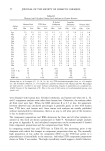
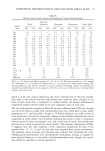
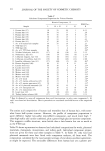
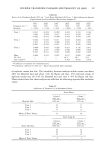
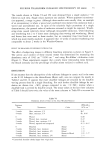
j. Soc. Cosmet. Chem., 36, 61-74 (January/February 1985) Quantitative Fourier transform infrared spectroscopy of oxidized hair JOHN STRASSBURGER, Gillette Research Institute, 1413 Research Blvd., Rockville, MD 20850, and MIKLOS M. BREUER, Personal Care Division, Gillette Company, Gillette Park, Boston, MA 02106. Received October 31, 1984. Presented at the Society of Cosmetic Chemists Annual Scientific Meeting, New York, December 6-7, 1984. Synopsis Oxidative hair damage was measured with a Fourier transform infrared spectrometer using a high pressure diamond anvil cell. Disulfide bond cleavage by bleaching or thioglycollate waving was distinguished from that caused by bisulfite treatment. Oxidative damage was quantified by normalizing the S = O band intensity (near 1040 cm-•) against various keratin band intensities. The intensity ratio producing the most precise quantitative results for replicate determinations was established. Intensities obtained after spectral subtraction were found to give the best results. The reproducibility of the measurements was also established. Oxidative damage was measured on a variety of hair tresses that were subjected to various cosmetic treatments (e.g. bleaching, waving) and environmental weathering. The technique was found to give reproducible results and was capable of determining absolute levels of sulfonic acid in hair. Further- more, the method can also be used for measuring sulfonate (- SO•) and thiosulfonate (- S- SO i) group concentrations in hair. INTRODUCTION Evaluation of hair damage is a problem that preoccupies cosmetic chemists. The problem is particularly important in judging the performance of hair bleaches, hair dyes, and permanent waving lotions, which all include an oxidation step during their application. In addition, hair also undergoes natural oxidative degradation processes (weathering) owing to its exposure to sun and atmospheric oxygen. Prevention, or at least the slowing down, of weathering of hair is a major concern of cosmetic chemistry. Methods capable of measuring oxidative hair damage are of great interest to the hair care industry. The present paper describes a new method for measuring oxidative hair damage based on Fourier transform infrared spectroscopy (FTIR). A number of investigators (1-5) have studied keratin oxidation using infrared spectroscopy. Most have found that per- oxide oxidation leads to major infrared absorption bands at 1040 cm- • and 1175 cm- • The assignment of these two bands as sulfonate linkages from cysteic acid residues seems well established (6,7). Cysteic acid residues arise from disulfide bond fission of cystine, the most abundant amino acid found in hair (8,9). The use of the intensity of the S -- O band at 1040 cm- 1 for quantifying oxidative hair 61

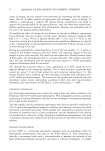
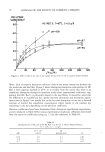
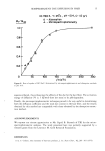
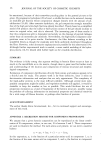
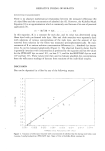
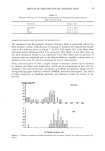
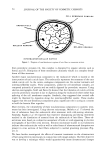
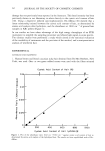
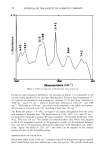
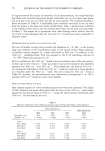
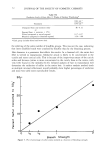
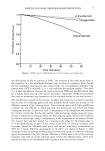
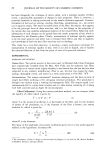
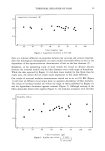
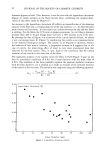
62 JOURNAL OF THE SOCIETY OF COSMETIC CHEMISTS damage has not previously been reported in the literature. This band intensity has been previously shown in our laboratory to relate directly to the cysteic acid content of hair (10). Using a dispersive infrared spectrophotometer, Bit-Alkhas (10) showed that a linear relationship existed between the cysteic acid content of hair, as determined by amino acid analysis after hydrolysis, and the absorbance at 1040 cm-• of ground hair samples in KBr pellets (Figure 1). In our studies we have taken advantage of the high energy throughput of an FTIR instrument to simplify the sampling procedure and obtain high signal-to-noise spectra. Two distinct studies were performed: a study which aimed at the statistical evaluation of the variability of treatments and the precision of the method, and a semiquantitative analysis of weathered hair. EXPERIMENTAL MATERIALS AND EQUIPMENT i. Human brown and blond caucasian scalp hair obtained from De Meo Brothers, New York, was used. One- or two-gram tabbed cresses were used with the fibers oriented 0.16 o 0.08 0.04 Cysteic Acid Content of Hair (%) 4 8 12 16 I I I r 0 200 400 600 800 I000 Cysteic Acid Content of Hair (jJmoles/g) Figure 1. Plot of the absorbance ratio 1042 cm-t/1650 cm-• against cysteic acid content of hair as determined by amino acid analysis of the hydrolysed hair. The results are from unpublished work of Bit- Alkhas.
Purchased for the exclusive use of nofirst nolast (unknown)
From: SCC Media Library & Resource Center (library.scconline.org)