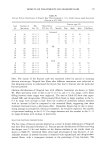
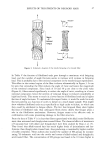
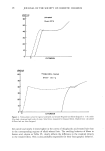
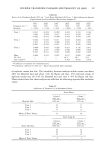
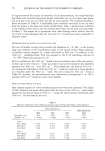
40 JOURNAL OF THE SOCIETY OF COSMETIC CHEMISTS volving a single region of twist (2). The extent of untwisting of the fiber under continuous loading was measured in terms of the angle of rotation. In many instances fiber failure seems to have been preceded by the generation of a crack in the region of twist, although this could not be established with certainty. Combing a hair mass involves the application of low levels of tensile force similar to those in a tensile fatigue experiment with a fiber. Because of entanglements, these forces are generally higher in the case of Negroid hair than in Caucasian hair. To simulate the effect of combing, an apparatus was designed to subject single fibers to tensile fatigue at various load levels (2). It should be noted that the tensile fatigue procedure gives rise to torsional fatigue in the regions of twist, which can enhance damage in these regions of the fiber. This may be responsible for the breaking of fibers into half wavelength sections on manual squeezing. The mechanical and fractographic behavior of untreated Negroid hair has been reported earlier (2). In this communication these studies have been extended to include the effects of chemical treatments and humectants. EXPERIMENTAL MATERIALS These studies were carried out on hair obtained from a 31-year-old male. The hair sample was cleaned with sodium dodecyl sulfate (12.5%), exhaustively washed with distilled water, and conditioned at appropriate relative humidity at 2 iøC. EVALUATION METHODS Tensile mechanical properties were measured with 50-mm long specimens extended at 50%/min (strain rate 0.0083 s-•). Wet measurements were carried out on a sample soaked in water for 2 hours. The apparatus and experimental procedures for the study of torsional effects in tensile loading and tensile fatigue have been described earlier (1). Fatigue experiments extended to 11 kc, with applied loads ranging from 10 to 40 g. HAIR TREATMENTS Treatment with Creme Relaxer. Single fibers were taped to a plastic board and an alkaline permanent creme relaxer (Revlon Realistic © , super strength formulation) was applied for 20 min with stroking motions of the fingers to straighten the hair. During this procedure about 8% of the fibers broke. The remaining fibers were rinsed with distilled water to remove the relaxer and were subsequently treated with a neutralizer shampoo (Revlon Realistic © Herbal Deep Clean Shampoo). The fibers were then thoroughly rinsed with distilled water, blotted dry, and conditioned at 65% RH and 21øC. This sample will be referred to as "superrelaxed hair." Treatment with Thioglycolic Acid. Hair samples in the form of small tresses were immersed in a 5.5% solution of thioglycolic acid (pH = 9.3, adjusted with ammonium hy- droxide) at 35øC for 20 min. During this treatment an attempt was made to straighten the fibers by stroking gently with gloved hands. Subsequently, the tresses were rinsed

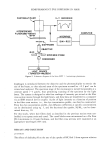
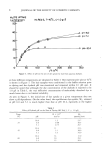
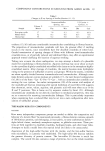
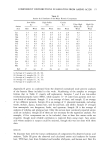
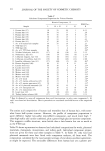
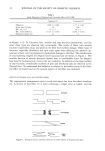
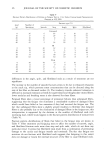
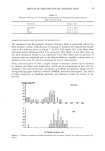
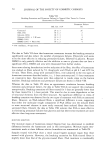
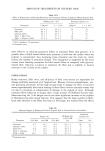
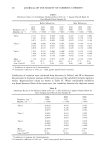
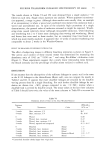
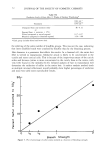
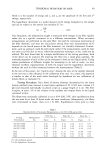
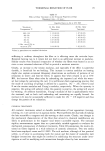
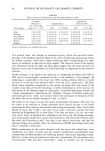
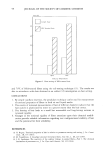
EFFECTS OF TREATMENTS ON NEGROID HAIR with distilled water, blotted dry, and conditioned at 65% RH and 2 iøC. No breakage was observed during the treatment. Humectant Treatments. Samples of Negroid hair fibers were treated with either distilled water for 30 rain at 40øC or 5% monoethanolamine thioglycolate at pH 8.5 for 30 min at 40øC. The fibers were not straightened during these pretreatments. Samples of fibers treated as above were then treated with the following humectant solutions: 1. 5% aqueous solution of polyacrylic acid (PAA) (MW = 1800) at pH 8.5 (adjusted with ethanolamine). 2. 30% aqueous solution of glycerin. 3. 30% aqueous solution of glycerin that was 2M in urea at pH 8.5 (adjusted with ethanolamine). 4. 10% aqueous solution of dimethylsulfoxide (DMSO). 5. 5% aqueous solution of polyacrylic acid that was 5% in dimethyl sulfoxide at pH 8.5 (adjusted with ethanolamine). Humectant treatments were carried out in two different ways. In the first, the hair fibers were treated with the appropriate humectant solution for 3 days at 40øC and then were conditioned at 65% RH and 21øC without rinsing. In the second treatment method, the samples were treated for 1 hour at 40øC each day for a period of three days, with no rinsing between treatments fibers were conditioned at 65% RH at 2 IøC. MOISTURE SORPTION Moisture sorption by the hair samples was determined by equilibrating mO.5 g quan- tities of dry hair (dried in vacuum over P205 for 3 days) for one week in desiccators containing appropriate saturated salt solutions to give the required relative humidities. RESULTS AND DISCUSSION COMPARISON OF NEGROID AND CAUCASIAN HAIR The manageability problems and damage arising from the kinky nature of Negroid hair have been discussed earlier in this paper. The relatively straight nature of Caucasian hair makes it more manageable and less prone to mechanical damage, so that there are significant differences in the mechanical and fractographic behavior of these two types of hair. In addition, there seems to be a significant difference in ellipticity, which may be of biogeneric origin. The ellipticity, extension and stress at break, and fraction of premature failures (arbitrarily defined as the percentage of fibers breaking below 22% extension) are shown in Table I. The data in Table !, though obtained for only one sample of Negroid hair, are believed to show characteristic differences and illustrate the problems associated with Negroid hair. Although these measurements were made at different strain rates, the differences in properties are typical. Some caution, however, should be exercised in interpretation of these results as they are at variance with those obtained by other workers (3). Scanning electron microscope studies of fracture ends of Negroid hair have shown five different patterns, i.e., smooth, step, angle, fibrillated, and split ends, diagrammed
Purchased for the exclusive use of nofirst nolast (unknown)
From: SCC Media Library & Resource Center (library.scconline.org)