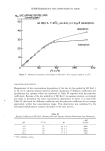
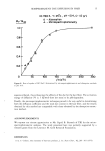
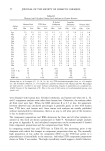
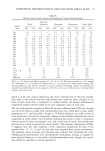
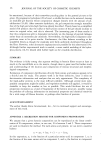
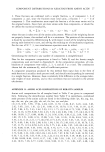
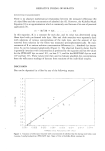
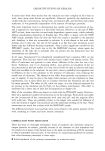
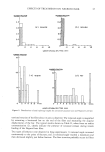
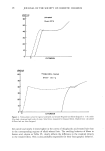
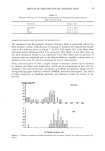
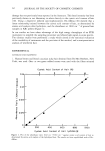
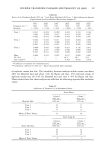
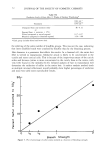
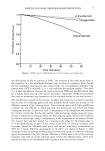
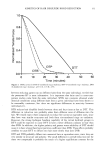
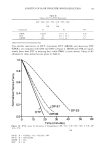
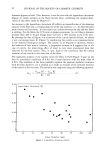
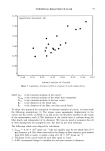
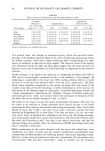
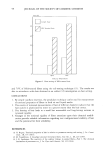
SEMIPERMANENT DYE DIFFUSION IN HAIR 15 Moo HC RED5, T= 25'•C, pH = 10.4, C= 1.0 g/[ (3 - Absorption A - Microspectrophotometry 0.8 0.6 0.4 0 50 •00 t50 200 250 :500 Figure 8. Rate of uptake of HC Red 3 determined by microspectrophotometric and absorption methods at pH 10.4. aqueous ethanol, thus enhancing the affinity of the dye for the hair fiber. The activation energy of diffusion (70 ___ 5 kJ/mol) does not seem to be pH-dependent. Finally, the microspectrophotometric technique proved to be very useful in determining both the diffusion coefficient and the total dye content in the hair fiber, and the results obtained by this method are comparable with those obtained by the absorption-extrac- tion method. ACKNOWLEDGEMENTS We express our sincere appreciation to Ms. Sigrid B. Ruetsch of TRI for the micro- spectrophotometric analyses. The work presented here was partially supported by a research grant from the Lawrence M. Gelb Research Foundation. REFERENCES (1) J. F. Corbett, The chemistry of hair-care products, J. Soc. Dyers Co/o/•r., 92, 285-303 (1976).

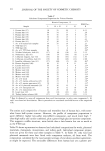
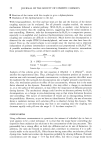
16 JOURNAL OF THE SOCIETY OF COSMETIC CHEMISTS (2) A. V. Hill, Diffusion of oxygen and lactic acid through tissues, Proc. Roy. Soc. (London), B104, 39- 96 (1928). (3) J. Crank, Mathematics of Diffusion, (Oxford Press, London, 1956), p 66. (4) C. Matano, The relation between the diffusion coefficients and concentrations of solid metals (the nickel-copper system), JapanJ. Physics, 8, 109-113 (1933). (5) Y. K. Kamath, S. B. Ruetsch, and H.-D. Weigmann, Microspectrophotometric study of ozone fading of disperse dyes in nylon, Textile Res. J., 53, 391-402 (1983). (6) E. I. Valko and G. Barnett, A study of the swelling of hair in mixed and aqueous solvents, J. Soc. Cosmet. Chem., 3, 108-117 (1952).
Purchased for the exclusive use of nofirst nolast (unknown)
From: SCC Media Library & Resource Center (library.scconline.org)