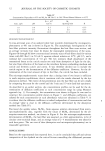
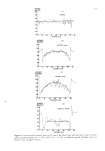
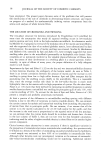
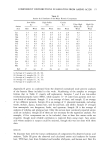
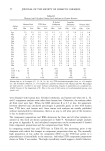
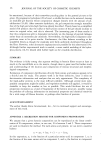
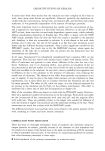
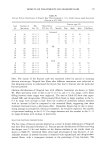
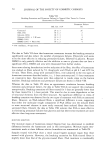
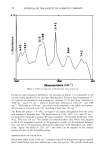
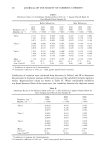
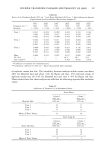
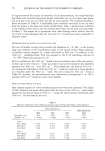
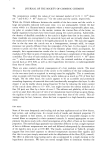
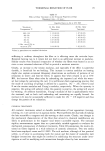
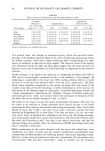
70 JOURNAL OF THE SOCIETY OF COSMETIC CHEMISTS To explore further the sources of variability of our measurements, two single-bleached hair fibers were analyzed along their length. Each fiber was cut into three equal pieces and each piece was cut into three sections for each analysis. The resulting absorbance ratios are shown in Table V. Considerably more oxidation was found in the tip third than was found in the other two thirds of both fibers. Fiber 1 showed more oxidation in the middle section than in the root portion while these two sections were equivalent in Fiber 2. The results are in agreement with other findings which indicate that the tip of hair is more damaged than the root end (14-17) and hence more susceptible to oxidative attack. DETERMINATION OF BUNTE SALT CONTENT OF HAIR The use of bisulfite waving lotion involves the formation of -S-SO i in the waving stage and oxidation in the neutralization stage. In the spectra of hair tresses subjected to bisulfite waving (samples C), a band was found at 1022 cm-• in addition to the 1042 cm-• (sulfonate) band. This was assigned to the S = O stretching vibration of -S- SO i Bunte salts groups (10,13). Prior to subtraction, the 1022 cm- • bands were not resolved in any of the nine spectra. In three spectra the 1042 cm- • band was resolved and in the remainder only shoulders appeared near 1042 cm-• and 1022 cm-•. After subtraction, the band at 1022 cm-• was strong and well defined, while the 1042 cm- • band was weak and at times appeared as a shoulder under the 1022 cm-• band. The ratios using the 1042 cm-• band in Table III, therefore, are approximations only. Estimates of thiosulfonate (-S-SO•) residues (1022 cm-• band) are much more reliable. EFFECT OF WEATHERING ON HAIR Hair samples exposed to various weathering protocols were also examined. The degree of fiber oxidation was again determined from the ratio of the 1042 cm-• peak height against the hair protein band at 1076 cm- •, using the valley between these bands (near 1050 cm-•) as the baseline for each. Table V Oxidation Absorbance Ratios Measured Along Length of Single Hair Fibers, Once Bleached Before Subtraction After Subtraction 1042 1042 1042 1042 Frequency, cm- • 1076 1650 1235 1235 (Baseline, cm - 1) (• 1050) (-- 1900) (-- 1100) (-- 900) Fiber 1 Root Third 0.676 0.012 0.052 0.073 Mid Third 0.788 0.014 0.063 0.085 Tip Third 1.003 0.015 0.077 0.095 Fiber 2 Root Third 1.517 0.017 0. 102 0. 117 Mid Third 1.500 0.017 0. 104 0.114 Tip Third 2.250 0.019 0. 106 0. 120

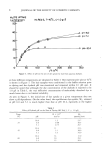
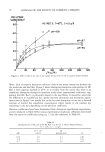
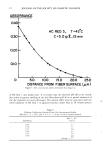
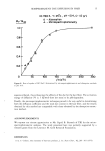
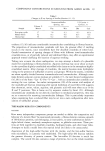
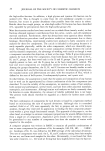
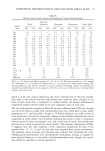
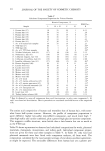
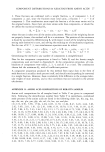
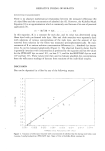
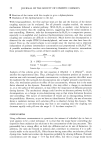
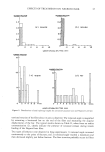
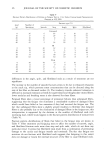
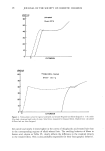
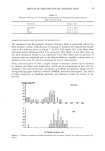
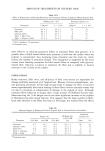
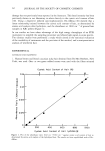
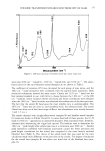
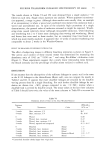
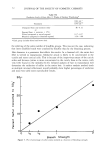
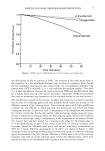
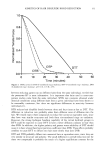
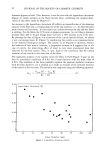
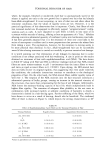
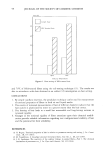
FOURIER TRANSFORM INFRARED SPECTROSCOPY OF HAIR 71 The results shown in Tables VI and VII were obtained from a single analysis (--10 fibers) on each tress. Single values represent one analysis. Where apparent inconsisten- cies appeared, a range is given. Although these results were usually close, an example of an inconsistency is where a waved and weathered tress showed less oxidation than a waved and unweathered one. In spite of the relatively high uncertainty of a single determination, the general order of oxidation occurred as might be expected. Weath- ering alone caused relatively minor (although measurable) oxidation, while bleaching and weathering was 2 to 4 times more damaging than waving and weathering. Blond and brown hair were used in these studies, but no consistent trend was found as to which was more readily oxidized. It appeared that 12 weeks of outdoor weathering was comparable to about 2 weeks in the Weather-Ometer. EFFECT OF BLEACHES OF DIFFERENT STRENGTHS The effect of subjecting tresses to different bleaching intensities is shown in Figure 5. The cysteic acid content of these treated tresses was determined by measuring the absorbance ratio of 1042 cm-•/1650 cm -• and using Bit-Alkhas' calibration curve (Figure 1). These experiments suggest that a nearly linear relationship exists between the bleach intensity and the percentage of sulfur atoms oxidized to sulfonic acid. DISCUSSION If one assumes that the absorptivity of the sulfonate linkages in cysteic acid is the same as the S = O linkages in the thiosulfonate (Bunte salt), one can compare the results in Tables I and III. It appears that more disulfide linkages are attacked by the bisulfite waving process than by a single bleaching. For each broken disulfide linkage by oxi- dation we obtain two -SO• groups compared to one -S-SO• residue when a disulfide link is severed by bisulfite attack. The mean values in the last three columns of Table I should have twice the value of the same columns in Table III to account for Table VI Oxidation Levels of Hair in the Atlas Weather-Ometer Exposure 1042 cm- 1 Time Treatment Color 1076 cm- 1 2 weeks Heat, moisture, UV 4 weeks Heat, moisture, UV 0 Waved 2 weeks Waved, heat, moisture 2 weeks Waved, heat, moisture, UV 4 weeks Waved, exposed and unexposed 0 Bleached 2 weeks Bleached, heat, moisture 2 weeks Bleached, heat, moisture, UV 4 weeks Bleached, heat, moisture 4 weeks Bleached, heat, moisture, UV Blond Blond Blond Brown & Blond Blond Sh* Sh, O. 06 O. 08 0.22 0.46 0.25-0.62 1.17 1.35 1.70 1.9l-2.27 2.51 * Unresolved shoulder clearly larger than virgin hair.
Purchased for the exclusive use of nofirst nolast (unknown)
From: SCC Media Library & Resource Center (library.scconline.org)