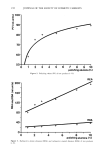
208 JOURNAL OF THE SOCIETY OF COSMETIC CHEMISTS but to a lesser extent near neutral pH. Additional repulsive forces would exist between adsorbed ionic surfactants and the overall negative charge of the protein. As the sub- strate matrix expands and the tertiary structure is disrupted, additional sites would become available for surfactant binding and hydration. An explanation for the lack of swelling by cationic surfactants is that the surfactant- substrate interactions are attractive, i.e. the surfactant's positively charged head groups may be attracted to the anionic sites on the substrate. This attractive force would tend to cancel the surfactant-surfactant electrostatic repulsion caused by the positively charged head groups. Further, electrostatic interaction of the positively charged head groups of the cationic surfactant with the negatively charged groups in the protein would, in effect, neutralize part of the negative high charge density on the collagen, thereby decreasing the repelling forces of the negative charge. The net result would be little or no swelling above the normal hydration of the membrane. There are no ionic surfactant-surfactant or surfactant-substrate interactions for nonionic surfactants, explaining why they produce little swelling above normal hydration. For anionic surfactants, the relative contribution of these two interior forces to the overall conformation of the substrate depends on the pH of the binding site environ- ment. When the environment is acidic, electrostatic repulsive forces are at a minimum since the negative sites on the substrate are protonated. As the pH begins to rise, there is probably a corresponding rise in the repulsive forces within the protein matrix, and swelling increases. In the case of skin, if the protein structure has not been permanently denatured, the swelling is reversible by removal of the surfactant and returning the sample to neutral pH (10). We speculate that ethoxylation of alkyl sulfates reduces swelling because of several factors. Ethoxylation may effectively decrease repulsive forces between surfactants ad- sorbed to interfaces, as shown by decreases in critical micelie concentration. When alkyl sulfates are ethoxylated, the ethylene oxide units form a flexible link between the hy- drophobe and the charged hydrophile. This would afford the head group greater mo- bility and allow adjacent head groups to assume positions of greater separation, thereby decreasing electrostatic repulsion. The resultant reduction in electrostatic repulsion would increase with the degree of ethoxylation. Ethoxylation also increases the molec- ular size of the surfactant, which sterically hinders penetration into the substrate ma- trix. The steric hindrance is small for lower molecular weight surfactants but becomes dominant as the amount of ethoxylation increases, as evidenced by the fact that swelling is completely unaffected by concentration for the higher ethoxylates of alkyl sulfates, e.g. AEOS-6EO and -9EO. The combination of decreasing affinity for the substrate, decreasing repulsion between neighboring protein strands, and decreasing access to the substrate interior would result in reductions in the net swelling of the membrane. We developed this model for the swelling of collagen film to study and predict surfac- tant-induced irritation. We have found it to be a helpful tool which allows us to con- sider the possible interactions occurring within the protein matrix. CONCLUSIONS The swelling of collagen film by anionic surfactants correlates well with their skin irritation. A radiotracer technique was used to measure swelling of collagen mem-

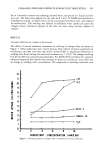
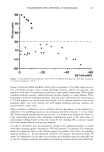
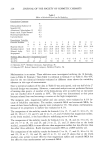
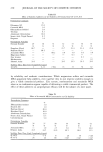
COLLAGEN SWELLING PREDICTS SURFACTANT IRRITATION 209 branes. This i, vitro technique was used to study the effect of surfactant structure versus activity for a homologous series of alkyl sulfates and alkyl ether sulfates. The maximum in swelling activity was produced by the C12 alkyl sulfate, and this activity was re- duced by ethoxylation. Using this technique, we estimate the irritation potential of various surfactants to be: LAS = SLS = ALS AEOS-3EO AEOS-6E0 AEOS-9EO = Tween 20 The method was used to study the effect of cocamidopropyl betaine on SLS-induced swelling. The betaine decreased the swelling activity of SLS by as much as 45 percent for cetain combinations of SLS and betaine. These results correlate well with those published using a variety of physicochemical techniques. Most importantly, the irritation potentials predicted by this assay agree with those obtained by established i, vivo and i, vitro irritation assays. These results illustrate the utility of the collagen swelling assay as a rapid method to investigate surfactant interac- tions and generate predictive irritation data. The collagen swelling assay can be used to screen ingredients for lack of irritation or anti-irritant qualities and quantify the extent of these effects. The assay is rapid, easy to perform, utilizes a uniform and reproducible substrate available commercially, and can be used on a routine basis as a rapid screening method for anionic ingredients and products. ACKNOWLEDGEMENT We wish to acknowledge Dr. J. Nichols and Helitrex Inc. for their cooperation in optimizing the collagen film for this project. REFERENCES (1) R. F. Witter and W. Mink, Effect of synthetic detergents on the swelling and the ATPase of mito- chondria isolated from rat liver, J. Biophys. Blochem. Cytol., 4, 73 (1958). (2) U. Zeidler and G. Reese, In vitro test for the comparability of surfactants, Proceedings of the Interna- tional Federation of the Cosmetw Chemists Society. Paris, 229-233 (1982). (3) G.J. Putterman, N. F. Wolejsza, M. A. Wolfram, and K. Laden, The effect of detergents on swelling of stratum corneum,J. Soc, Cosmet. Chem., 28, 521-532 (1977). (4) B. R. Choman, Determination of the response of skin to chemical agents by an in vitro procedure. J. Invest. Dermatol., 37, 263-271 (1971). (5) C. R. Robbins and K. Fernee, Some observations on the swelling of human epidermal membrane,J. Soc. Cosmet. Chem., 34, 21-34 (1983). (6) E. A. Tavss, E. Eigen, and A.M. Kligman, Letter to the editor,J. Soc. Cosmet. Chem., 36, 25 1-254 (1985). (7) A.M. Kligman and W. M. Woocling, A method for the measurement and evaluation of irritants on human skin, J. Invest. Dermatol., 49, 78-94 (1967). (8) G. Imokawa, K. Sumura, and M. Katsumi, Study of skin roughness caused by surfactants: A new method in vivo for evaluation of skin roughness, J. Am Oil Chem, Soc., 52, 479-483 (1975). (9) G. Imokawa, K. Sumura, and M. Katsumi, Study of skin roughness caused by surfactants: II. Corre- lation between protein denaturation and skin roughness,J. Am Oil Chem. Sot., 52, 484-489 (1975). (10) L. D. Rhein, C. R. Robbins, and K. Fernee, Surfactant structure effects on stratum corneum swelling, presented at the Annual Meeting of the Society of Cosmetic Chemists, New York (1985). (11) P. J. Frosch and A.M. Kligman, The soap chamber test, J. Am. Acad. Dermatology, 35-41 (July 1979). (12) D. L. Opdyke and C. M. Burnett, Practical problems in the evaluation of the safety of cosmetics, Proceedings of the Scientzfic Section of the Toilet Goods Association, 44, 3-4 (1965).
Purchased for the exclusive use of nofirst nolast (unknown)
From: SCC Media Library & Resource Center (library.scconline.org)