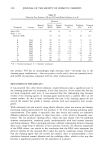
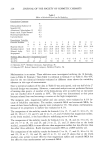
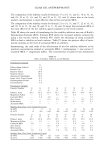
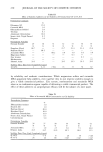
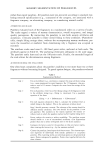
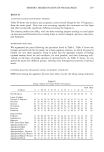
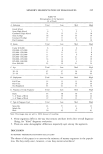
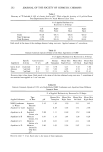
SENSORY SEGMENTATION OF FRAGRANCES 239 RESULTS ACCEPTANCE SCORES AND SENSORY PROFILES Table IV shows the attribute and acceptance scores (overall liking) for the 15 fragrances, from the entire panel. Note that even averaging together the consumers we find large and often statistically significant differences among the fragrances. The sensory profiles also differ, with the three winning samples tending to score higher on sweetness and fioweriness but scoring lower in overall strength, spiciness, heaviness, and harshness. SEGMENTING THE PANEL We segmented the panel following the procedure listed in Table I. Table V shows the average optimal levels for the panel, for a three-segment solution, in which the panel is broken out into three segments. Keep in mind that the approach consists of finding optimal sensory levels for each attribute, for each panelist, and then clustering indi- viduals on the basis of similar patterns of optimal levels. As Table V shows, we can spread the panel into different groups, showing more homogeneous patterns of optimal levels. PATTERNS RELATING FRAGRANCE LIKING TO SENSORY ATTRIBUTES Differences among the segments become clear when we plot the liking rating (ordinate) Table IV Liking, Sensory and Image Profile of Fragrances Attribute TOP BOT A I M H F K D E N B J L C G O 3 3 Overall Liking 54 52 52 48 47 47 45 45 45 44 43 43 40 40 26 52 35 Sensory Attributes Strength of Fragrance Sweetness Spiciness Floweriness Heaviness Harshness 54 53 55 56 59 58 53 63 63 55 59 61 57 61 65 54 61 52 56 45 58 63 42 52 49 52 47 58 43 47 49 37 51 44 42 31 42 37 31 38 32 42 50 37 46 38 43 38 53 38 44 46 56 39 54 55 42 56 45 42 54 44 41 44 50 31 47 41 49 48 52 53 46 54 47 58 61 52 57 56 55 58 62 49 58 38 35 37 39 38 43 35 45 43 42 43 44 43 47 60 36 50 Image Attributes Freshness Sophisticated Expensive Diff. From Other Frags. Appropriate/Daytime Appropriate/Night Appropriate/Gift 51 50 48 49 50 47 53 46 44 49 44 39 43 41 34 49 39 50 46 45 44 40 44 40 42 38 38 38 42 39 38 29 47 35 52 49 48 44 41 47 46 45 39 39 42 46 41 42 32 49 38 48 41 43 45 47 44 46 46 51 43 53 41 44 46 51 44 47 51 51 48 50 49 49 54 43 41 49 43 41 43 44 33 50 40 58 56 54 53 47 52 47 50 46 44 47 48 48 45 32 56 41 51 49 48 45 44 47 46 42 36 39 40 41 39 39 23 49 33 Appropriate/Spec. Occasion 53 47 48 49 44 45 44 41 39 39 40 43 40 37 25 49 34 Appropriate/Young Women 45 48 43 45 49 40 47 36 37 42 40 34 39 38 26 45 34 Appropriate/MatureWomen 59 54 54 53 50 55 47 49 47 48 49 49 48 48 34 55 43 Appropriate/Work 48 47 47 44 43 44 46 38 33 44 36 35 37 36 26 47 33

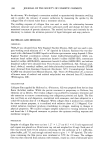
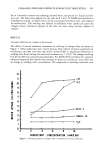
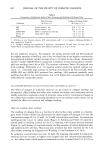
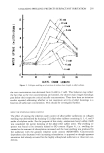
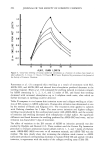
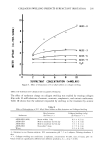
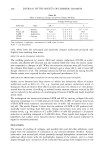
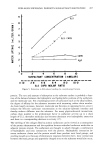
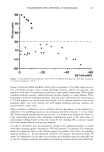
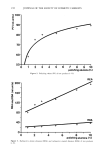
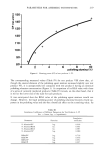
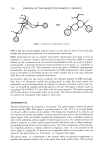
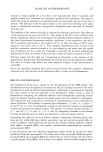
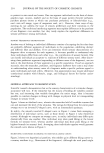
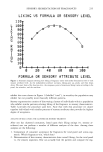
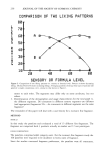
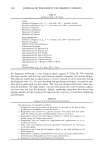
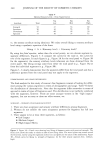
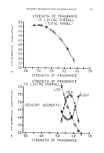
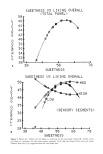
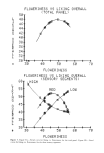
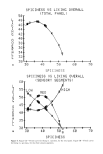
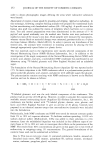
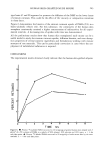
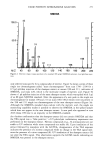
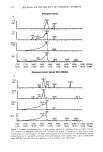
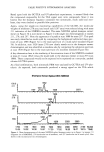
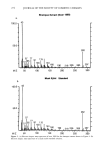
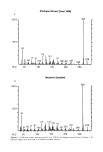
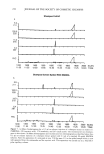
240 JOURNAL OF THE SOCIETY OF COSMETIC CHEMISTS Table V Optimal Sensory Levels--From Segmentation Seg Seg Seg Attribute Total Low Med High Strength 52 47 56 60 Sweetness 50 36 55 55 Floweriness 47 60 42 30 Spiciness 37 30 37 52 vs. the sensory attribute rating (abscissa). We relate overall liking to sensory attribute level using a quadratic equation of the form: Liking = A + B(sensory level) 4- C(sensory level) 2 By using the fitted equation, rather than the actual points, we can discern segment-to- segment differences. Figures 3-6 compare the curves for the total vs. the curves for two of the segments. In each figure (e.g., Figure 3A for the total panel vs. Figure 3B for the segments), the sensory attribute levels (abscissa) are those obtained from the entire panel. The liking ratings come from either the total panel (e.g., Figure 3A) or from the individual segments (e.g., Figure 3B). Figures 3-6 clearly demonstrate that the segments differ from the total panel and that a preference pattern from the total panel may not apply to the segments. DEMOGRAPHICS AND USAGE DIFFERENCES The final analysis for this study of women's fine fragrances consists of looking for differ- ences among the various segments in terms of demographics and usage. Table VI shows the distribution of characteristics. Note that the segments differ somewhat in terms of age and in terms of types of fragrances used. The distribution is not perfectly correlated with the segments, however. There are some younger women in the "high impact" segment, but not as many as there are older women, etc. SUMMARY--WOMEN'S FiNE FRAGRANCE STUDY 1. There are clear acceptance and sensory attribute differences among fragrances. 2. Women do not exhibit the same acceptance patterns for fragrance but fall into segments. 3. There appear to be at least three segments, as follows: ß Low Impact ß Medium Impact ß High Impact/Heavy Figure 3. Figure 3A--Fitted curve showing how liking of fragrance varies with perceived strength. The fitted curve allows the reader to obtain an idea of how liking varies. The actual points may scatter around the fitted line, but by using the regression method one can rapidly see the nature of the relationship. Figure 3B--Fitted curves for liking vs. strength of fragrance, for the three sensory segments (low, medium, high).
Purchased for the exclusive use of nofirst nolast (unknown)
From: SCC Media Library & Resource Center (library.scconline.org)